

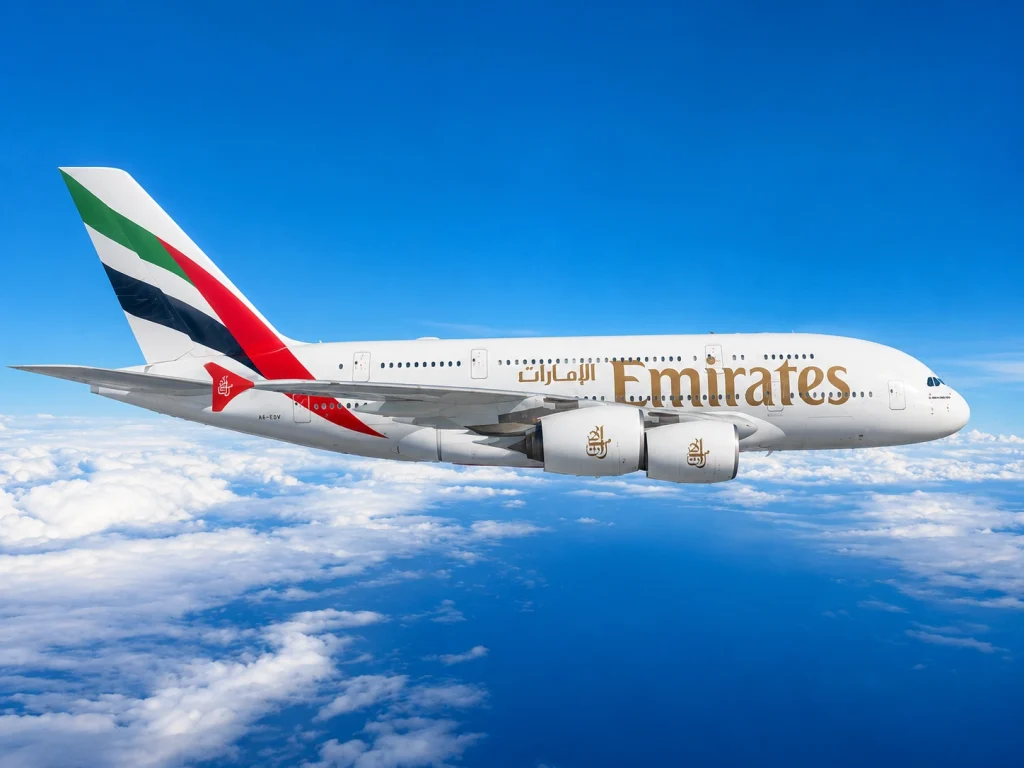
The president of Emirates, Tim Clark, was quoted in Berlin yesterday saying that the airline has no intention to cut capacity even at the expense of financial losses from detouring to avoid the conflict in Iran. The airline is running with increased fuel, expanding its StarLink network, seeking Berlin air traffic rights, and snubbing Lufthansa’s regulatory complaints.
BERLIN: On Tuesday, Tim Clark, president of Emirates, made one of the clearest statements from within the aviation industry that Gulf airlines do not plan to back down from the economic challenge that the Middle East war presents. By announcing that Emirates has no plans to reduce its routes or reduce capacity, Clark noted that the airline continues to fly passengers from Dubai to places like India and Australia while loading extra fuel to compensate for the challenges created by the war. This strategy taken by the Emirates airline in relation to the Middle East war in 2026 is seen as one of a company that is ready to incur costs rather than losing business to other airlines.
What the War Has Changed And What Emirates Will Not Change
Emirates’ stance during the ongoing conflict between the Arab nations is reflected in the fact that the airline refuses to cut any flights to/from the Middle East by 2026, but the route choice has incurred certain costs. To ensure the safety of their passengers, the airlines choose to carry more fuel on certain routes that go near or through the airspace in question. As we know, extra fuel translates into extra weight, and, therefore, extra fuel consumption for each trip. It seems Clark had nothing to worry about, as he’s an airline president himself who has to deal with $96 Brent per barrel prices.
The effect on those who fly via Dubai by Emirates Airlines to South Asia, Southeast Asia, and Australia has thus far been limited. Flights have continued. Schedules have remained unchanged. Instead of transferring the cost of operations from its own back to the shoulders of its customers, in the form of canceled or rescheduled flights, Emirates Airlines has borne it alone.
The Berlin Push Slots Locked, But Still No Approval
Apart from the capacity news and other Berlin updates, Clark said that Emirates was offering complimentary Starlink satellite internet services on its aircraft wherever possible, even in spite of the existing challenges in obtaining sufficient amounts of hardware to implement this initiative. Starlink-powered planes offer a much better onboard internet connection speed compared to the previous solutions a huge step forward for long-haul flights.
ALSO READ: Emirates Names First Emirati Women Captains to Command Boeing 777
The Lufthansa Showdown: “Fight Your Own Corner!”
Besides this storyline, there is a second equally important aspect of the no-flight cuts in the Middle East because of the war 2026 news from Berlin. This is because Clark employed his presence at the air show to publicly criticize Deutsche Lufthansa’s decades-old crusade against Gulf airlines in Europe – one that contends that the Gulf airlines enjoy an unfair advantage.
The controversy between Lufthansa and the Gulf carrier airlines ranks as one of the longest-running disputes in commercial aviation history. The old generation airlines of Europe argue that the fact that state ownership underlies airlines like Emirates, Qatar Airways, and Etihad gives such airlines the ability to subsidize routes, incur losses, and undercut their rivals within Europe because they operate from the same commercial framework as the rest of the airlines cannot. The Gulf airlines refute these assertions and highlight their success story and the benefits accruing to the consumers from the competition. Clark’s remark about “hiding behind its skirts” is the most direct assertion ever made on behalf of Emirates.
What the Emirates Position Says about the Industry as a Whole
That there will be no Emirates flight cuts due to Middle East war in 2026 position taken by Emirates at Berlin does not only mean something to one specific carrier; instead, it indicates that the largest airline from the Gulf region perceives this ongoing crisis as merely a hurdle but not as a strategic threat, which means that structural change needs to be done within the company’s network. This means that the market share Emirates might have lost due to reducing its flights stays as it is, its position within the industry is getting even stronger against other airlines cutting their flights, and it remains an equally powerful player at the Berlin air show.