


ISLAMABAD: An ongoing secret defence arrangement between Islamabad and Beijing is likely to redraw the lines of airpower strategy in South Asia for some time to come. According to media reports, Pakistan is now in talks to purchase up to 40 J-35 stealth jets from China along with other military equipment that includes an array of reconnaissance planes and missile defence systems worth around $4.6 billion. If the deal materialises, Pakistan would become the first nation outside of China to deploy its own fleet of fifth generation stealth jets; only China, the US, and Russia have done so till date.
The Deal at Hand
The reported purchase goes far beyond mere aircraft acquisition. According to the reports, Pakistan is trying to acquire the complete set of J-35 Stealth Fighter systems along with KJ-500 Airborne Early Warning and Control Systems and HQ-19 Long-Range Surface to Air Missile Defence System. It is worth noting that the three technologies when combined together create an integrated system of warfare capable of solving the top three deficiencies faced by Pakistan’s military.
The KJ-500 will ensure that the radar coverage is extended far beyond the capabilities of any terrestrial radar system, enabling the military commanders to gain knowledge about any approaching enemy well in advance and coordinate their airborne operations more efficiently. The HQ-19 system, developed to destroy ballistic missiles and sophisticated enemy aircraft at altitude, is directly addressing the threat posed by India’s layered air defence architecture that includes its purchase of S-400s from Russia. This is not a mere upgrade but a paradigm shift in Pakistan’s aerial warfare capability.
Why It Has Been Done This Way
The timing of Pakistan’s interest in fifth-generation aviation is no coincidence. The air battles with India in May 2025 made both nations question their approach to combat and equipment purchases. Pakistani representatives stated that Chinese aircraft had acquitted themselves well against Indian aircraft from Europe and Russia in the battle, and the military leadership of Pakistan was quick to act on this.
The modernization of India’s air force has similarly been moving along uneasily fast for Islamabad. India has a steadily increasing number of French-made Rafale fighter jets, and the country is working on its own development of an Advanced Medium Combat Aircraft, set to be operational in the early 2030s. The purchase of additional Rafales will add to the perceived qualitative gap between the two sides, one that cannot realistically be overcome by conventional 4.5-generation aircraft.
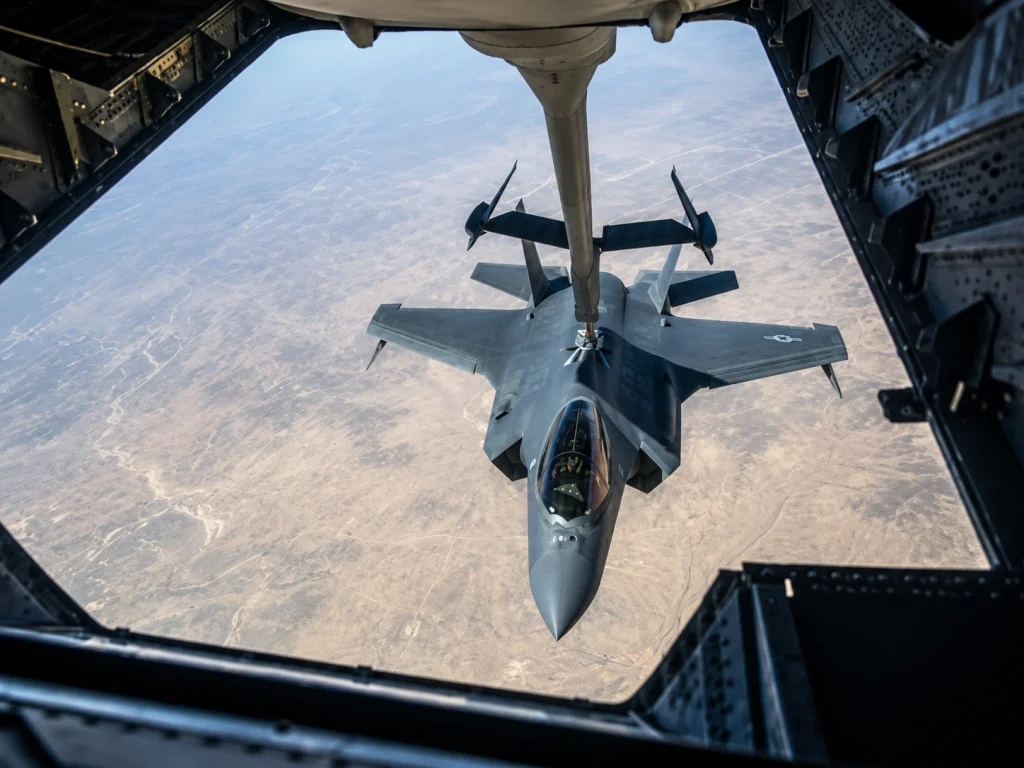
This is precisely the situation that is remedied by the Pakistan J-35 stealth jet fighter. The combination of its ability to be hard to detect, sensor fusion, and network-centric target acquisition provides the pilot with capabilities currently unavailable to any other aircraft in its arsenal. For the first time, Pakistani strategists have a platform for thinking about attacking India’s airspace.
ALSO READ: Pakistan Sends 8,000 Troops and JF-17 Fighter Jets to Saudi Arabia Under Secret Defence Pact
The Calculations of Beijing
This package is not being offered to Islamabad as an act of charity on the part of China. Instead, Beijing has been pursuing a calculated policy of building stronger relationships between their defence and industrial sector and Pakistan for the last two decades through programmes such as the development of the JF-17 Thunder along with the introduction of J-10Cs from 2022 onwards.
The export of the J-35 is an ideological departure from previous Chinese thinking on how to handle its fifth generation planes. Until now, China considered its fifth generation planes as national strategic assets that could not be shared with others due to their high level of sensitivity and value. Offering the J-35 stealth fighter to Pakistan under extremely favorable economic conditions, especially the reportedly halved price, indicates that China believes in using top-notch military equipment as a political tool and not as something exclusive to China alone.
Training Has Begun for Pakistan’s Pilots
One of the most telling things about the whole story is that the pilots from Pakistan are already in China and undergoing pilot type conversion training using the simulator aircraft of the J-35 fighter jet. It is clear that there was a lot of work done prior to arriving at this stage.
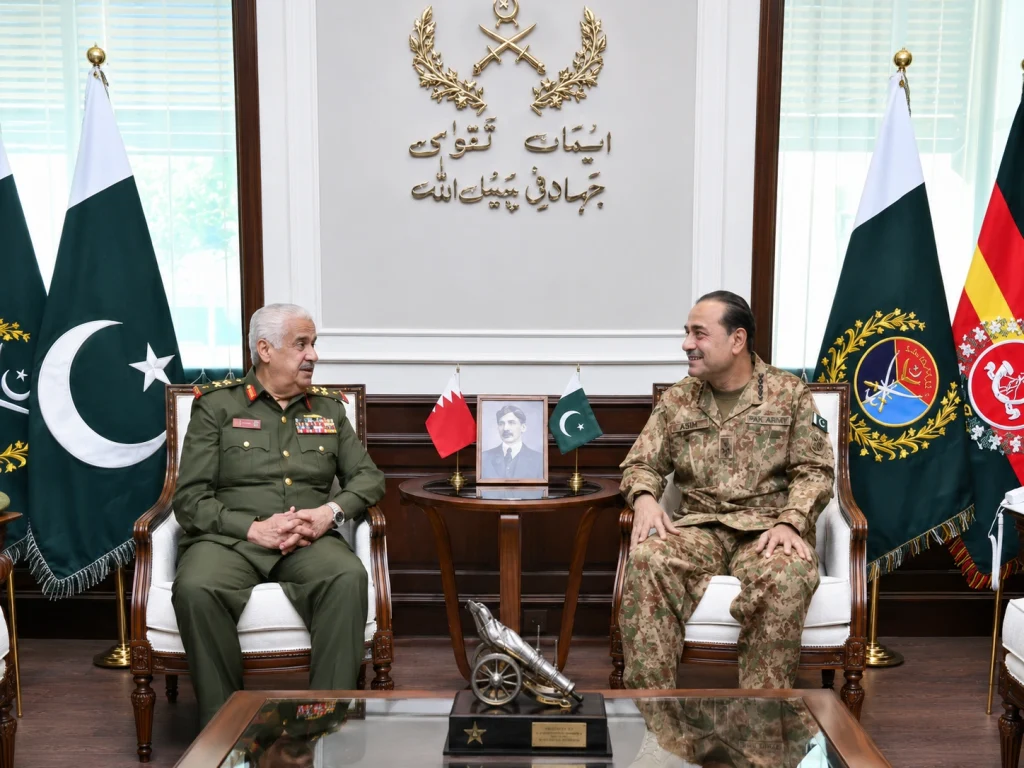
Military exchanges at the highest levels have also increased. An Air Chief from Pakistan recently visited China, whereas high-level Chinese military officials returned the favor by visiting Islamabad an indicator of high-level military diplomacy that usually takes place before contracts can be signed rather than during preliminary talks.
Regional Threat is Real
The Indian defense department is sure to take notice. With the deployment of a stealth fleet of Pakistan J-35 jets, the Indians are compelled to hasten their plans for developing their fifth generation aircraft, upgrade their air defenses on land, and revise their perceptions regarding radar surveillance on their western border. All of these decisions have a high price tag associated with them.
Aside from the bilateral relationship, there are smaller regional actors and Gulf countries that are following this agreement with great interest. Should China succeed in using Pakistan to highlight how good an exporter of J-35 is, then this would mean opening up a sales channel to air forces desiring stealth capability without being politically entangled with America.
The Beginning of a New Era for Pakistan’s Air Force
Pakistan has had an advantage of competing against a country that has more money, more industry, and access to a wide network of arms suppliers. The J-35 deal will mark a turning point in the way that this competition is being fought.
It was the first instance when Pakistan would not be struggling to keep up with India on a platform-to-platform basis, but instead have the upper hand in a critically important field of warfare. This comes as a shock both for New Delhi and its defense partners, who did not expect it to happen so soon.