
Punjab Lets Teenagers Ride Legally With New Motorcycle Permit
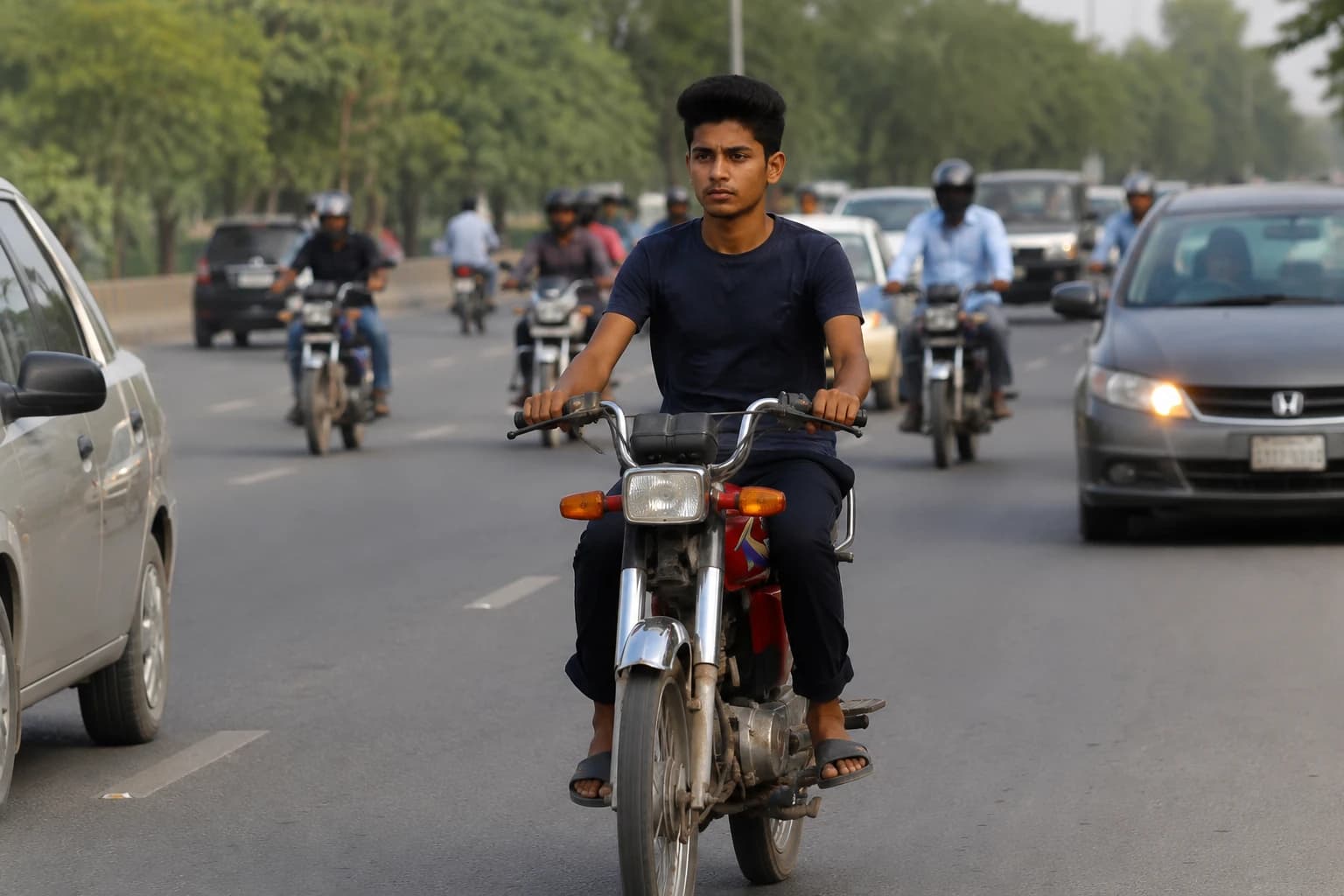
LAHORE: Punjab govt is rolling out the Juvenile Permit which will provide 16 to 18-year-olds an opportunity to drive legally for the very first time in the province. The plan, announced by Punjab CM Maryam Nawaz Sharif, will have a simple procedure to enroll in the program - simply pay the fee, come with your parents, get your documents verified, and hit the road. No written test results visible in the announced criteria. No mandatory training course. Just a structured acknowledgement that teenagers ride and that the state should know about it.
According to Focus Pakistan, the permit can be obtained at a price of Rs1,000 by a 16-year-old. An individual who is 17 years or 18 years old will have to pay Rs500. No official reasoning was provided for why there is a difference in prices, but it can be inferred that it’s because a 16-year-old doesn’t keep the permit for
Key Rules for Applicants
Lahore CTO Syed Abdul Raheem Shirazi fixed the speed ceiling at 60 kilometres per hour for all permit holders. That number looks reasonable on paper. On Punjab's roads where motorcyclists routinely push past 120 km/h through dense traffic it demands enforcement muscle the government has not yet demonstrated it possesses.
Parental consent is non-negotiable. Applicants must walk into the traffic authority office accompanied by a parent or legal guardian not simply submit a signed form. The guardian provides a copy of their Computerised National Identity Card and a recent photograph. The applicant brings a Smart Card and Form-B. No guardian present, no permit issued.
Road Safety Questions Remain
Shirazi framed the initiative in the language of habit formation. Punjab does not simply want teenagers to carry a permit card it wants them to absorb traffic discipline at the age when behaviour patterns set hardest. Authorities did not explain at launch how a laminated permit alone can build traffic discipline without a rider education programme.
The processing starts from Lahore itself, and it’s capacity to handle the process already exists in the form of infrastructure within the traffic police department. The Punjab govt has not announced when it will extend the permit scheme to Rawalpindi, Faisalabad, Multan and other districts.
Also Read: Sindh Police Launch Action Against Thousands of Blacklisted Vehicles in Karachi
The harder test comes on the road. Punjab's motorcycle culture runs deep, fast, and largely unregulated. A 60 km/h cap on permit holders means traffic police must now distinguish between a licensed adult and a permitted teenager moving at speed on roads where number plate visibility and enforcement bandwidth are already stretched. The provincial government has not said how it intends to close that gap.
What the scheme does immediately is convert informal permission into legal documentation. Most Punjab families already allow teenage sons to ride to school, to work, to the market. This permit puts a government stamp on that reality. For the teenager stopped at a checkpoint, it replaces discretion with documentation. That alone marks a shift even if the harder work of making young riders safer still lies ahead.

Leave a Reply
Your email address will not be published. Required fields are marked *