
SECP Quietly Rewrites Guarantee Rules, Opening Door to Government-Backed Capital
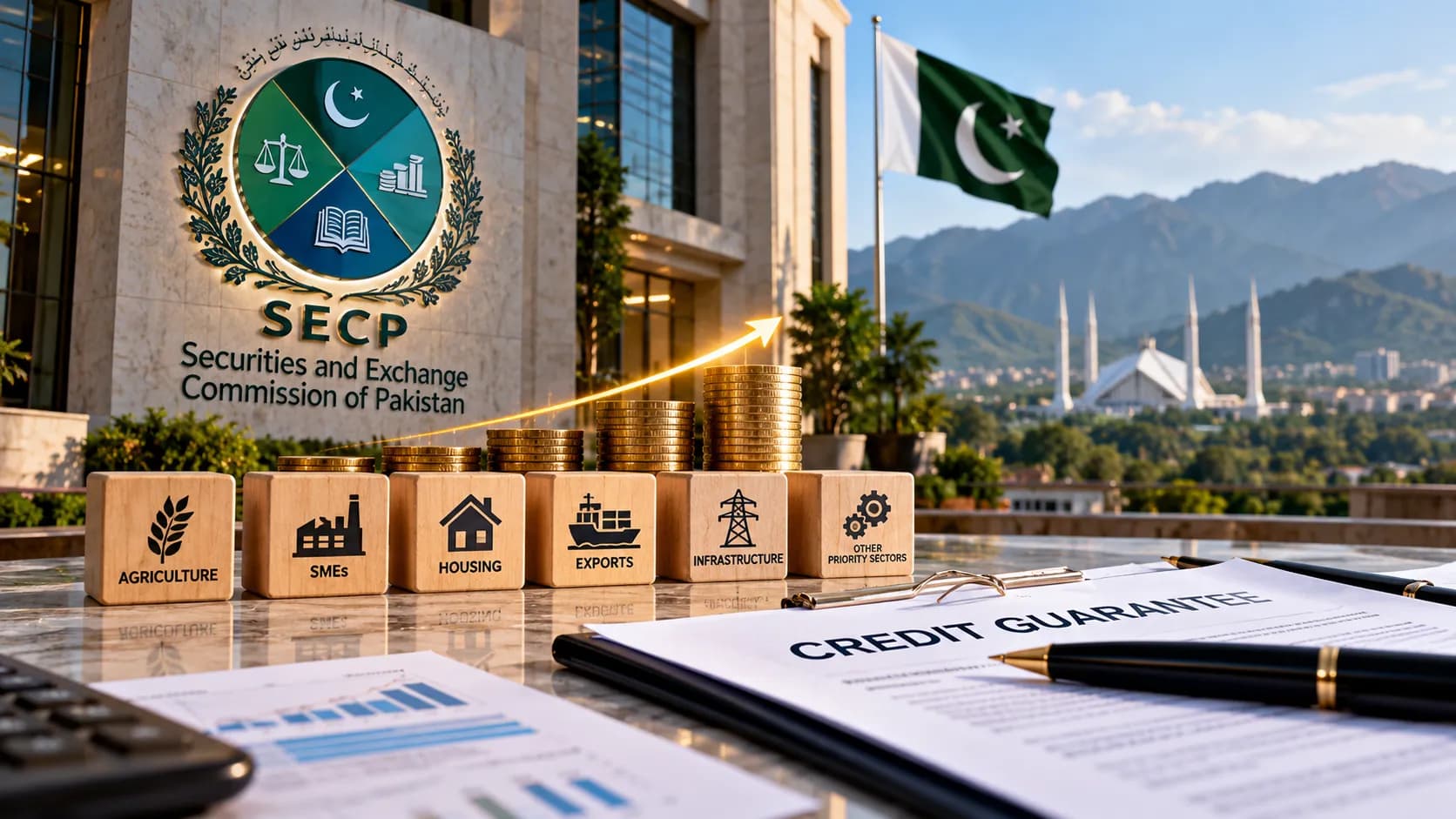
ISLAMABAD: Securities and Exchange Commission of Pakistan-SECP has quietly removed infrastructure-specific wording from its rules for guarantee-only finance companies. It also allowed federal and provincial governments and state-linked institutions to back such companies with non-returnable capital, according to a circular issued on Oct 2.
Circular No. 22 of 2026 from the Securities and Exchange Commission of Pakistan (SECP) took effect on the day of issue. It changes a 2019 framework covering non-banking finance companies (NBFCs) whose sole business is issuing guarantees.
Under the amendment, the federal government, a provincial government, or a body or multilateral institution that either owns or controls may provide a grant, funding or committed amount to an eligible NBFC. The circular classifies such money as "Ring-Fenced Capital" and requires it to be irrevocable and non-returnable.
NBFCs may use the capital to expand their guarantee portfolios or to issue guarantees for agreed priority sectors, the circular said. It did not name any sectors.
What is Govt-Backed SECP Credit Guarantee
Don't picture a government loan. No ministry hands cash to a borrower here. It puts capital behind a guarantee company instead.
Also Read: Pakistan Insurers Pay Rs548 Billion as Claims Cross 1 Million
Think of that company as a shock absorber. It carries a slice of the credit risk, and a bank or bond investor grows more willing to fund a business, a project or a whole sector. Borrower defaults? The guarantor covers whatever share of the loss the deal specifies.
Circular 22 does not make the state guarantee individual loans either. It lets eligible government-linked funding sit inside a specialised guarantee NBFC as Ring-Fenced Capital. The NBFC then issues the guarantees.
The 2019 framework, set out in Circular No. 17 of 2019, described these companies as working to enhance the quality of debt instruments that finance infrastructure projects in Pakistan. The new circular deletes that phrase from the framework's heading and opening paragraph.
The 2019 rules counted two forms of Qualified Capital: Callable Capital and Contingent Capital, including any drawdown under them. Circular 22 adds Ring-Fenced Capital as a third category.
Under the original criteria, contingent capital had to come from a local, international or multilateral financial institution carrying a AAA rating from a SECP-registered agency. It could not exceed 1.5 times the NBFC's paid-up and callable capital combined.
Condtions on Use
The circular restricts Ring-Fenced Capital to issuing and settling guarantees and absorbing related losses. Each guarantee claim an NBFC pays, and each impairment it books, cuts the recognised Ring-Fenced Capital by a matching amount.
Recoveries can reverse that. Money the company later collects from a borrower or another source goes back into the recognised total, net of reasonable recovery costs.
Until it needs the money, an NBFC can invest it under an investment policy its board has approved. The capital provider has to agree first.
The regulator cited Section 282B(3) of the Companies Ordinance, 1984, together with Regulation 67A of the Non-Banking Finance Companies and Notified Entities Regulations, 2008, as its legal basis.
No Money Yet
No financing programme, government funding commitment or list of beneficiaries accompanies the circular. Agriculture, small businesses, housing and exports go unmentioned, as does every other sector.
InfraZamin Pakistan, a licensed credit guarantee provider, operates under the existing framework. Indus Guarantees, part of the Private Infrastructure Development Group's InfraCo Asia, owns 60 percent of the company, and Karandaaz Pakistan owns 40 percent, according to a rating agency release. PIDG member GuarantCo has extended InfraZamin a contingent capital facility of up to 8.25 billion rupees with a 23-year tenor for infrastructure guarantees.
SECP separately amended the lending provisions of the NBFC regulations in November 2025. That round created a new Credit Guarantee Institution category with its own exposure limits and sustainability standards.





Leave a Reply
Your email address will not be published. Required fields are marked *