KARACHI: The provincial government of Sindh has announced some far-reaching transportation infrastructure decisions during their meeting held on Wednesday, which tackle all the persistent issues of Karachi’s urban transportation problems in one go, starting from Karachi Heavy Transport Terminal project on Northern Bypass to other projects related to electric buses, double-decker buses, women’s e-scooters, EV cabs, and solar-powered traffic lights.
Chairman of the Sindh Mass Transit Authority Board and senior minister Sharjeel Inam Memon conducted the meeting that was concerned with urban transportation and infrastructural plans in Karachi, Hyderabad, and Sukkur cities, covering each and every category of transportation ranging from cargo to daily commuter services.
Northern Bypass Site Eliminates Heavy Vehicles from City Streets
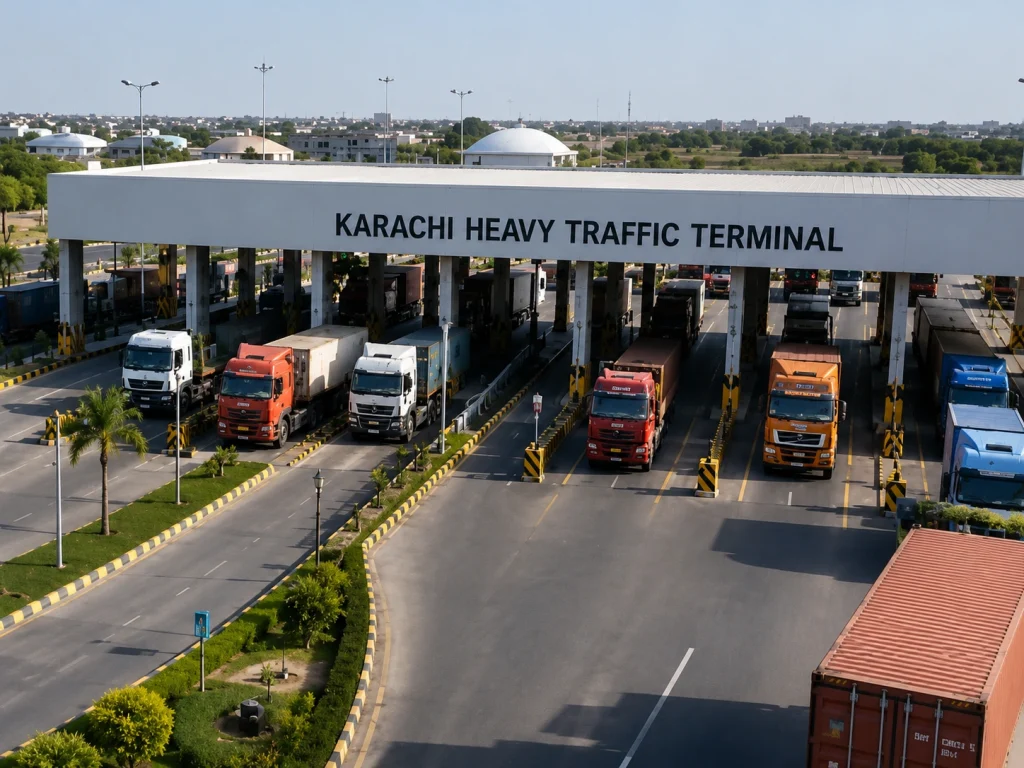
The heavy transport terminal for Karachi at the Northern Bypass cuts straight to the heart of the problem of the gridlock caused by the trucks and trailers each day within the arterial roads of the city. The heavy transport associated with Karachi Port uses roads within the city that have not been designed for the levels of traffic that heavy trucks bring to the streets of Pakistan’s busiest port city.
The recommended strategy involves creating an up-to-date terminal on the Northern Bypass track that is purposely meant to handle the truckloads, trailers, and other heavy transport vehicles – moving the movement of goods out of the city and putting it on a designated track that is located just beyond the outskirts of Karachi. The development of a heavy transport track between Karachi port and the proposed terminal will make the operation feasible, making it possible for goods to be moved from the port to the terminal without going through the city.
Public Private Partnership Model Includes Karachi and Hyderabad
The decision of launching the heavy transport terminal in Karachi was equally important as that to launch the public transport project, which was also included in the Karachi Metropolitan Transport Authority meeting agenda announced on Wednesday. 500 electric buses will be acquired through a public private partnership model for 25 routes in Karachi and five in Hyderabad.
This constitutes a significant step forward in terms of expanding the official bus fleet of Karachi. The official bus fleet of Karachi has always been working well under its capacity due to inadequate coverage for a major city in South Asia. Moreover, electric buses will help save money on operations and produce no emissions in a city already struggling with environmental issues.
126-Passenger Buses Enhance Passenger Movement Along Important Route Corridors
In addition to the decision to use the Karachi heavy transport station and electrified bus network, the SMTA board decided to procure an additional fifty double-decker buses in Karachi, each capable of ferrying 126 passengers at once. Use of the double-decker buses along crowded routes ensures that there is essentially a doubling of passenger load per bus as compared to normal single deckers.
According to Memon, the addition of the double decker is meant to enhance passenger movement and ease congestion on public transport systems – an approach that aims at complementing and not replacing the electric buses network.
ALSO READ: GAC Motor Prepares Pakistan Entry With EVs and Eight-Year Quality Record Behind It
Distribution of Hyderabad Scooters Starts May 22
The SMTA board decided to acquire 500 more pink electric scooters for the use of women; this initiative follows the one which was termed by Memon as revolutionary for the women empowerment movement in Sindh. The distribution of these newly acquired scooters will commence from Hyderabad city starting May 22.
According to Memon, it was the “pink scooter project” that helped transform the perceptions about the movement of women in Sindhi society a statement that shows the impact of the programme on the people among whom women could not move freely due to lack of facilities and social stigma.
Solar Energy to Power All Future Traffic Signals in Sindh
While the SMTA approval for Karachi’s heavy transport terminal was part of Wednesday’s agenda, there were two other forward-thinking decisions made about transport. One of the decisions involved the initiation of an e-vehicle taxi service in Karachi. This will be done in such a way that the financial assessment of the project is hastened this month.
In addition, the decision was made that from now on, all traffic signals in Sindh will be run using solar-powered systems – a provincial standard that will make traffic lights independent of electric power, lower the cost of maintaining traffic signals, and help them function during the power blackouts that lead to chaos at intersections in Karachi and elsewhere in Sindh.