
KARACHI: Pakistan is making concerted efforts to boost its business relations with Southeast Asia amid efforts by government officials and entrepreneurs to venture into new export markets in one of the fastest-growing economic regions in the world.
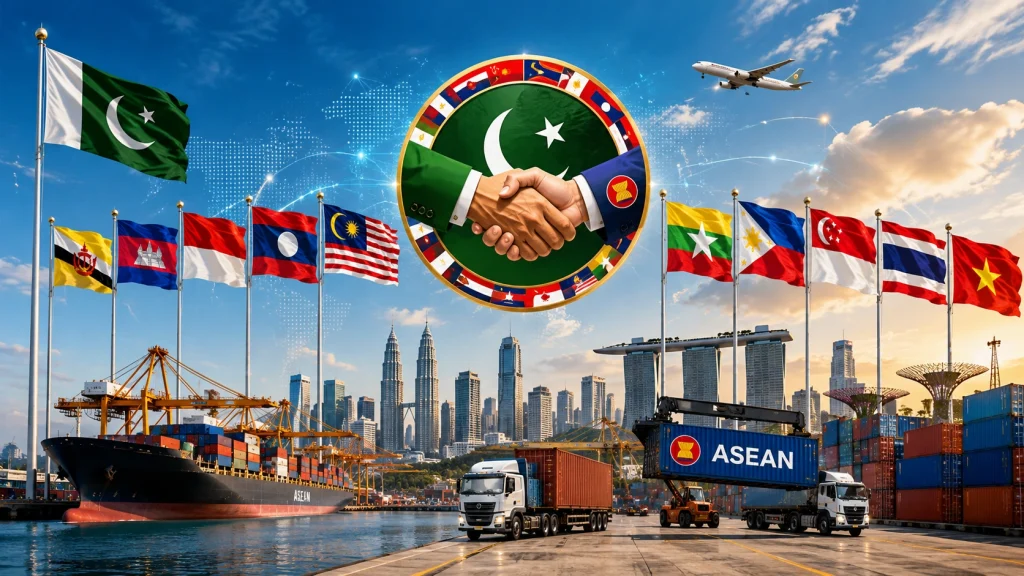
As globalization is changing trade relations between countries and the global supply chains are becoming increasingly regional, ASEAN is emerging as an important market destination for Pakistanis looking to sell their products abroad. The association, which consists of 10 members states with a population of over 680 million and an economy of more than $4 trillion, provides Pakistan an entry point to a booming market.
Pakistan Seeks Increased ASEAN Trade
Pakistan is presently enjoying expanding business ties with countries like Malaysia, Indonesia, Singapore, Thailand and Vietnam, but economists feel that the trade between the two countries constitutes a mere fraction of the full possibilities of trade that exist there.
The country exports textiles, garments, rice, leather goods, surgical instruments, sports equipment, seafood, fruits and pharmaceutical products to ASEAN nations. In return, Pakistan imports palm oil, machinery, electrical equipment, chemicals, rubber, electronics and industrial raw materials that support domestic manufacturing.
Experts in international business believe that ASEAN can provide Pakistan with the chance to diversify its markets for exports and increase resistance to economic crises in the international market environment.
Malaysia and Indonesia Lead Pakistan’s Expansion
Malaysia continues to rank among Pakistan’s strongest economic partners in Southeast Asia. The Pakistan-Malaysia Closer Economic Partnership Agreement (MPCEPA), which was signed back in 2008, is still contributing towards enhanced market access and tariff reductions for businesses in both nations.
Also Read: Pakistan Exports to China Jump 48.7% to $1.55 Billion
Additionally, Indonesia has come up as another nation that provides ample opportunities for exports from Pakistan; in particular, kinnow, pharmaceuticals and textiles through preferential trade agreements.
Singapore, on the other hand, acts as a financial and logistical link between Pakistan and other members of ASEAN, and Thailand as well as Vietnam are still interesting options in agriculture, food-processing, manufacturing and tourism industries.
Businesses Call for Faster Market Access
According to Atif Ikram Sheikh, the President of FPCCI, ASEAN can become an important catalyst for Pakistan’s exports if both regions enhance their business cooperation. As far as the halal industry is concerned, Sheikh named Malaysia and Indonesia as the most appropriate countries to develop it in. He emphasized that enhanced cooperation will help boost exports of halal products from Pakistan to all Southeast Asian countries.
In addition, Sardar Tahir Khan, the President of ICCI, agreed with these views and said that Pakistani firms should strive to capitalize on opportunities offered by the trillion-dollar economy of ASEAN. Khan further stated that the chamber will continue providing links between Pakistani firms and investors in Malaysia, Indonesia and other ASEAN nations.
IT, Digital Economy Offer New Growth Frontier
In addition to the conventional export sector, analysts have observed that Pakistan has enormous latent capacity in sectors such as information technology, IT services, renewable energy, higher education, and tourism.Pakistan’s growing software sector can especially gain from collaborations with countries with a high technological base, like Singapore and Malaysia, where there is increasing demand for IT collaborations and outsourcing.
Analysts also note the potential for the emergence of Pakistani start-ups, financial technology companies, and technology companies within the fast-growing digital economy of ASEAN.
Challenges Still Stand in the Way
Although Pakistan’s diplomatic and commercial interactions have improved, there are a number of structural issues that prevent the country from moving forward. These include high logistics costs, lack of direct sea connections, non-tariff barriers, inadequate promotion of trade and poor awareness among exporters.
Through its “Look East” strategy and various programs from the TDAP, efforts are made to overcome these deficiencies through enhancing business-to-business interactions, attending more international trade fairs, and increasing foreign investments.
In an environment where Asia is transforming the global business environment, Pakistan can use this opportunity to benefit from a better integration into ASEAN, and thus diversify its exports and ensure the sustainable development of its businesses.