
Pakistan Govt Debt Hits Record Rs81,930 Billion, Adding Rs6,994 Billion in a Single Year
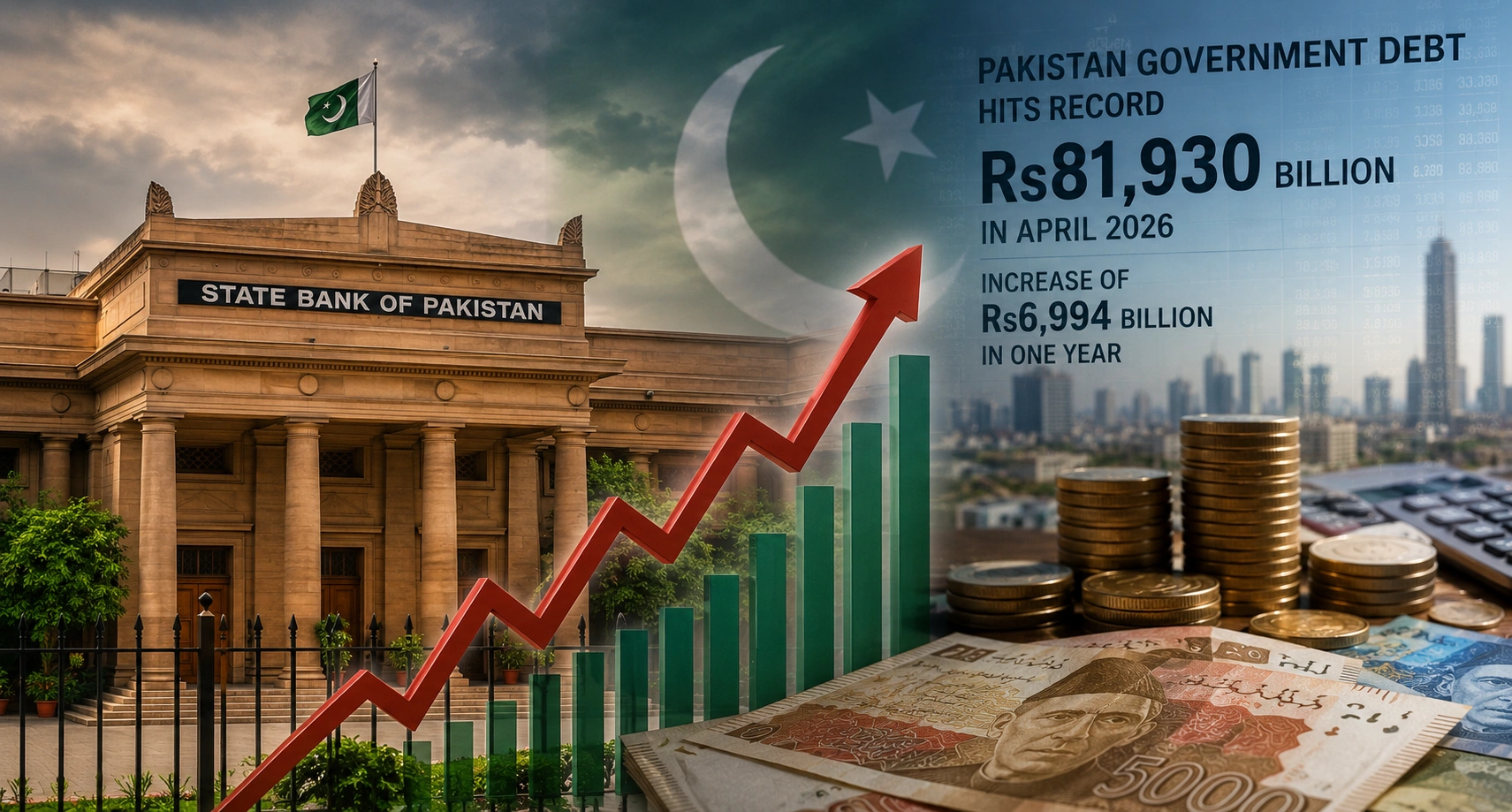
ISLAMABAD: The debt load of the federal government in Pakistan surpassed a new record of Rs81,930 billion while according to the latest data released by the State Bank of Pakistan, the debt level of the government grew by Rs6,994 billion in the last year alone while during just the month of April 2026, the government borrowed a total of Rs1,406 billion.
These figures have broken all existing debt records in Pakistan and come at a time when the government claims that the economy is being stabilized by the government.
This particular jump means that within a year, the government borrowed a total amount of Rs7 trillion which is significantly higher than the expenditure incurred annually for development work and even higher than the budget allocated by most of the provinces. In the past 360 days, the total national debt increased from Rs71 trillion to Rs80.5 trillion, with the amount increasing by around Rs26 billion per day.
What is Driving The Surge
The persistent rise in federal fiscal debt traces primarily to government expenditures running ahead of revenues, with oil imports identified as a major contributing factor. The debt stock breaks into two broad streams: domestic borrowing, which accounts for the larger share, and external obligations. Out of the total domestic debt, floating assets have been reported to be the most active type during April with Market Treasury Bills rising to Rs10.43 trillion from Rs8.23 trillion from the same period of last year because of consistent resorting to short-term borrowing for liquidity purposes and deficit financing.
Also Read: Pakistan Public Sector Debt Surges by Rs15 Trillion in Two Years as Govt Borrowing Accelerates
The current level of public debt in Pakistan is standing at 70.7% of GDP against a ceiling of 56% as per the provisions of the Fiscal Responsibility and Debt Limitation Act passed by the parliament. The law exists precisely to prevent this. Enforcement, by any measure, has failed.
The IMF dimension
Pakistan currently operates under an IMF Extended Fund Facility, which demands fiscal consolidation and primary surplus targets. The record debt print complicates Islamabad's narrative heading into the next programme review. External creditors watch the debt-to-GDP trajectory closely, and Pakistan's government debt-to-GDP ratio hit 83% in 2025 against a long-term average of 73.6% though analysts project a gradual decline to 77% by end-2026 if fiscal discipline holds. That is a significant "if." The April monthly addition of Rs1,406 billion suggests no meaningful deceleration yet.
Per Capita Burden
From the most recent census, each Pakistani individual bears an individual debt burden of about Rs325,000, which is meaningless on its own but very telling when placed in relation to median incomes, which are only fractions of that amount. The Pakistan government cited lower rates of inflation and improved tax revenue as indicators of financial improvement. Those trends are real. But the debt counter keeps moving in one direction. With the fiscal year closing on June 30, the final FY26 debt stock will depend on how much additional borrowing the government undertakes in the remaining weeks. On current trajectory, the Rs82 trillion mark falls before the fiscal year ends.




Leave a Reply
Your email address will not be published. Required fields are marked *