
Chinese Giant Quietly Dominates Pakistan’s Phone Market Through Three Brands
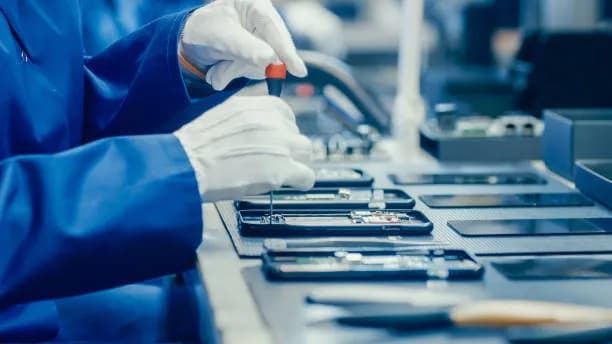
Chinese mobile giant Transsion produces one in four phones assembled in Pakistan as imports plunge 69% and local plants stumble amid a cooling phone boom.
KARACHI: Pakistan mobile phone assembly lines slowed sharply in August, and commercial imports nearly dried up with them. The handset industry lost the momentum July's production rush had given it.
Plants turned out 1.66 million handsets in August, the Pakistan Telecommunication Authority's (PTA) latest numbers show, 14 percent short of last August's count. Against July, output crashed 57 percent.
The monthly figure looks brutal. Context softens it. July carried an unusually high base, because buyers who had delayed purchases ahead of the FY27 budget came back in force. Assemblers pushed output to 3.90 million units that month to meet them. August simply lost that boost.
The year-on-year slide offers no such excuse.
Imports offer no cushion
Commercial imports fell even harder. Just 80,000 or so phones came in through official channels in August. Against a year ago, that is a 69 percent drop; against July, 27 percent.
Add the two streams and roughly 1.74 million handsets entered measured supply in August. That figure covers assembly and commercial imports only. It says nothing about retail sales, dealer stock or phones that slip in outside official channels.
In August, local plants covered 95 percent of that supply. July's figure was 97 percent. Stretch the lens across eight months and the share settles at 87 percent.
Read that share carefully. It grew partly because imports shrank, and only partly because factories did well. From January to August, local assembly actually slipped 6 percent, to 18.66 million units from 19.77 million a year earlier.
5G output takes the hardest hit
The steepest drop appears in 5G production. Local lines turned out 553,079 5G-enabled handsets in August 2025. This August? Just 134,501, according to PTA figures reported by PhoneWorld. Roughly three of every four have vanished from the count.
Also Read: Pakistan Mobile Phone Imports Fall 3.56% as Local Assembly Grows
According to Focus Pakistan, Islamabad wants far more from this sector. The proposed Mobile and Electronic Devices Manufacturing Policy 2026-33 targets 50 percent domestic value addition and cumulative exports of $2.5 billion by 2033. The collapse sits awkwardly beside Pakistan's ambition to graduate from basic assembly to higher-value electronics manufacturing and exports.
VGO Tel leads, Transsion trio dominates
VGO Tel topped local production in 8M2026 with 2.45 million units. Infinix sits second at 1.96 million. Itel follows on 1.56 million, Tecno on 1.14 million. Below them come Samsung with 1.01 million, Vivo and Nokia on 0.97 million apiece, then Club Mobile (0.72 million), X Mobile (0.70 million) and Q Mobile (0.63 million) closing out the top ten.
The ranking hides a bigger story. One company owns three of those names. Infinix, Itel and Tecno all belong to Shenzhen-based Transsion Holdings. Together they produced 4.66 million units, about a quarter of all local output and nearly double VGO Tel's tally.
Concentration runs deep across the list. The top 10 brands assembled 12.11 million handsets between them, roughly 65 percent of everything Pakistan's plants turned out this year.
Tax debate returns to the table
The numbers land as the regulator itself argues for change. The PTA has backed rationalisation of duties and taxes on mobile devices to improve smartphone affordability, while insisting any framework must balance affordability against the sustainability of local manufacturing versus completely built-up imports, Business Recorder reported.
That balance now looks harder to strike. Imports have shrunk to a trickle, yet local output still fell. Replacing finished-phone imports was the easier part. Building a competitive manufacturing industry will prove much harder.
September's data will show whether August marked a post-budget dip or the start of something longer.





Leave a Reply
Your email address will not be published. Required fields are marked *