
State Bank Gives Banks 26 Months to Double Women’s Lending
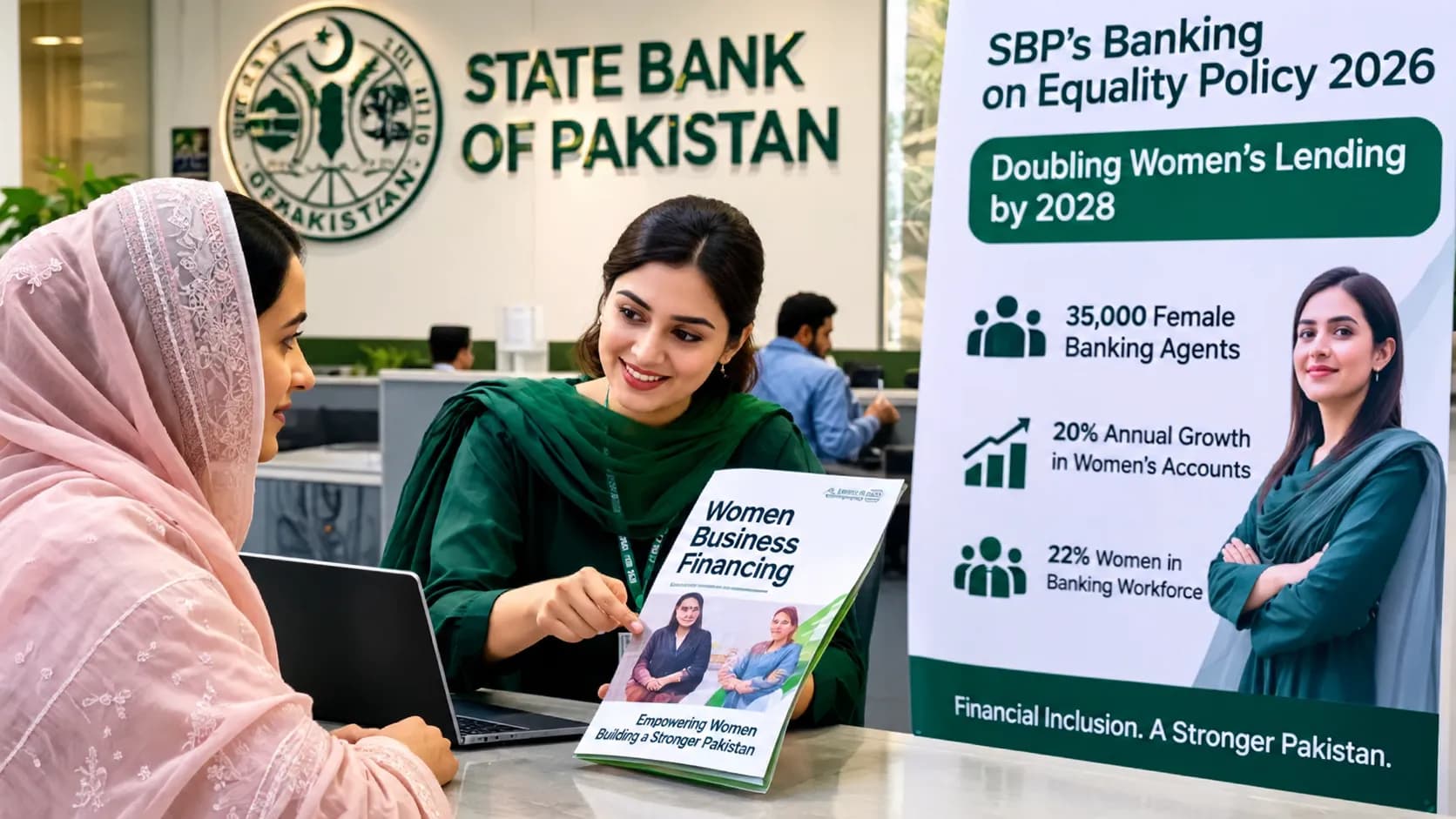
KARACHI: The State Bank of Pakistan has given banks 26 months to double their lending to women. The central bank set the deadline at December 31, 2028, in its Banking on Equality Policy 2026, which it issued on October 13. The policy also calls for 35,000 women working as branchless banking agents, a rise of at least 20 percent a year in women’s active accounts, and more women on bank payrolls.
The missing number matters. The SBP will send each institution its own target separately, measured against a June 2026 baseline. Until those figures surface, outsiders have no rupee amount against which to test the promise.
SBP Women Financing
The lending target covers commercial banks and development finance institutions. Each must draw up an annual credit plan, identify women who could borrow, and design products around what those women actually need.
The SBP wants the whole loan journey online, from financial guidance and credit assessment to approval and repayment. It also urges lenders to use alternative data to judge women entrepreneurs who have no conventional credit history. That missing history has long kept small women-run businesses out of formal credit.
Also Read: SBP Begins Image-Only Cheque Clearing from October 15
Banks will also have to disclose what they lend to women and women-owned businesses in their published financial statements. Shareholders and analysts can then check each bank’s record in its annual accounts.
Branchless banking providers must lift their female agent count to 35,000 by the same deadline. The SBP aims this push at women in underserved communities who struggle to visit a branch.
The regulator has told banks to sell Asaan Mobile Accounts and Asaan Digital Accounts to non-working women, informal workers and women in the gig economy. A new Women Digital Business Account will carry simpler requirements and limits matched to the size and nature of each business.
Banks’ women financial services departments must also build support for women entrepreneurs, in-house or through specialist partners. That support will pair credit with business advice and skills training.
The target that points inward
The sharpest goal concerns the banks themselves. Women hold just 17 percent of jobs at regulated institutions, according to the policy. The SBP wants that share at 22 percent by end-2028.
Five percentage points sounds modest. Still, the starting figure means more than eight in ten people working in an industry now courting women customers are men.
Institutions must prepare action plans covering recruitment, career growth, mentoring and workplace support, with attention to women with disabilities and other underrepresented groups.
The first policy moved the needle
The SBP launched its first Banking on Equality policy in 2021. Since then, the gender gap in financial inclusion has narrowed to 29 percent from 39 percent, the central bank says.
Governor Jameel Ahmad told a World Bank session in Washington last October that women’s active bank accounts had climbed to 37 million from 20 million over that stretch. He said women’s SME and agricultural financing portfolios had doubled, and banks had hired more than 14,600 women in three years.
The National Financial Inclusion Strategy now targets a 25 percent gap by 2028. That leaves four points to close in three years, after the first policy closed ten in four.
Institutions must now keep gender-disaggregated records on accounts, lending and payments, and track how actively women use their accounts.
Those records will decide whether the policy delivers. Pakistan has opened millions of accounts for women since 2021. The new rules ask the harder question: will banks lend them money?



Leave a Reply
Your email address will not be published. Required fields are marked *