


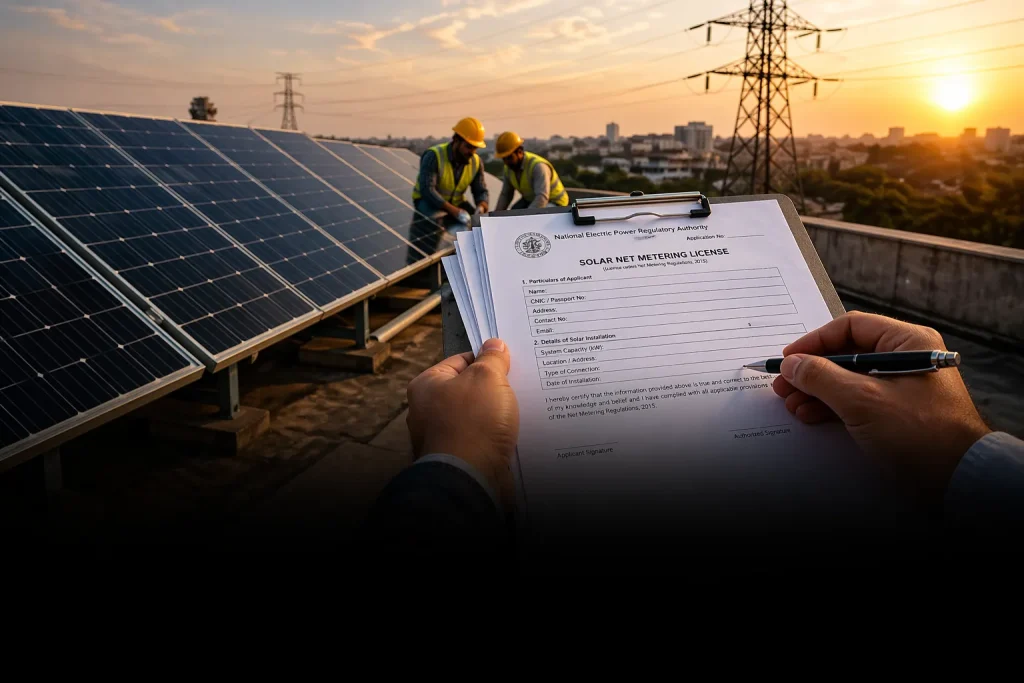
ISLAMABAD: NEPRA Solar License has become mandatory for all consumers installing solar power systems, as the government introduces a major shift in Pakistan’s renewable energy policy. The new rule marks a clear departure from the earlier framework that allowed small-scale users to install solar systems with minimal regulatory oversight.
Previously, the regulatory framework offered a degree of leniency to small-scale consumers. Distribution companies (DISCOs) held the authority to grant licenses to users installing systems up to 25 kilowatts (kW). In many cases, these consumers enjoyed a streamlined process. Authorities issued licenses free of charge. This approach encouraged the rapid adoption of green energy in homes and small businesses.
NEPRA Solar License Makes Mandatory Approval for All Users
However, the Power Division’s recent amendments have scrapped this exemption. NEPRA authorities state that anyone who wants to generate electricity through solar energy must obtain a proper license from the Ministry. This requirement allows the government to accurately track how much solar power consumers produce and feed into the national grid.
Also Read: Delay in LNG Supply May Trigger Higher Electricity Prices and Increased Load Shedding
The most striking aspect of this amendment is the introduction of a new fee structure. Solar users must now prepare for additional costs that could significantly impact the initial “payback period” of their investment.
NEPRA Solar License Fee Set at Rs1,000 per kW
The Ministry has introduced a fee of Rs.1,000 per kilowatt (kW). For a standard 10 kW residential system, this translates to an immediate additional cost of Rs. 10,000. Furthermore, consumers must submit this payment via a pay order specifically addressed to NEPRA, based on their total sanctioned load. This move aims to generate revenue for the regulator while standardizing the registration of “prosumers” (consumers who also produce energy).
While the news brings a heavy hand of regulation, it does offer a silver lining for a specific category of users. Sources within NEPRA have confirmed that hybrid technology users remain exempt from this licensing requirement.
Hybrid solar systems, which utilize batteries to store energy for use during power outages or nighttime, do not rely solely on feeding power back to the grid. Because these systems often operate independently or in a “backup” capacity without heavy reliance on the net-metering infrastructure, the Ministry has decided to keep them out of the mandatory licensing net for now.
The amendments also clarify the connection process for new installations. Under the updated rules, authorities will provide connections to consumers specifically under Net Billing projects. The process correctly calculates the amount of energy supplied to the national grid by consumers and offsets their usage. However, the whole process now works within a more stringent licensing regime.
According to industry specialists, the government may be trying to control the “duck curve” phenomenon, where excess solar energy generated during the day causes reduced demand for electricity from the grid, resulting in a huge demand in the evening.. By requiring licenses for all users, the government gains better visibility to manage grid stability more effectively.
However, the question arises whether through such requirements and charges, the process of transition to renewable energy sources will be slowed down for the country. With electricity prices rising constantly, people saw hope only in solar power. With these new regulations, the path to energy independence just became a bit more expensive.