
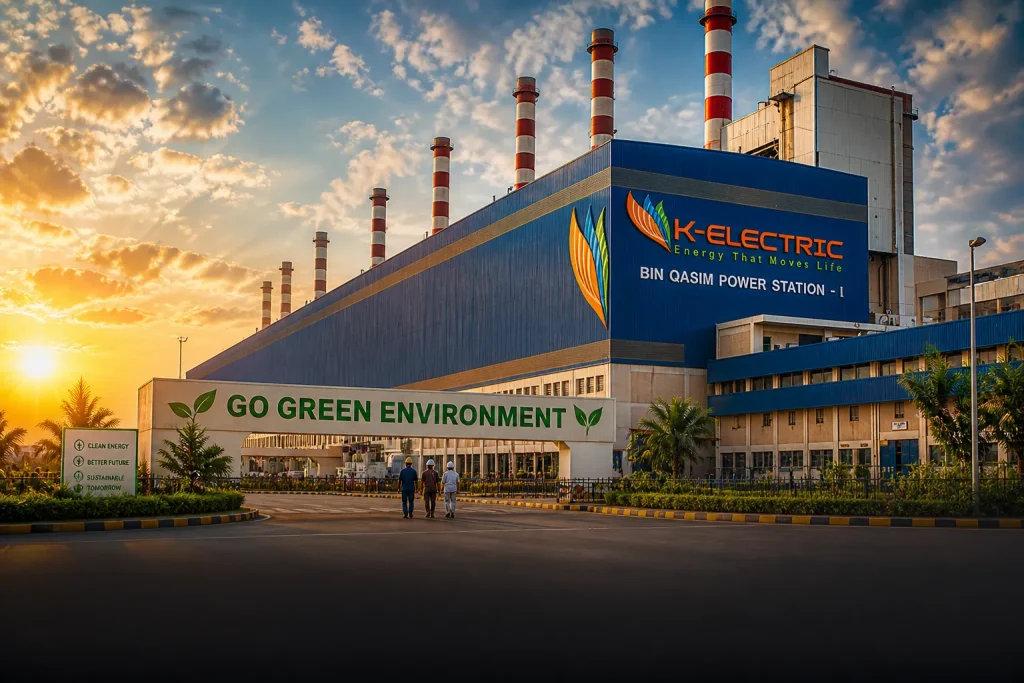
KARACHI: K-Electric announced a set of operational measures on Sunday ahead of a forecast heatwave in Karachi, suspending all scheduled maintenance shutdowns and committing to halt economic load-shedding during afternoon hours if city temperatures breach 45 degrees Celsius. The measures apply immediately and remain in force for the duration of the heatwave period, according to a statement from the utility’s spokesperson.
K-Electric’s heatwave protocol rests on three pillars. The utility suspends all maintenance shutdowns during extreme heat conditions, removing planned technical outages from the schedule entirely. Its 70% network exemption from load-shedding continues without modification. Also, the economic power shedding that usually occurs during the afternoon peak period ceases as soon as the official temperature goes above 45 degrees.
The spokesperson reiterated the 70% exemption ratio without going into details regarding the geographic spread of the program and its future expansion to other regions.
Also Read: NEPRA Solar License Now Mandatory in Pakistan as New Fees Announced
Where the Commitment Falls Short
The announcement leaves 30% of K-Electric’s network without a firm supply guarantee during the heatwave. Those areas receive one conditional protection the temperature-triggered afternoon suspension and no additional commitment beyond it. However, the 45 degrees Celsius level itself needs to be examined as the humidity in Karachi at that time makes it dangerous for humans long before reaching that mark. A family in a low-income neighbourhood without mechanical cooling does not experience 43 degrees and 45 degrees as meaningfully different conditions. K-Electric’s threshold protects its operational schedule as much as it protects residents. The utility has not publicly addressed this gap.
2015 Shapes Current Policy
K-Electric’s heatwave protocol carries clear institutional memory of June 2015, when Karachi recorded over 1,200 deaths during a multi-day extreme heat event. Load-shedding running eight to twelve hours across low-income areas compounded temperature-related fatalities significantly during that period. The policy framework became more effective.
The suspension of maintenance shutdowns in periods of heat waves and temperature-based suspension of load shedding were both developed based on the operational consequences of the company following the 2015 disaster. However, investment in infrastructure was much slower in the poverty-stricken areas where the majority of deaths occurred in 2015.
K-Electric operates as Karachi’s sole electricity distributor under an exclusive licence covering the city and surrounding areas. That monopoly position means residents in the unprotected 30% carry no alternative supply option and no market mechanism to signal dissatisfaction. Regulatory oversight through NEPRA provides a formal channel for complaints, but offers no immediate remedy during an active heatwave.
The utility’s announcement positioned the 70% exemption figure as evidence of progress. For the millions of residents outside that coverage, Sunday’s statement offered a conditional promise and a temperature threshold that may or may not trigger before the most dangerous afternoon hours pass.

Focus Pakistan is an independent digital news and media platform dedicated to delivering credible, insightful, and impactful journalism across Pakistan and beyond. The publication covers a broad range of sectors including business, economy, technology, telecommunications, aviation, automotive, infrastructure, energy, tourism, public policy, and national affairs.
Committed to accuracy, transparency, and editorial integrity, Focus Pakistan combines breaking news coverage with in-depth analysis, feature stories, expert commentary, and research-based reporting. The platform aims to provide readers with timely, factual, and balanced information while promoting informed public discourse and responsible journalism.
Through its commitment to high editorial standards, Focus Pakistan strives to be a trusted source of news and analysis for policymakers, business leaders, industry professionals, and the general public.