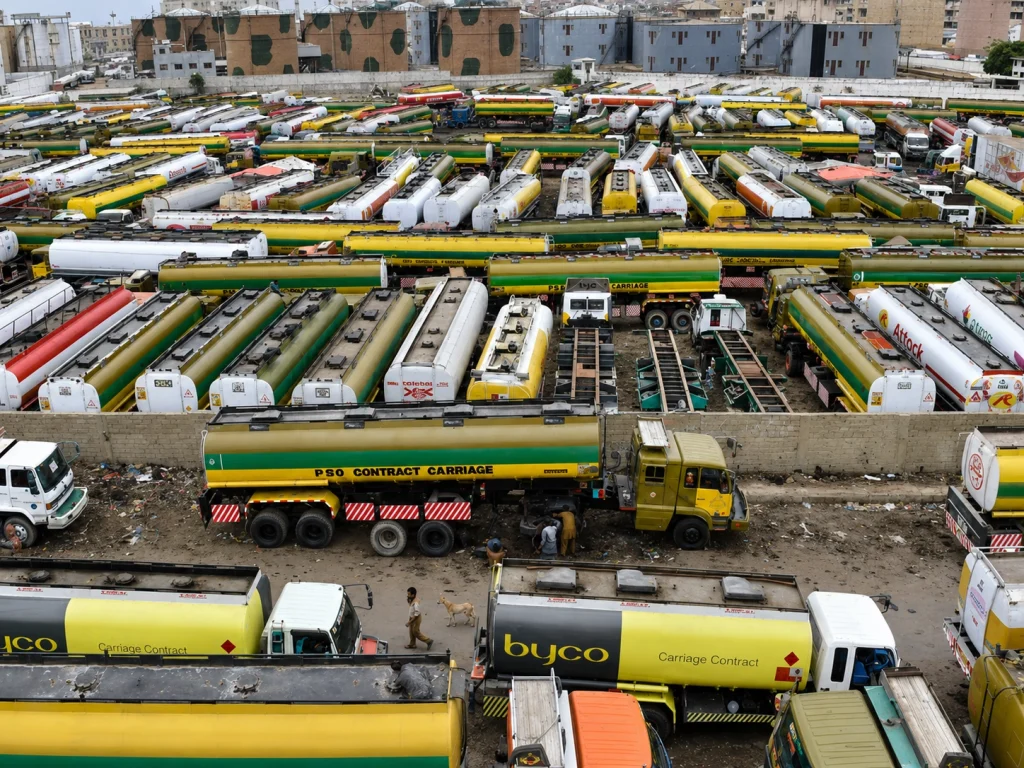
ISLAMABAD: Not only did the new conflict in the Middle East affect the international market for energy resources, but it also created an economic ripple effect for Pakistan, which affects all fronts at once. The import dependence on oil is the reason for such susceptibility to external factors, making the repercussions of international politics feel like an immediate crisis at home.
With tensions escalating in the Strait of Hormuz region and shipping risks pushing oil prices up globally, Pakistan is faced with an old and very entrenched issue for which there are no easy solutions.
How Oil Prices Destabilize Pakistan’s Economy
Pakistan imported oil dependency nature provides a harsh transmission process from the global energy markets to the cost of living in the country. The moment there is a price increase in the cost of crude oil, then transport costs go up right away. Power charges will follow as well.
According to economists, a $10 per barrel rise in the world oil price results in a one-percentage-point rise in the inflation rate in Pakistan. The effect on families who are struggling due to high prices is direct and devastating for their buying capacity.
The story from the bill of imports is just as grim. It costs Pakistan about $18-$20 billion a year in petroleum products. Each $5 rise in international crude prices means another $1 billion on top of that bill – and that’s what makes that sum reflect the extent of its reliance on foreign oil.
Cycle of the Rupee, the Deficit, and the IMF
The import dependency of Pakistan on oil has repercussions that go much deeper than inflation. Higher expenses for importing oil result in an increase in the current account deficit, depreciation of the Pakistani rupee, and tighter monetary policy by the State Bank of Pakistan, thus leading to slower economic growth. In terms of fiscal policies, increased fuel prices translate into higher subsidies and deficits.
ALSO READ: China Oil Imports Decline to Lowest Level by 20% Since July 2022
The government must spend more just to keep the aging infrastructure working and ends up with fewer resources for productive investment that Pakistan requires.
What Pakistan Could Do Today
Experts recommend that policymakers avoid succumbing to pressure for generalized fuel subsidies, which, while politically expedient, historically have proven themselves economically detrimental by guaranteeing budget deficits and subsequent IMF involvement. Specific assistance can be provided by way of direct aid in the form of cash transfers through the Benazir Income Support Programme.
Release of fuel reserves in a strategic manner will help to curb sudden price surges and panic purchases. Conserving energy in terms of reducing the opening hours of markets, working time of government offices, and using energy-efficient lights will help reduce imports bills worth millions without any structural change. The country must use its diplomatic ties with Saudi Arabia, the UAE, and Qatar to get respite through deferred payment and other ways to manage their fuel problems.
Long-Term Solution for Pakistan’s Oil Dependency
Short-term solutions ease the situation but don’t solve the problem of Pakistan’s oil dependency fundamentally. The five main steps that need to be taken have been agreed upon by experts in the future.
Pakistan needs to move fast toward alternate energy production in the country, with a target of achieving a balance of 50% production from renewables through wind and solar energy till 2030. There should be an expansion of the domestic production capacities of refined products to save costs on importing such items. Electricity-driven transportation, especially buses and motorcycles, will immensely help decrease the dependency of the country on oil imports. It is imperative that the government addresses the issue of circular debt in the electricity sector right away.
The import dependency of oil in Pakistan is not a recent phenomenon. Rather, the Gulf crisis has made it clear that the consequences of overlooking it cannot be ignored anymore.

Focus Pakistan is an independent digital news and media platform dedicated to delivering credible, insightful, and impactful journalism across Pakistan and beyond. The publication covers a broad range of sectors including business, economy, technology, telecommunications, aviation, automotive, infrastructure, energy, tourism, public policy, and national affairs.
Committed to accuracy, transparency, and editorial integrity, Focus Pakistan combines breaking news coverage with in-depth analysis, feature stories, expert commentary, and research-based reporting. The platform aims to provide readers with timely, factual, and balanced information while promoting informed public discourse and responsible journalism.
Through its commitment to high editorial standards, Focus Pakistan strives to be a trusted source of news and analysis for policymakers, business leaders, industry professionals, and the general public.