
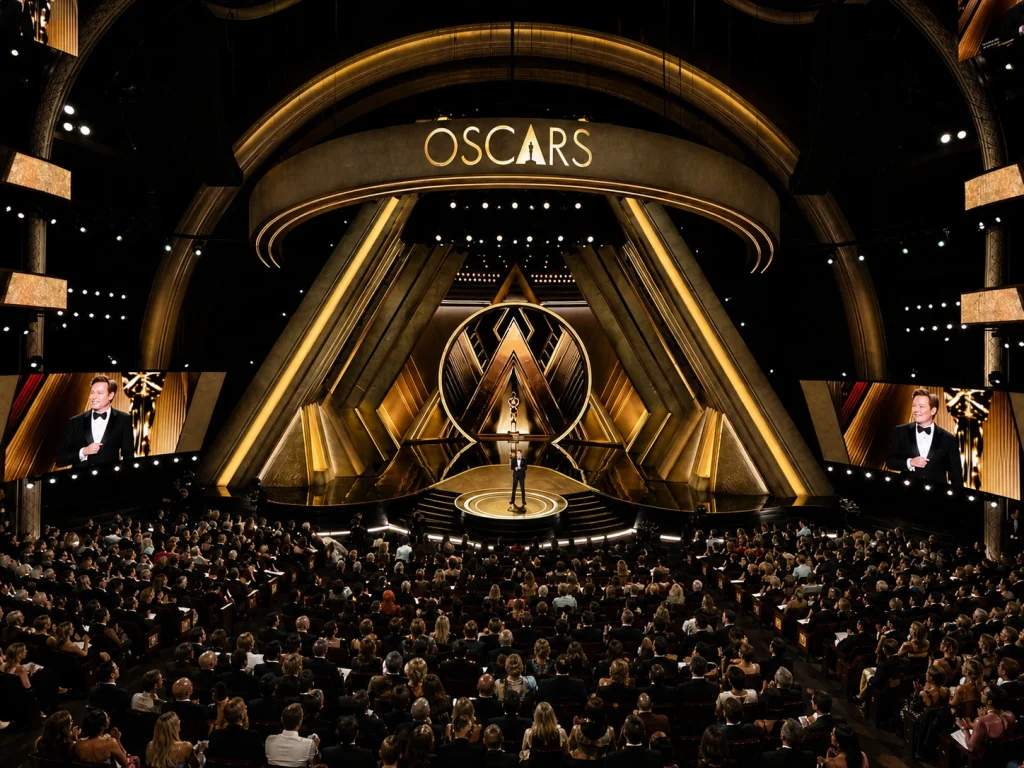
However, the Academy of Motion Picture Arts and Sciences has made it quite clear that there is a distinction between the work done by humans and machines. the Oscars ban on AI actors now stands as official policy digital recreations of real performers and any roles delivered by artificial intelligence will not qualify for Academy Award consideration. Screenplays generated by AI tools rather than human writers will also fail to meet eligibility requirements. The ruling marks one of the most significant policy decisions Hollywood’s most prestigious institution has ever made on the subject of artificial intelligence in filmmaking.
Only Human Performances Will Count
These new regulations set an absolute standard regarding eligibility to act in films. Only real-life human actors whose performance appears on the legal credits of the film, and who perform that part by their own consent, will be eligible for awards. If you have used digital actors generated using AI, or even an imitation of a real-life actor, then your production will be disqualified irrespective of its quality.
It was also clearly put forward by The Academy that only those characters performed by humans could be taken into consideration when it came to the award category of acting so as to keep it relevant to its purpose. This criteria holds true for all acting categories, whether for the best actor or the best actress award category.
The new regulations apply not only to performances but also to scripts. Those screenplays that are submitted to be considered for Oscars must prove that the screenplay was written by humans. If the script is composed mainly or completely using AI chatbots or any other automated generators, then the screenplay cannot meet the eligibility criteria, even if the human editor has heavily modified the text.
ALSO READ: What Happens to Your Brain When You Let AI Do All the Thinking
Human Authors Needed to Write Screenplays
This requirement responds directly to increasing worries in the Hollywood writers’ community regarding the impact of AI on script writing. The Writers Guild of America has had a long-standing negotiation with movie studios on the use of AI in film script writing, and the Academy’s newly established requirement resonates with the position held by the larger industry.
The Val Kilmer Case Sets the Stage for the Discussion
This came shortly after the Academy made headlines with its decision to use an artificial intelligence reconstruction of the deceased actor Val Kilmer in a preview for the archaeological adventure movie As Deep as the Grave. In this case, the digital reincarnation of Val Kilmer, who was portrayed younger using video footage from his lifetime, delivered lines of dialogue to another character. This venture was fully supported by the family of Val Kilmer, who were actively involved and provided access to his private video collection.
The reveal occurred amid a gathering of film distributors, attracting considerable media coverage and renewing discussion regarding the limits to which AI could be used within films. Kilmer, the actor from the movie Top Gun, died last year. This particular incident is a clear example of the exact issues that the newly proposed regulations aim to address – namely, a performance that is observed on screen yet never actually performed by a human being.
Accelerated Challenges for Hollywood
With regard to the new Oscar regulations, this shows that there is an overall concern within the entertainment industry given the advances in the development of artificial intelligence technology. In this case, the studios, writers, directors, and actors are dealing with issues related to the use of AI within the creative process. By creating such rules regarding the use of artificial intelligence, the Academy demonstrates that even its most influential body feels that the time has come to define certain standards.