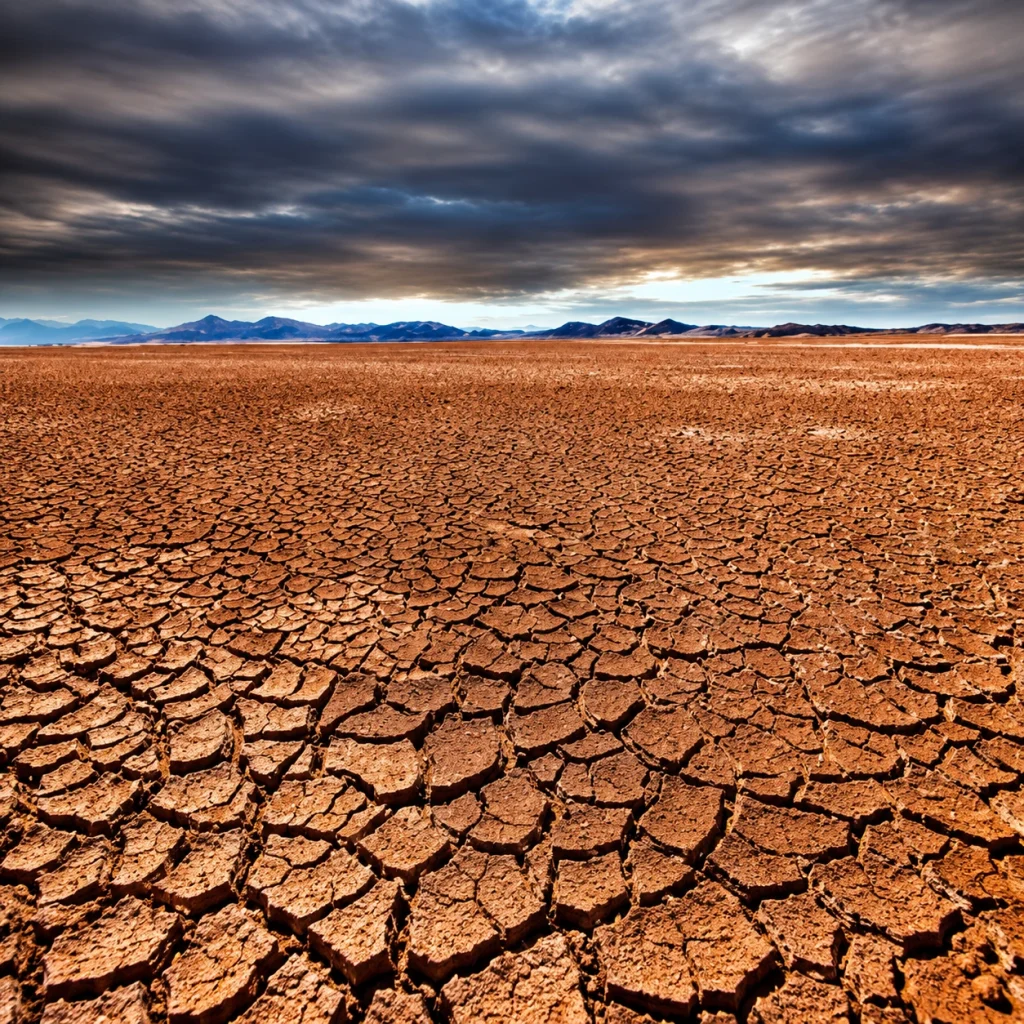
ISLAMABAD: During summers, things are not easy for people residing in Jacobabad, which is a town inhabited by 300,000 individuals in the province of Sindh. It happens in a sudden fashion akin to passing judgment. The heat levels cross 50°C. The air is saturated with moisture that makes it impossible for the body to cool itself off with the help of sweat. The outdoor environment turns lethal in a few minutes. Nighttime temperatures do not go down to a level that provides any respite. There is a technical way of describing these extreme heat conditions. They are known as “wet bulb temperatures above 35°C.”
This is something that Jacobabad has already experienced several times. This was revealed by Climate Analytics, an international think tank, while analyzing Pakistan’s heat wave problem. According to modelling by The Washington Post, Jacobabad will have to suffer wet-bulb globe temperatures of at least 90 degrees Fahrenheit for a third of the year by 2030. Four years from now, to be precise.
The Warning Issued to Pakistan Over and Over Again
According to a former minister for Pakistan climate crisis, Amin Aslam, who spoke on a public platform, there have been studies by international scholars which prove that nine districts in Southern Punjab and Sindh will soon become uninhabitable owing to extreme temperatures. Moreover, the University of Chicago has done research which has revealed that eight cities in Pakistan are part of the list of the world’s fifteen cities that experience the worst heat waves, making Pakistan the only country of its size that is subjected to such harsh conditions.
Such predictions are not new. These come from the World Bank, from MIT, from Climate Analytics, from the climate modelers at the Washington Post, and even from Pakistan’s very own Met Department. The 2026 heat wave prediction made by the Met Office had estimated temperatures ranging from 47°C to 50°C in districts like Jacobabad, Larkana, Dadu, Sibi, Multan, Rahim Yar Khan, and Bahawalpur; the list in one single weather bulletin contained the geography of Pakistan’s biggest climatic hazard.
What will change in 2026 is not the science. It is the approach to the deadline. What used to be the 2030 limit that scientists pointed at for years as being critical due to the cumulative impact will be in one electoral term’s reach. The choices to be made or not made by the ruling elite in Pakistan will make the difference.
The Human Price Revealed Through the Statistics
More than 568 deaths occurred due to heat wave in Pakistan in 2024 according to statistics, whereas more than 7,900 cases have been hospitalized. This figure is probably much higher. Heat stroke victims may be considered dead from cardiac arrest, respiratory arrest, or multiple organ failures. It implies that the real figures of dead cannot be known through studying the data issued by the authorities.
Due to the Urban Heat Island effect, where dense infrastructure makes temperatures much higher than in less densely populated regions, temperatures in Karachi have risen by about 5-7°C higher than the surrounding rural regions. This temperature increase puts temperatures, which would be already dangerous, into deadly levels for poor urban inhabitants with no means of air conditioning or even power.
ALSO READ: 50°C Warning: Sindh on Red Alert as Lethal Heatwave Approaches
What Experts Say Must Happen Before 2030
Climate Adaptation What Researchers and Experts Recommend
- Urban Green InfrastructureExpanding tree cover, parks, and vegetated corridors in major cities to counter Urban Heat Island amplification. Karachi, Multan, and Lahore are identified as priority cities for accelerated greening programmes.
- Heatwave Response SystemsDedicated cooling centres, trained medical personnel, and early warning systems in the nine highest-risk districts. The 2024 heatwave response in Jacobabad involved a centre with only four beds for a city of 300,000.
- Water Security and ManagementThe World Bank’s Pakistan Climate and Development Report identifies water security as the most acute climate-linked economic risk. Improved irrigation efficiency, groundwater management, and urban water infrastructure are essential requirements.
- Climate-Resilient InfrastructureBuilding codes, road materials, and urban planning frameworks designed for 50°C environments rather than the 35–40°C conditions that shaped Pakistan’s existing infrastructure over the past century.
- International Climate FinancePakistan has consistently argued for greater access to climate adaptation finance from developed nations. Accelerating that access — and deploying it effectively at the district level rather than the federal level — remains the critical implementation gap.
Islamabad Is Not Exempted
Vulnerability to the impacts of climate change does not only affect Pakistan’s hot regions. According to Amin Aslam, there has been increased environmental damage due to uncontrolled urban development in Islamabad, which was previously thought to be an oasis of greenery and a temperate city free from the scorching heat that characterizes Sindh and south Punjab. The tree coverage around the periphery of the capital city has greatly reduced due to the construction of buildings in these areas. With increasing urbanization, there will be a tendency for Islamabad to be like Lahore and Faisalabad.
The extreme weather of 45 degrees Centigrade in some parts of Punjab and Sindh in April 2025 led to the closure of schools in Lahore, experienced shortages in electricity supply, and were more than the averages by 4 to 7 degrees Centigrade. These schools that close down due to excessive heat serve as refugee camps during flooding and undergo two different kinds of catastrophes in one year.
The Four Years Left
The 2030 target date in the climate literature of Pakistan is not an end; it is the point after which circumstances that are currently perilous become institutionally insupportable for large populations without major changes. Places that are now hard to inhabit at the height of summer months turn into places that require facilities for living year-round that most people in them can neither afford nor receive.
The warning of the Met Office of Pakistan issued last month regarding the heatwave of the summer of 2026 is just slightly under what scientists predict will be the scenario of 2030. The discrepancy between today’s reality and the prediction of 2030 is closing at a much faster rate than the country’s efforts to adapt to the changes are proceeding. The discrepancy is the very heart of Pakistan’s climate emergency.
The grandmother who sits outside in the doorway of Jacobabad at 11 o’clock at night, in 38°C temperature that will not drop further till morning, is not awaiting the science to reach a conclusion. She is already embedded in the data; it remains to be seen if the policies will reach her.

Nayab Fatima is a media professional specializing in fact-based journalism, research, and analytical reporting on technology, telecom, aviation, and automobiles.