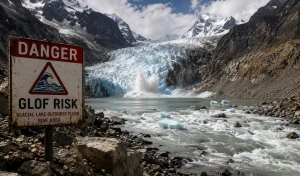


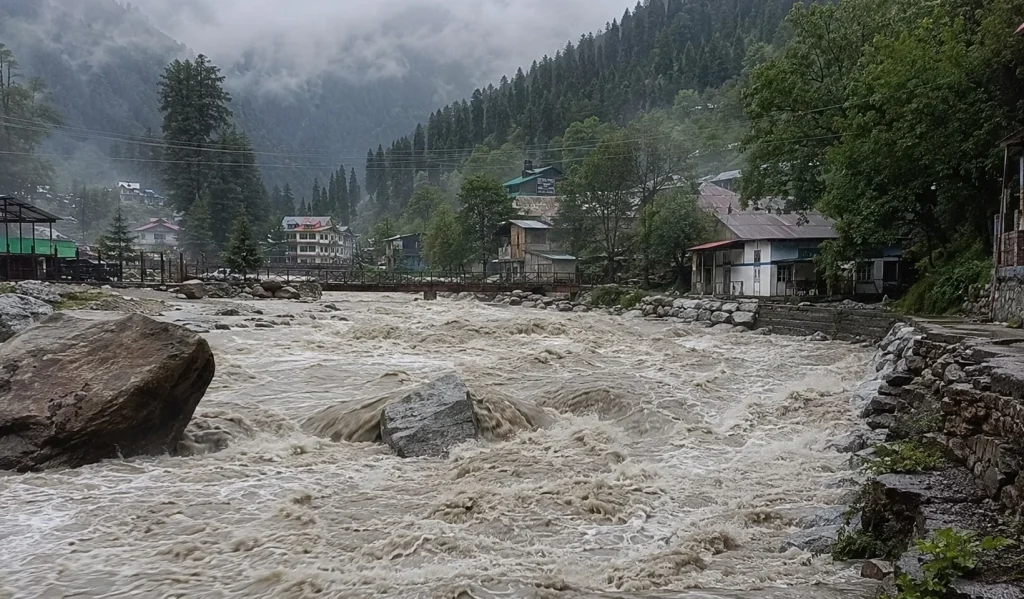
ISLAMABAD: Pakistan Glof alert has triggered emergency measures across Khyber Pakhtunkhwa and Gilgit-Baltistan after the PMD warned of dangerous glacial floods, heavy rainfall, and flash flooding in northern regions..
The warning comes when the country’s northern areas are bracing for emergency preparations as the combination of warming weather conditions along with rain may result in floods, landslides, and glof in a number of dangerous valleys.
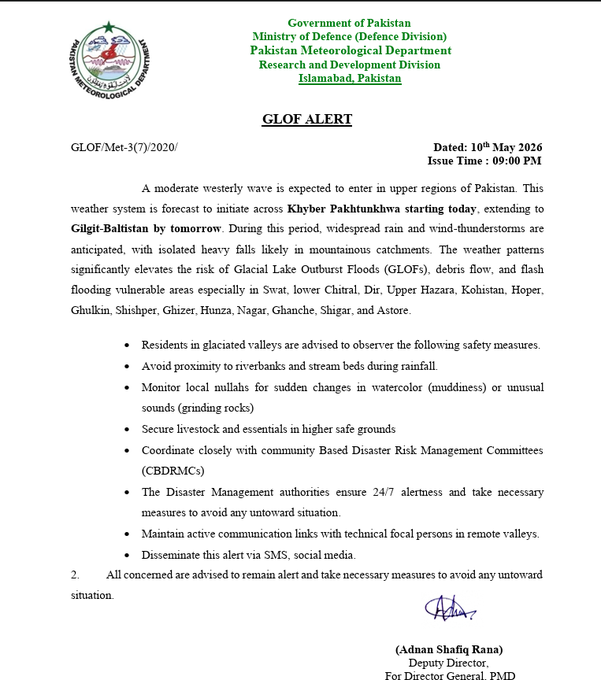
According to the meteorology department, a westerly weather system of moderate strength entered the northern parts of the country and started influencing Khyber Pakhtunkhwa before spreading its influence towards Gilgit Baltistan.
Pakistan Glof Alert Raises Flood Fears in Northern Areas
The guidance from the Met department was very clear and immediate to those who reside in glacial valleys. Avoid staying near rivers and streams in case of rains. Observe the local nullahs carefully to detect any change in color due to muddiness, which means a disaster will occur. Pay attention to any unusual sound, such as grinding stones, which suggests a disaster is underway. These are steps to take beforehand. hey are actions that save lives in the hours before a glacial outburst hits.
Also Read: Karachi Turning Into Concrete Oven as Green Cover Falls Below 2%
Authorities Mobilise Across Two Provinces
Disaster management agencies moved quickly after the PMD alert. Direct orders were conveyed to deputy commissioners of Upper Chitral, Lower Chitral, Upper Dir, Swat, Upper Kohistan, and Mansehra districts – the districts that occupied the most vulnerable geographical locations.
According to the PDMA, it was essential to keep track of glaciers that were at risk, perform evacuations within communities that were vulnerable, and make sure that the emergency site was ready for an immediate evacuation. The rescue workers need to be ready for emergencies and not be on their way to them.
Authorities must also alert communities living in remote valleys through text messages and social media platforms. Technical focal persons in isolated areas must stay in active communication with disaster management teams around the clock.
The PDMA also flagged an option of last resort — controlled breaching of vulnerable glacial lake sites — to prevent sudden uncontrolled outbursts if risk levels rise further. Coordinating that intervention with relevant departments requires preparation that starts now, not after a disaster strikes.
Tourists and Travellers — Stay Away
The PDMA sent out a direct alert to tourists, advising them to stay away from any unnecessary travel near the banks of streams, rivers, and waterways in the impacted areas. For the individuals who are currently in low-lying zones, the advice is clear – get to higher ground now!
Tourism in Pakistan’s northern parts sees many visitors in the summer months. Right now, those same landscapes carry serious danger. Anyone who hears mudslides or falling rocks should move immediately. There is no second warning with a glacial outburst.

Focus Pakistan is an independent digital news and media platform dedicated to delivering credible, insightful, and impactful journalism across Pakistan and beyond. The publication covers a broad range of sectors including business, economy, technology, telecommunications, aviation, automotive, infrastructure, energy, tourism, public policy, and national affairs.
Committed to accuracy, transparency, and editorial integrity, Focus Pakistan combines breaking news coverage with in-depth analysis, feature stories, expert commentary, and research-based reporting. The platform aims to provide readers with timely, factual, and balanced information while promoting informed public discourse and responsible journalism.
Through its commitment to high editorial standards, Focus Pakistan strives to be a trusted source of news and analysis for policymakers, business leaders, industry professionals, and the general public.