
Pakistan Finally Drafts A Ten-Year Population Plan To Slow Its Growth
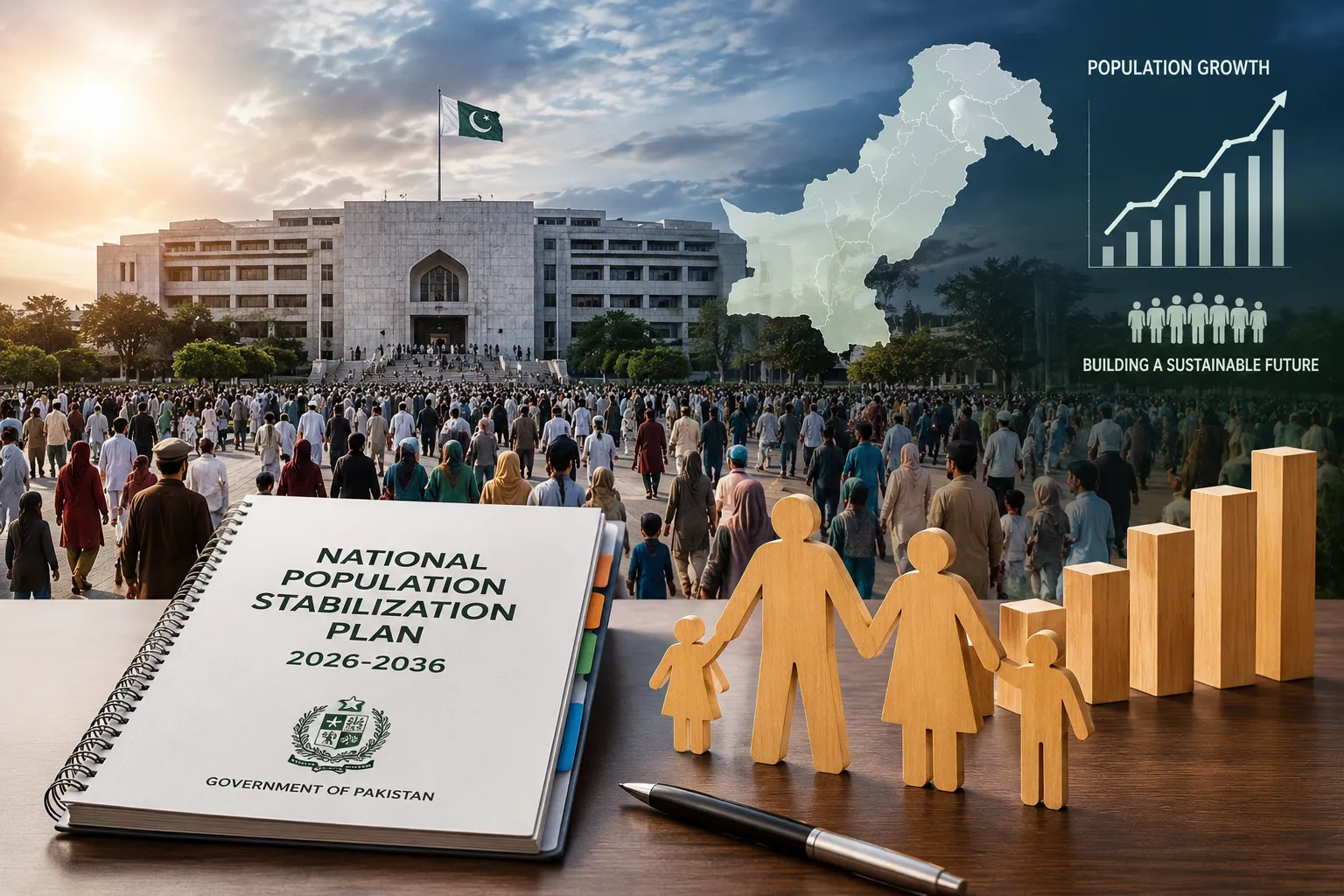
ISLAMABAD: Pakistan's population has crossed 241 million and keeps growing at 2.55 percent a year — among the fastest rates in Asia. On Tuesday, the government's planning and health ministries sat down to do something concrete about it.
Pakistan Population Stabilization Plan Takes Shape
Federal Minister for Planning, Development and Special Initiatives Ahsan Iqbal and Federal Minister for National Health Services Syed Mustafa Kamal jointly chaired a high-level meeting in Islamabad and agreed to finalize the National Population Stabilization Plan 2026-2036, a decade-long framework aimed at bringing the country's growth rate under control.
The meeting brought together Secretary Health, the Director General of Population, a Member of the Population Wing at the Planning Ministry, and other senior officials, who reviewed the plan's existing draft in detail.
Provincial Approval Will Be Crucial
There was an agreement that the two ministries would collaborate in drafting the final draft, which will be sent to all the four provinces for their feedback and approval before being sent for consideration at the National Population Council, an indication of the increasing importance that is attached to provincial consent in making population policies in Pakistan today.
Also Read: 25 Million Children Locked Out of School for Decades, Government Report Confirms
This is because population and health services fall under the category of devolved subjects under the 18th Amendment, thus, while Islamabad may come up with its own national policy, it would require the approval of the provinces to put it into effect. This was what the ministers emphasized in the discussion.
Earlier Reforms Laid the Foundation
Tuesday's meeting builds on groundwork laid earlier this year. In June, the Health Ministry held a national consultative session on an earlier version of the same effort then called the Draft National Population Stabilization Program 2026-35 developed with input from the Ministry of Finance, the Planning Commission, the Economic Affairs Division, UN agencies and the Population Council. At that session, Kamal called population stabilization a national imperative for economic survival, not a discretionary policy choice, and argued that family planning access is the gateway to universal health coverage.
The government has also moved on smaller, related fronts recently Parliament's advocacy contributed to a tax waiver on contraceptive commodities and menstrual hygiene products earlier this year, part of a broader push to make reproductive health services more affordable.
Also Read: Pakistan Gains New Zealand-Sized Population Annually, Warns Mustafa Kamal
Both ministers reiterated their commitment Tuesday to addressing what they described as a defining challenge for the country's economic and social future. The meeting closed with an agreement to keep working jointly toward population stability, framed as a prerequisite not a side issue for Pakistan's broader socio-economic development.
The next steps will be determined primarily by how quickly the joint draft is reviewed in the provinces. In the past, Pakistan has come up with policies related to its population without seeing any reduction in the growth rate; whether the latest framework will break that trend remains to be seen.



Leave a Reply
Your email address will not be published. Required fields are marked *