
PSX Sheds Nearly 2,000 Points in Monday Opening
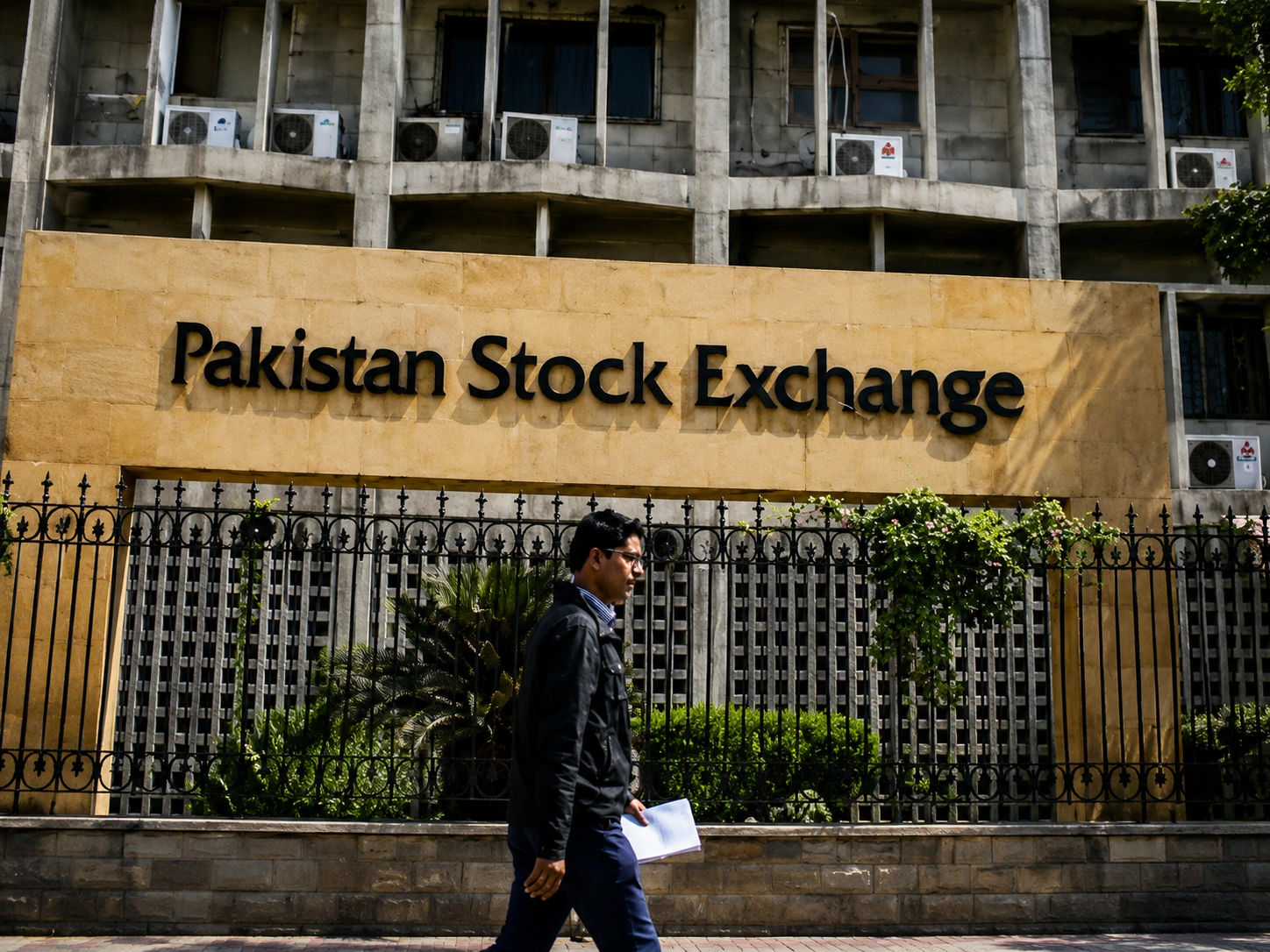
There have been another wave of huge selling at the Pakistan Stock Exchange in view of the mounting tensions between the US and Iran in the Middle Eastern region, leading to an increase in the price of Brent crude oil to above $90 a barrel for the first time in more than a month, causing the KSE-100 Index to drop by almost 2,000 points.
At 9:33 am, the KSE-100 Index was recorded at 173,812.83, which is a drop of 1,989.95 points or 1.13 percent from yesterday's closing level.
The Cumulative Damage – A Three-Week Story
The negative effects of the PSX KSE-100 selling pressure due to the US-Iran confrontation have wiped out over 8,400 points which constitutes about 4.6 percent of the index, during an ongoing correction period that has lasted for three consecutive weeks ever since the US put an end to the Iranian shipments.
Selling in All Sectors
The PSX KSE-100 selling pressure due to tensions between Iran and US was evident in all major sectors. The sectors under pressure include:
- Oil and Gas Exploration: OGDC, MARI, PPL, POL, despite rising price of oil, as the risks involved in economic disruption overshadow the income potential of listed oil firms in Pakistan
- OMC: uncertainty in fuel supply chain and margins affecting marketing companies
- Commercial Banks: MCB, MEBL, NBP under pressure from credit risks and slowing economic growth concerns
- Fertilizer: sensitivity of agricultural inputs' costs to oil prices causing sector weakness
- Cement: construction sector exposure to slowing economic growth expectations
- Automobile Assembling: sensitivity to inflation and credit conditions
- Electricity Generation: HUBCO and others in sector under fuel cost concerns
Brent Above $90 – The Cause Pakistan Can’t Shirk Off
Crude oil prices continued to climb as Brent gained 2.6% to trade at $90.40 per barrel, while US crude advanced by 2.3% to reach $84.39 per barrel, following reports that only a few vessels passed through the Strait of Hormuz.
For Pakistan, an importer of more than 80 percent of its energy needs, $90 Brent implies:
- Upcoming fuel price adjustment: the ongoing monthly adjustment will now be made against a price of $90 per barrel of crude, thereby making an expected Rs40 diesel price increase inevitable and even higher.
- Pressure on external account: each $10 rise in Brent price leads to an additional $1.5 to $2 billion import bill for Pakistan.
- Rapidly rising inflation: cost of transport, food distribution, and industrial production rises with oil price and impacts inflation which stands at 11.7 percent currently.
Pressure on Global Markets as Well – but Mostly for Pakistan
The most hard-hit market right now is South Korea, where its reliance on semiconductors has resulted in losses of almost 13 percent in just two weeks due to the exit of retail investors who are forced to exit through aggressive trading because of their use of leverage. Pakistan’s KSE-100, though not as drastic in percentages, suffers the additional problem of energy imports.
Fed Rate Hike Risk Recurring
Despite the consumer price data for the US coming in negative last week, inflation risks associated with oil have once again raised the probability of rate hikes.
The future markets have priced a hike of 29 basis points in interest rates from the Fed by year-end, with a 60% likelihood that there will be an interest rate hike as soon as September, thus sending yield on 30-year US Treasury back above 5.0%.
The US Treasury rates at more than 5.0 percent divert global money away from the stock market towards bonds, setting the standard for the corporate earnings to be high enough. The risk-off environment created by the rise in the yield on Treasuries impacts Pakistan adversely.
The PSX KSE-100 sell-off caused by the Iran-US tension correction will continue for as long as there are three factors present: US-Iran military engagement, Brent Crude Oil at over $85 and increasing likelihood of rate hikes from the Fed. All three are still present – including the ninth day of US strikes on Iran since Sunday.
The Pakistani stock market has already corrected itself by roughly 8,400 points from its previous level before the escalation. Whether this is an opportunity to buy or marks the start of a more profound correction depends upon whether the Strait of Hormuz crisis, which now amounts to only a few ships passing through and one reportedly burning, worsens or calms down.


Leave a Reply
Your email address will not be published. Required fields are marked *