
UAE Visa Freeze Chokes Pakistani Exports
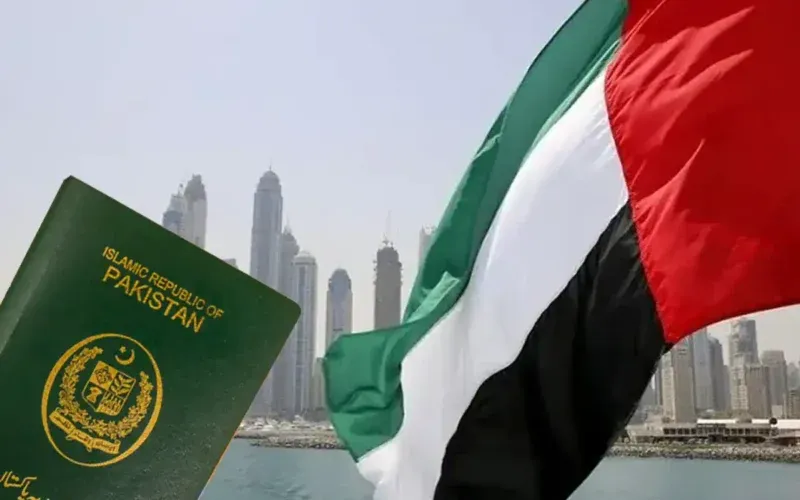
ISLAMABAD: According to Ismail Suttar, who is the Founder and Chairman of the Salt Manufacturers Association of Pakistan, UAE's visa policy does not allow any Pakistani citizen to get visas in any form at the moment. It was added that official communication regarding the restrictions has not been made by the relevant authorities yet, creating uncertainty in the trade world about future transactions with Pakistan.
Pakistan's Exports Suffer Due to UAE Visa Freeze
The United Arab Emirates is reported to have stopped granting visas to Pakistani citizens, and UAE visa freeze in the UAE is now impacting Pakistan’s exports and business transactions, said businessmen who claim that the matter has become critical. Pakistan's exporters and traders say that this has put up many barriers to the growth of their businesses in the Gulf region.
According to Ismail Suttar, the founder and chairman of the Salt Manufacturers Association of Pakistan, the current freezing of UAE visas is preventing Pakistani nationals from acquiring visas in any class. Suttar says that official reasons for such restrictions are not yet known, making the corporate sector doubtful about future business interactions with an important trade partner of Pakistan.
An anonymous representative from the Karachi Chamber of Commerce and Industry (KCCI) revealed that the KCCI had issued an official letter on June 11, while following it up on July 7, to the UAE consul general. “There has been no success as yet,” he stated, detailing the situation of businessmen who have had their offices functioning for several decades in Dubai but are now facing stringent traveling conditions. Even businessmen with decades of experience in UAE, whose families also live there, are facing denial of visas for their visits to meet their parents and siblings.
ALSO READ: Middle East Aviation Crisis Wipes Out Flights, Tourism and Jobs
Suttar also said that the UAE visa ban is affecting plans related to the upcoming Gulfood event, which will take place early next year in Dubai. The chances of participation by Pakistani companies in the food sector are slim due to the fact that the sales representatives will not be able to get the required visas. “If they are unable to get visas, then they cannot participate in the event and showcase their products or find new markets,” he remarked.
Ex-secretary general of the FPCCI, Shahid Anwar, noted that the visa scenario for Pakistani travelers in the Middle East region seems to be both good and bad. Firstly, he highlighted two good signs about visa situation from other Middle Eastern countries: Saudi Arabia had launched a package-based tourist visa system which also allowed Pakistanis to be part of the initial list of participants; while the country of Kuwait has brought back multiple visa options for Pakistani citizens after more than a decade-long ban.
The UAE case is much more complicated according to Anwar. The UAE authorities officially claim that there is no ban on visas, and all categories of visa are being processed. "However, it seems that there is a huge gap between the official stance and the actual experience shared by many Pakistani businessmen," he pointed out.
Usman Shaukat, President of Rawalpindi Chamber of Commerce & Industries, has stated that many members of the chamber, who run their business operations in the UAE and even own some property there, have been encountering many visa problems. According to him, many business conferences have been called off due to the issue, and most exporters have been unable to participate in many international exhibitions like Gulfood, Dubai Health, and Middle East Health. The visa problem in the UAE affects not only Rawalpindi but Karachi and Lahore as well.
Consultant of aviation industry, Wahid Mukhtar presented an unambiguous analysis of travel movements influenced by the UAE visa ban. According to his opinion, Saudi Arabia is the sole bright spot in the Middle East region, mainly due to the presence of Umrah movement, whereas the UAE has been "badly stuck," experiencing a 95% reduction in visa issuance.
Family visa applications receive a 65% refusal, with only 30 to 35% approval rate. There are hardly any visit visas; however, those having labor visas travel. Besides, according to Wahid Mukhtar, on arrival visas are not granted anymore in Qatar to the people from Pakistan, thus diverting vacationers to other places like Azerbaijan and Tashkent.
Masood Ahmed was able to confirm that the UAE visa ban is also having an impact on the healthcare industry. According to him, people who wish to get a Dubai visa are no longer receiving the same if they are under 40 years old, regardless of whether they have the right documentation. People above 40 years old are usually able to pass, but during Arab Health, people below 40 years old were able to pass if they were with their family members.




Leave a Reply
Your email address will not be published. Required fields are marked *