



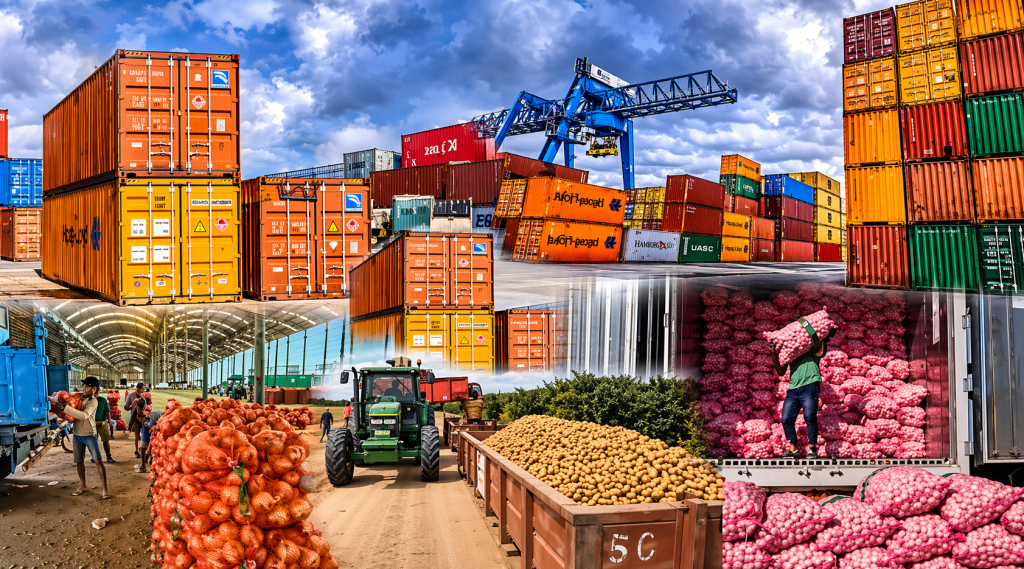
KARACHI: The total import bill for food items in Pakistan reached $7.09 billion during the initial nine months of financial year FY2026, indicating an increasing stress on Pakistan’s food chain, officials report.
On the other hand, the country experienced a marked fall in raw food exports that reduced by almost 34% to $3.80 billion. These two contradicting trends highlight structural weaknesses in the sector as well as the rising dependency on food imports.
According to the statistics collected by the Pakistan Bureau of Statistics, the government raised the importation of important items in order to stabilize the domestic market due to shortages and price hikes.
According to officials, there were several issues affecting the local production of foods, among which was unfavorable climatic conditions, high costs of production, and inefficient logistics. This compelled the government to source these foods from foreign countries.
The importation of sugar also witnessed an upward trend, surpassing 308,000 metric tonnes, as the authorities sought ways to curb the fluctuation of the commodity’s price in domestic markets. The price of sugar was unpredictable in retail stores.
The biggest cost in terms of importing food was still palm oil, which cost more than $3 billion. The high internal consumption of oils and ghee made Pakistan highly reliant on external sources of this key ingredient.
ALSO READ: Pakistan Cement Profits Sink 7% as Coal Shock and Income Collapse Hit Earnings
Other foods such as pulses, tea, and dairy products were also imported more. Experts have claimed that increasing demand for basic food products still impacts the imports in the country, especially in cities.
Pakistan food imports rise due to shortages
The increased number of imports in the country has caused an increase in the trade deficit within the food sector. This is a threat to sustainability in terms of the economy of the country in addition to posing a threat to food security.
On the other hand, poor performance was experienced in some export categories. Exports of rice, both basmati and non-basmati, saw a considerable fall, thus accounting for much of the general decrease in export revenues.
Expenditures on fertilizer also dropped considerably. The vegetables exported faced a marked fall, followed by the same trend for tobacco and spices. There was a considerable fall in the vegetables exported, along with the other two commodities. This clearly reflects the issues that are plaguing agriculture.
Some areas did experience minor improvement, in particular, export performance for fish, fruits, and meats improved slightly. Nevertheless, economists opined that these improvements were not sufficient to counteract the overall decrease in agricultural exports.
Several factors explain the weak export performance, including low productivity, poor quality control, and limited value addition. According to experts, Pakistan had not made full use of its agricultural potential in foreign markets.
The increasing disparity between imports and exports of food has led to a focus on structural problems within agriculture. Some of the major hurdles included the use of old farming methods, inefficient utilization of water resources, and lack of proper storage systems.
Pakistan food imports show need for reforms
These actions are essential in making their production process more efficient and minimizing their dependence on importing food. The use of efficient farming methods, better seeds, and efficient logistics will aid in increasing their efficiency.
Also, policymakers have the task of trying to reconcile price stability with sustainability issues. Although imports are useful in maintaining prices and supplying the required products, constant dependence on foreign sources could lead to difficulties in the long run.
The present trend has brought out the need to tackle weaknesses in the agricultural and trading sectors. Experts believed that a concerted effort that would involve production, transportation, and competitive exporting could bring equilibrium back into the food sector.
Moreover, they also suggested that continued efforts from the government side would be essential to decrease dependency on imports and make the economy stable.