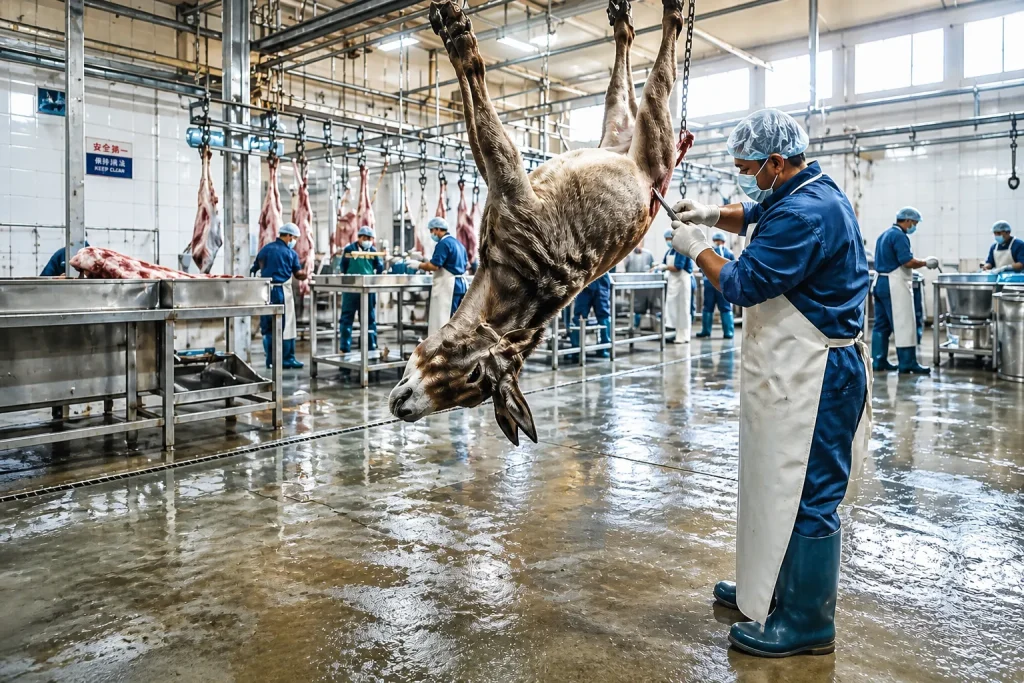
Pakistan donkey meat export faced renewed scrutiny after a Chinese company warned of shutdown due to prolonged approval delays.
ISLAMABAD: Chinese company threatening to shut down its Pakistan operations on International Labour Day to force Islamabad into action. What months of bureaucratic inertia could not resolve, one public announcement fixed overnight and the episode now stands as one of the most damaging indictments of Pakistan’s investment environment in recent memory.
Pakistan Donkey Meat Export Delays Trigger Crisis
M/s Hangeng Trade operates a unit in the North Gwadar Free Zone. It exports donkey meat and skins. Its export licenses remained pending with multiple government departments for several months. The Ministry of Food Security, the Finance Ministry, and the Cabinet Division each held one of these pieces. None moved.
On May 1, 2026, Hangeng went public. The company said it could “no longer sustain normal operations.” It warned that it may shut its Pakistan factory. It cited “non-market factors and operational barriers” as the reason.
The Prime Minister’s Office responded within hours.Friday night saw the issuance of emergency instructions. In an emergency meeting of the cabinet, it endorsed the decision of the ECC concerning donkey meat exports. The Animal Quarantine Department issued its approval before midnight. What used to be a lengthy process spanning months was compressed into one working night.
The Political Motives Behind the Rush
This timing has made the government’s panic quite obvious. hangeng’s shutdown announcement and its pointed advice to prospective investors at that very forum threatened to overshadow the entire visit before it began.
Mr Tauqir Shah, Advisor to the Prime Minister, was crucial in settling the impasse. According to the Planning Minister, Ahsan Iqbal, his ministry had been keeping a tab on the issue all along and recommendations for the same had been made by him.
The Cabinet Division, which had forwarded other ECC decisions to the April 29 cabinet meeting but withheld the donkey meat export summary, confirmed it followed standard procedures. A response from the Finance Minister’s office explaining the omission was still awaited at the time of publication.
Hangeng Trade Pakistan Flags Policy Failures
Hangeng did not limit its statement to its own grievances. The company addressed Chinese firms planning to attend the upcoming Pakistan-China B2B forum directly, urging them to “carefully assess the potential policy execution gaps and institutional uncertainties that may arise during project implementation” before committing capital.
The company described itself as fully prepared to generate foreign exchange, create employment, revitalise Gwadar Port, and contribute to CPEC development. Its ask was straightforward “a clear, consistent and executable policy environment.”
That ask went unanswered for months until a shutdown threat made it politically impossible to ignore any further.
The Bigger Problem Nobody Wants to Name
Hangeng’s crisis did not occur in isolation. Pakistan’s foreign direct investment dropped 27% during the first nine months of the current fiscal year, falling by half a billion dollars to just $1.4 billion according to State Bank data. That decline reflects exactly the kind of systemic uncertainty Hangeng described — not a one-off administrative failure but a recurring pattern that serious investors now factor into their risk calculations before entering the market. The government resolved this particular case. The structural problem that created it remains entirely intact.