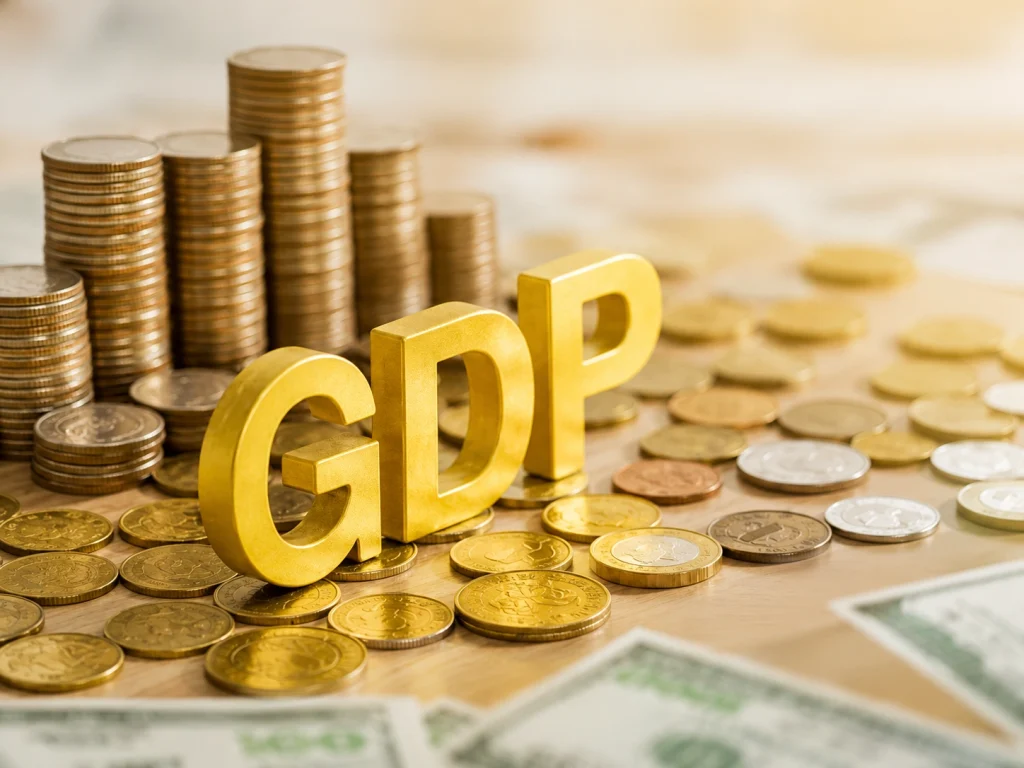
ISLAMABAD: The growth rate of GDP of Pakistan is 3.7% for the financial year 2025-26. This was an important growth rate for the economy of Pakistan, although it did not meet the government’s target for growth of 4.2%, because of the effects of geopolitical risks in the region and volatility in the energy prices.
In line with this, the National Accounts Committee had held a formal meeting and approved the preliminary GDP estimates for fiscal year 2025-26 through the Secretary of Planning, which made it clear that there was economic growth, but at the same time, there were issues prevailing due to an unfavorable external environment.
Sector-wise Analysis: Sources of Pakistan GDP Growth
Agricultural Growth Below Expectations
The sources of Pakistan GDP growth showed uneven results from the three primary sectors within the economy. The sector is the largest employer in the country and any underperformance in the sector will have a direct impact on income levels and food prices.
Industrial Disappointments, but LSM Delivers
The industrial sector saw growth of 3.51%, falling short of the official expectation of 4.3%. This was the most significant shortfall of any of Pakistan’s key economic sectors. On the other hand, there was a very positive surprise in large-scale manufacturing. LSM grew at a remarkable pace of 6.11%, led by increased production in the food processing industry, the petroleum sector, cars, electrical equipment, and transportation industries.
Services Sector Exceeds its Target
Fortunately, the growth in Pakistan’s GDP was significantly boosted by the services sector, which recorded growth of 4.09% against a target of 4%, being the only key area that met the government’s expectations. The growth in the services sector is due to the rise in domestic demand, increased activities in the financial sector, and the continuous digitalization of Pakistan’s economy.
ALSO READ: Pakistan Announces $1 Billion AI Investment for Tech Growth
$452 Billion Economy Mark Passed Per Capita Income Grows
Economic growth in Pakistan’s GDP has resulted in tangible growth in economic activities that Pakistani citizens can identify. This growth was worth $44 billion over the fiscal year, resulting in an overall economy valued at $452.1 billion, which is an indicator of genuine wealth creation, despite falling short on its economic growth targets.
Average income per person rose by 9%, reaching Rs533,629, or $1,901. This growth indicates some positive progress in improving average living conditions despite ongoing inflation and economic reforms that affect the spending capacity of millions of ordinary Pakistanis.
Momentum in Investments Gains Strength in the Private and Public Sectors
Fixes Investments Increase by More than 10 Percent
GDP growth in Pakistan was backed by investments that show confidence in the economy of the country. Total fixed investments saw a growth of more than 10 percent, reaching Rs 16,071 billion.
The private sector investment was the pioneer, growing by 12.8%. This is an indicator of the true confidence of entrepreneurship in the economy of Pakistan, rather than being driven just by government expenditures. The public sector investment witnessed growth of 11.6%, and general government fixed investment grew by 3.9%.
Half a Percentage Point Loss of GDP Growth in Pakistan Due to Middle East War
According to Federal Minister for Planning Ahsan Iqbal, the failure to reach the target is due in part to external forces which are outside the government’s jurisdiction. “If there would not have been tension in the Middle East, then we could have achieved at least 4 percent of our GDP growth rate,” he claimed.
However, Ahsan Iqbal presented the 3.7% as a successful policy achievement despite the tremendous external pressure rather than being a policy failure, while economists continue to present that Pakistan’s economic recovery is structurally very weak despite any external threats Islam
A Recovery That Requires Further Reinforcement
The Pakistani GDP growth rate is 3.7%, and it is clear that the economy is heading towards the correct path – something tangible has happened. Yet one observation that analysts make regularly is that although there is progress on reducing inflation rates and better economic indicators due to the IMF programme, nothing sustainable is happening yet for Pakistan.
Geopolitical risks, energy market uncertainty, and continued fiscal consolidation efforts have been putting pressure on industrial production and economic growth as well, serving as a stark reminder that Pakistan’s GDP needs to grow at a much faster pace in the future for the betterment of its 240 million citizens.