
Pakistan Offloaded PIA for Rs55 Billion and Quietly Absorbed Rs650 Billion in Debt
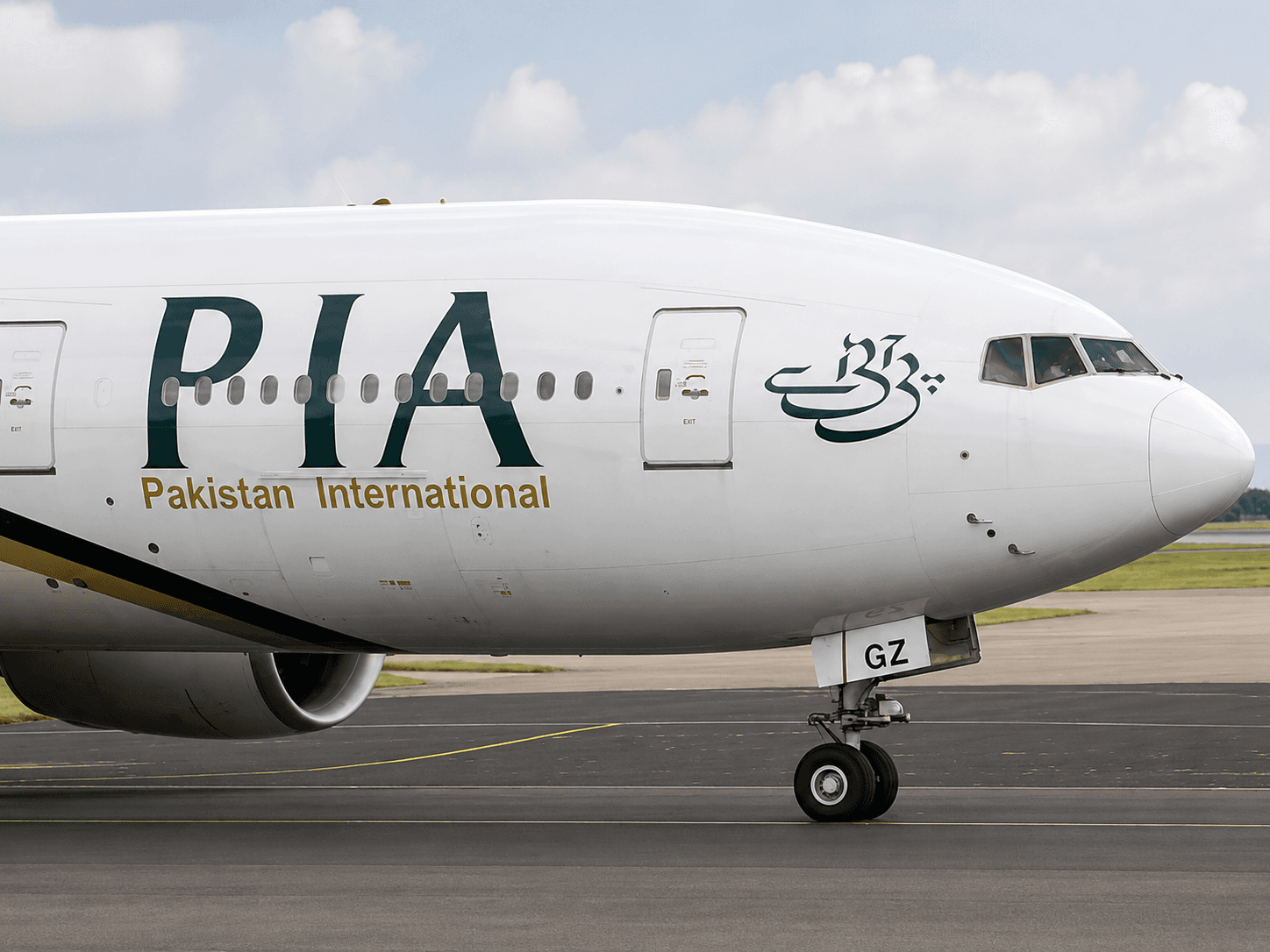
ISLAMABAD: The privatisation of PIA is worth Rs135 billion in headline figures. The figure looms large in all press releases and media accounts of the achievements of the government. But the figure is very deceptive.
However, the privatisation transaction for PIA did not result in the payment of Rs135 billion by the company to the government. Instead, Rs55 billion was paid by the company to the government. The rest goes back to the airline in terms of investments to support the recovery process.
The arrangement is as follows. A group of individuals in the country has decided in the year 2025 to purchase a majority shareholding in the Pakistan International Airlines Corporation Limited, which is 75%. The amount of Rs10.1 billion was received by the government in the first phase of the deal. An additional Rs45 billion will be earned by the government after selling its remaining shares, which is estimated to take place in May 2026.
Ten Years of Losses Making Any Sale Meaningful Incomprehensible
To comprehend why the PIA privatisation proposal appears in its current form, one must first comprehend how completely the airline’s value was depleted.
According to estimates, PIA has incurred losses totaling around Rs400 billion to Rs500 billion during the last decade or so. The inclusion of bank debt, pension liabilities, accounts payable to suppliers, and government-guaranteed debts raises this figure to about Rs650 billion. These losses have not been incurred in one particular crisis situation but over many years of escalating fuel prices, weakening exchange rates, political influence, and management that was unable to align costs with operations.
The manpower organization reflects just how grave the problem was. In its worst moments, the number of people working for PIA was 14,500 when the number of aircrafts was only 30. This was clearly a mismatch. There were too many employees for too few airplanes and not enough revenue to cover the cost. It was estimated that PIA lost between Rs60 billion and Rs90 billion per year.
The 2024 Restructuring: Making the Sale Happen by Erasing the History
If there was no basic restructuring to begin with, it is certain that no private entity would ever take the offer to buy into the company. This was done by the government in 2024 through shifting about Rs654 billion worth of debt elsewhere.
This was the list of liabilities that were separated out, including historical bank debt, historical pensions, outstanding liabilities to suppliers, among others that had accrued over many years due to the bad management of the enterprise under the control of the State. This left behind what is left of PIACL, which now carried Rs180 billion worth of liabilities.
The restructuring made the privatisation process economically feasible for PIA. However, it did not erase these debts from the books. These were shifted to the government’s account forever. The consortium pays for the future of the airline, whereas the government foots the bill for its history.
ALSO READ: New Airline Noor Airways Clears First Regulatory Hurdle in Pakistan
What the Consortium Acquired
PIA Privatisation Deal was not the same airline as originally conceived. This version of the airline is history. Its restructuring in 2024 rendered it defunct prior to the privatization.
The Rs135 billion mentioned above is essentially the money that the group spent on buying an operating airline which comes with certain liabilities amounting to about Rs180 billion, along with the poor operational cost structure and aging aircraft. The main thing is that the money that has been paid by the group is for the airlines' operation, not for the government.
The real government gains through the PIA privatization agreement: Rs55 billion cash and retaining Rs650 billion worth of legacy debt permanently.
Fuel Cost Threat: The Factor That Could Derail the Entire Process
PIA Privatisation Deal means a transfer of the airline burdened by a risk factor beyond any management’s control. Aviation fuel alone makes up between 30% and 40% of an airline’s operational expenses. For an older and less fuel efficient aircraft, the percentage is even higher.
A continued rise in the prices of oil on an international scale – which happens repeatedly throughout every cycle in the aviation industry – will instantly increase the expenses of PIA while shrinking its profits, which are inherently slim from the start. Efficiency and restructuring can certainly enhance the competitiveness of the airline. They cannot prevent a major fuel crisis, however.
That is why airlines are said to be macro-sensitive firms. They do not only rely on their decisions for success but on factors outside their control such as the international energy market, currency trends, and demand cycle. It is a triple whammy for the new management of PIA.
Gulf Dependency and the Structural Route Problem
This transaction involves an airline whose stable source of income is derived from the Gulf routes, mainly the UAE and Saudi Arabia. This makes its future financial performance secure. The problem with the PIA privatization transaction lies in the structural route dependency.
Not a Transfer of Assets but a Transfer of Debt
What makes the privatisation of Pakistan International Airlines different from any ordinary business transfer transaction is that it is a carefully planned financial restructuring where the state gets Rs55 billion in cash, holds onto Rs650 billion worth of debt, and hands over an operational airline to the buyers, who will have committed Rs180 billion to the venture.
In conclusion, the following three factors will eventually decide if the privatisation of PIA results in the creation of a successful airline or continued restructuring efforts: changes in international fuel prices, Gulf aviation relations stability, and economic structure of the sector that penalises lack of efficiency.
Leave a Reply
Your email address will not be published. Required fields are marked *