


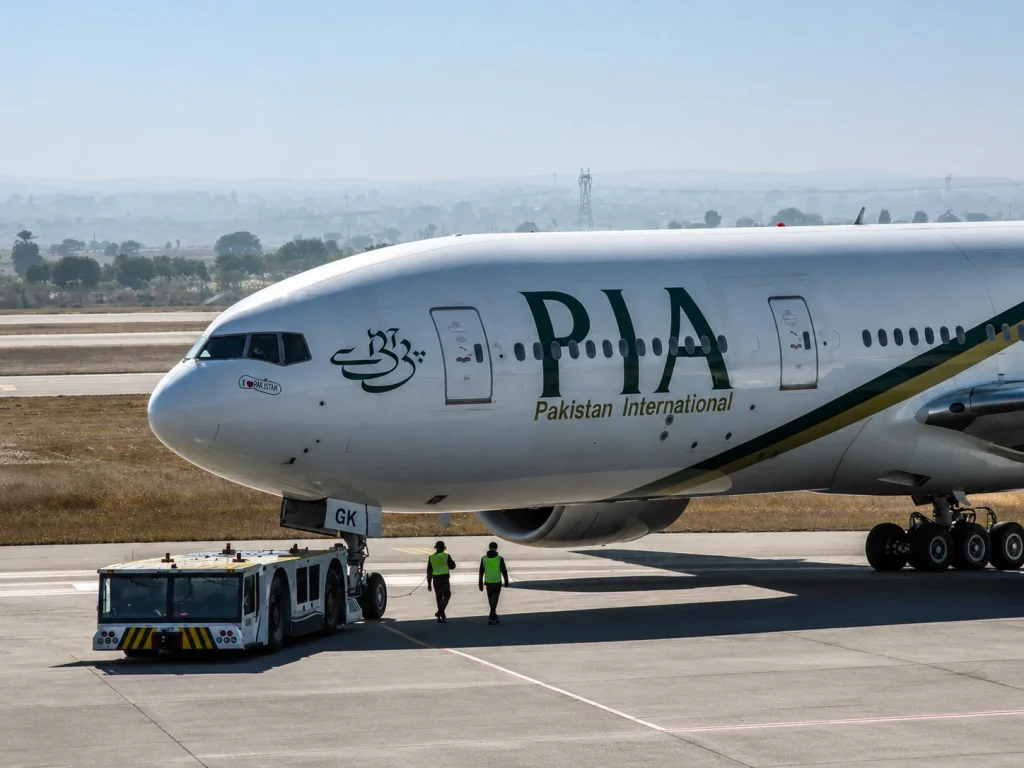
Federal Board of Revenue has exempted PIACL from the payment of tax of Rs. 8.765 billion – in respect of default surcharge and penalty on PIACL’s present tax liability with the purpose of removing the biggest financial hurdle that stands before the privatization of the state airline. Official notification regarding the PIA privatization tax exemption was released through S. R. O. 799(I)/2026 on Tuesday in connection with a decision made by the federal cabinet on December 31, 2025, under Section 183 of Income Tax Ordinance, 2001.
According to the FBR, the purpose of tax relief offered for the privatization of PIA is very clear-cut, and this single goal revolves around the need for achieving the successful conclusion of the privatization procedure as well as timely execution of the terms set out in the bid documents by both the government and the winning bidder. Without the provision of tax relief, the financial clearing-out process could not be completed.
Rs8.765 Billion Default Surcharge and Penalty Amounts Forgiven Under PIACL’s Books
Tax break for PIAC privatization refers to income tax that was outstanding in the amount of Rs8.765 billion by June 30, 2025, including default surcharge and penalties rather than the actual principal taxes. Default surcharge is an additional amount that becomes payable due to the failure to pay assessed tax in good time. Default surcharge comes with interest charges that can be accrued in a long period of non-payment.
With the two parts being waived through the notification for the PIA privatization tax relief, FBR effectively puts a pause on the financial decay that would be caused by the continued lack of payment. Thus, the amount of Rs8.765 billion would not grow further until the divestment proceeds through other phases. However, the notification does not absolve PIACL from paying their tax liability, only waives the penalties associated with it.
Four-year repayment plan with one-year grace period safeguards the new investor
According to the notification issued by PIA regarding the privatization process tax exemption, there is a defined repayment mechanism, which safeguards the new private investor from a burdensome tax payment right from day one of taking ownership. The company will be required to pay back the Rs8.765 billion of existing tax debt to the FBR within four years starting from the first completion date.
This includes a grace period of one year from this completion date, meaning that the new company owns the airlines without having to repay taxes immediately for a whole year from the start of operations. Thereafter, the balance will be repaid in equal annual installments for a period of three years, making it easy for the new company to budget for future expenses knowing how much they need to repay each year without uncertainty of having to settle a large sum at once.
ALSO READ: Pakistan Airspace Ban Crushes Indian Airlines $800M Lost, Routes Disrupted
PIA privatization tax relief approved by the cabinet on December 31 implementation comes later
The cabinet of the federation gave its approval to the tax waiver in the case of privatization of the PIA on December 31, 2025, and after some time elapsed, there was a notification by the Federal Board of Revenue about this cabinet-approved decision through SRO No. 799(I)/2026. This gap between the cabinet’s approval and the subsequent notification by the FBR arises due to the procedures followed in implementing the cabinet decision as a tax exemption.
By making the notification of the relevant statutory provision now, the FBR ensures that the privatization tax concession for PIA is on the most solid legal ground possible at what the government itself considers to be the most crucial point in the divestiture process – the time when bid documents must be executed, where investor confidence is essential, and where tax liabilities amounting to Rs8.765 billion are sufficiently complex in nature to provide a reasonable private investor with grounds to renegotiate or even back out of the transaction altogether.
Tax exemption in PIA privatization process is a clear message from the government regarding its intent to finalize the deal
There is an exemption of Rs8.765 billion in one go, which speaks volumes about how seriously the government views this privatization of PIA as a transaction since it finds it worth taking such a financial hit without jeopardizing the whole deal due to tax issues. It becomes evident from the path taken by the government to provide the tax exemption for PIA privatization through a cabinet decision and notification in the statute.
In light of the privatization scheme in Pakistan, which has undergone numerous postponements, unsuccessful bids, and ongoing concerns regarding its credibility among foreign investors, the tax break granted by the government for the privatization of PIA is a tangible achievement on the way to a deal.

Focus Pakistan is an independent digital news and media platform dedicated to delivering credible, insightful, and impactful journalism across Pakistan and beyond. The publication covers a broad range of sectors including business, economy, technology, telecommunications, aviation, automotive, infrastructure, energy, tourism, public policy, and national affairs.
Committed to accuracy, transparency, and editorial integrity, Focus Pakistan combines breaking news coverage with in-depth analysis, feature stories, expert commentary, and research-based reporting. The platform aims to provide readers with timely, factual, and balanced information while promoting informed public discourse and responsible journalism.
Through its commitment to high editorial standards, Focus Pakistan strives to be a trusted source of news and analysis for policymakers, business leaders, industry professionals, and the general public.