

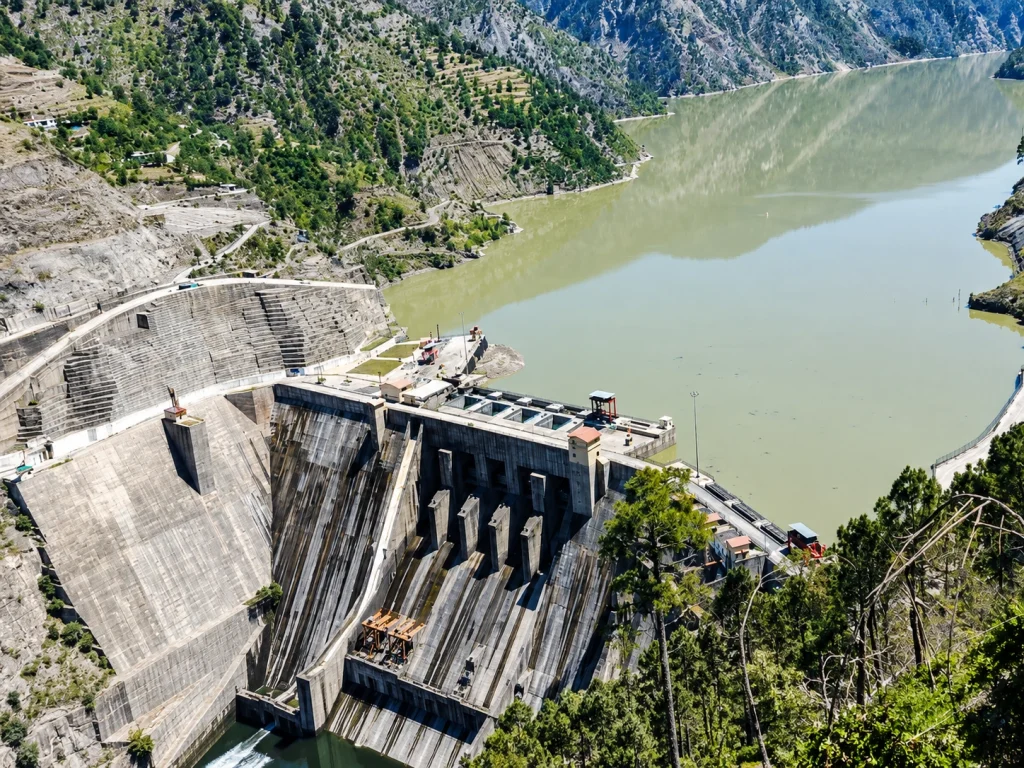
ISLAMABAD: In a recent decision made by an international court, Islamabad has been favored with regard to the interpretation of one of the most controversial aspects of the Indus Waters Treaty – the calculation of the permissible amount of storage capacity in Indian hydropower plants built on the western rivers, which are reserved for Pakistan.
The key technical issue addressed in the Indus Waters Treaty dispute resolution is precisely what determines how much pondage and water storage India is entitled to establish by way of its hydroelectric plants along rivers common to both countries. Pakistan raised this challenge before the court on grounds that India would end up establishing much more water storage than what the 1960 treaty allows.
On this key issue, the tribunal adopted the entire stance taken by Pakistan. This means that India does not have the power to decide on water storage capacity using artificially created benchmarks which can help India store more water than allowed by the treaties. The ruling has deprived India of the right to make decisions according to its own benchmarks on water storage, thereby restricting India from constructing hydroelectric projects on rivers covered under these treaties.
Full Disclosure of Data by India Required for Pakistan
Furthermore, the Indus Water Tribunal verdict is also significant in requiring the duty of transparency on the part of India. As per the decision, India has to disclose the complete data concerning any hydroelectric project under discussion. Such an obligation was required due to the nature of the treaty that obligated India to do so.
This information-sharing duty enhances Pakistan’s capability to check India’s adherence to its treaty obligations in real time, thus providing an accountability framework supported by the law of international courts through the recent decision on the Indus Waters Treaty arbitration case.
Security of water resources, strategic positioning, and diplomatic credibility
Speaking on behalf of the Ministry of Water and Power of Pakistan, Syed Mehr Ali Shah, who is also the Additional Secretary at the ministry, pointed out that the decision reached after the Indus Waters Treaty Arbitration reaffirms the fact that India had not managed to convince the judges of its entitlement of increasing its water storage capacity within the framework of the treaty. With this decision, Pakistan becomes strategically, scientifically, and diplomatically reinforced — an achievement highly valuable for a lower riparian country that relies upon the treaty.
The arbitration verdict of the Indus Waters Treaty is a great diplomatic victory for Islamabad as it strengthens the position of Pakistan which, for decades, had been arguing that the Indian program to develop hydroelectric power plants in shared river basins violates the provisions of the 1960 treaty. The significance of the arbitration verdict in this context is hard to exaggerate as it gives a legal basis to Pakistan’s claim, something that cannot be achieved through bilateral talks.
ALSO READ: India Court Declares 700-Year-Old Mosque a Temple, Muslim Prayer Rights Ended
Concession in 1960, Despite Continuous Pressure
The Indus Water Treaty, signed in 1960 under the auspices of the World Bank, serves as the governing instrument for the utilization of water for both India and Pakistan. It ranks among the few bilateral treaties that have managed to endure despite the many wars and crises between the two nuclear powers. According to the agreement, the eastern tributaries are awarded to India, while the western tributaries, including the Indus, Jhelum, and Chenab, belong to Pakistan.
There have been constant allegations against India that their program to develop hydroelectric power plants in Western rivers takes advantage of the unclear provisions of the Indus Waters Treaty to build capacities that were not envisioned by the drafters of the Treaty. The award on the Indus Waters Treaty arbitration supports such allegations.
Official Release Still Pending as Islamabad Cheers in Hushed Tones
The outcome of the arbitration of the Indus Waters Treaty is yet to be published as of now, which signifies the importance of the decision in light of the existing relationships between India and Pakistan and also due to the existing tensions within the region, which would increase once the verdict is announced.
This award is made under the circumstances when the relations between India and Pakistan are facing great pressure in various directions simultaneously. A decision of such a magnitude by an international court cannot, in itself, serve to alleviate the tensions between the two countries – but it does provide Pakistan with an internationally recognized legal foundation on which to base their claim to their rights in the waters.

Focus Pakistan is an independent digital news and media platform dedicated to delivering credible, insightful, and impactful journalism across Pakistan and beyond. The publication covers a broad range of sectors including business, economy, technology, telecommunications, aviation, automotive, infrastructure, energy, tourism, public policy, and national affairs.
Committed to accuracy, transparency, and editorial integrity, Focus Pakistan combines breaking news coverage with in-depth analysis, feature stories, expert commentary, and research-based reporting. The platform aims to provide readers with timely, factual, and balanced information while promoting informed public discourse and responsible journalism.
Through its commitment to high editorial standards, Focus Pakistan strives to be a trusted source of news and analysis for policymakers, business leaders, industry professionals, and the general public.