
This story is familiar to Karachiis. Promises. Speeches. Ground breaking. Filming. Silence, delay, and yet another cycle of the shortage that has plagued millions of people living in the biggest city of Pakistan.
KARACHI: When the federal government announced in the Budget 2026-27 that Rs. 10 billion would be allocated for the K-IV water project for Karachi, the reaction was not exaggerated. The budget is genuine. The requirement is critical. The doubt remains whether this time it is going to be different from the last two decades.
What the K-IV Karachi Water Project Really Is
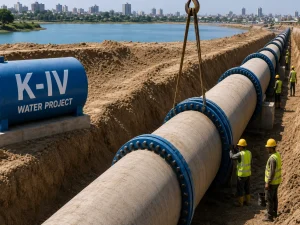
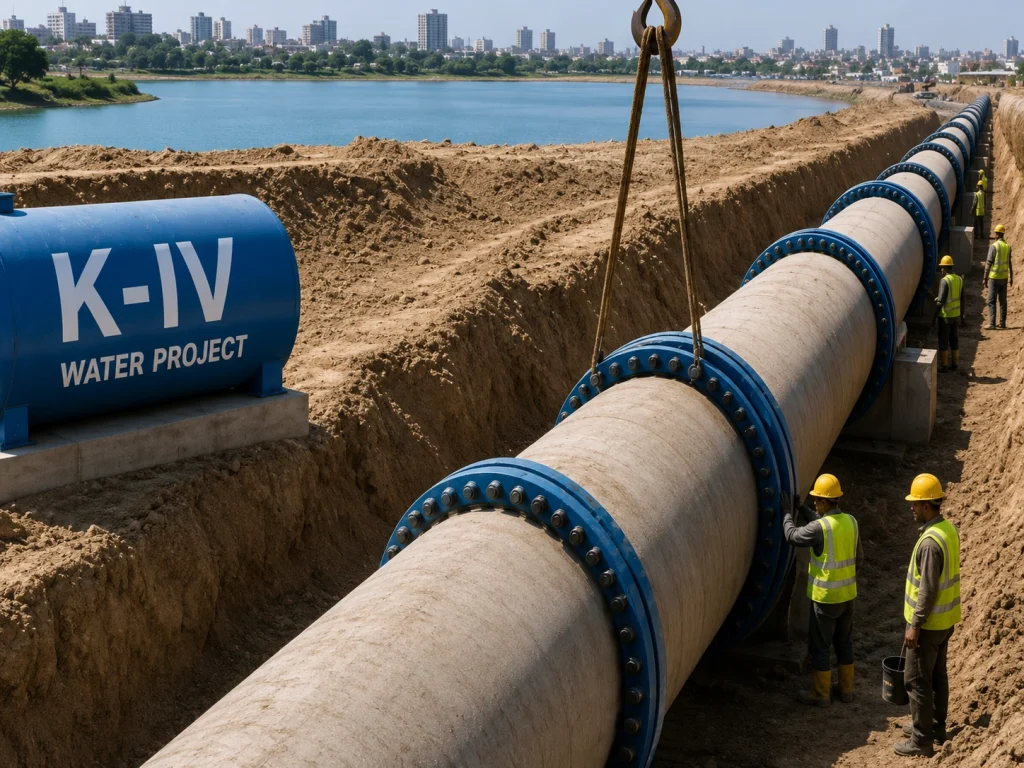
The K-IV bulk water supply project does not represent a small fix. Rather, it represents a structural remedy to one of the most destructive deficiencies in urban Pakistani infrastructure. Involving the creation of a pipeline system to move water from the Indus River system via Keenjhar Lake and associated canals, the plan involves transferring 260 million gallons per day initially to Karachi.
For a city with a population of more than 20 million, which is already experiencing heavy losses due to water being stolen, leaks, and old infrastructure pipelines, 260 MGD is indeed a ray of hope. Businesses, residential areas, hospitals, and industries are adversely affected by insufficient water supply. Implementation of the K-IV Karachi water scheme will surely be one of the most significant urban infrastructure projects in Pakistani history.
This idea was first introduced back in the early 2000s. That’s how long Karachi has been waiting.
A Timetable of Delay and Reinauguration
K-IV Karachi Water Supply Project is not an ordinary tale from the annals of infrastructure but one that reveals the nature of institutional chaos. The project was first inaugurated back in June 2015, by then Chief Minister Syed Qaim Ali Shah who had launched the project. This was the headline-grabbing event. Not so much the construction.
The second inauguration was in 2016, this one held by Dr Ishratul Ibad, the Sindh Governor. The third inauguration happened in 2023, where Prime Minister Shehbaz Sharif vowed to give all the support he could from his position as Prime Minister.
Three inaugurations; yet still unfinished.
The reasons have been recorded countless times. Lack of adequate funding has delayed completion on several occasions. Increased costs rendered the initial calculations null. Design changes caused the engineers to redraw their plans from scratch. Coordination between federal and provincial governments, specifically Islamabad and Sindh, was difficult at best. Issues with land acquisition delayed important sections of the project.
ALSO READ: Red Line BRT Project: Another Deadline, Another Contractor Will Karachi Ever See It Done?
K-IV Funds Are a Portion of Greater Infrastructure Spending
This funding is just one aspect of an even larger infrastructure drive built into Budget 2026-27. Clearly, there has been a lot of ambitious thinking on a number of fronts – water, energy, transport, and urban development – indicating that infrastructure spending forms an important component of the economic strategy.
The energy sector as well as the water resource sector has received huge amounts for their development. The Diamer-Bhasha Dam is being provided Rs. 14 billion to keep going forward with the biggest dam building programme in the world at the moment. For the Mohmand Dam, Rs. 22 billion is being allocated, which means the government understands the urgency of having storage facilities as well as hydroelectric power generation projects. The Dasu Hydropower Project, which is very important from the perspective of power generation in Pakistan, is being allocated Rs. 15 billion.
Urban Pakistan: Serious Attention
In addition to water and energy, Budget 2026-27 focuses on urban infrastructure in a way past budgets have not done before. Rs. 54.60 billion has been allocated to sustainable urban development and housing – an important move in a nation where the demand for urban housing always exceeds the supply.
This budget provision would be used in building 150,000 low-cost housing units at both the federal and provincial government levels. To those millions of Pakistanis who are not able to buy houses in the traditional markets due to high prices, the initiative will have serious implications. While this initiative is being taken, the government intends to build digital master plans for ten metropolitan cities.
Road Networks and Railways
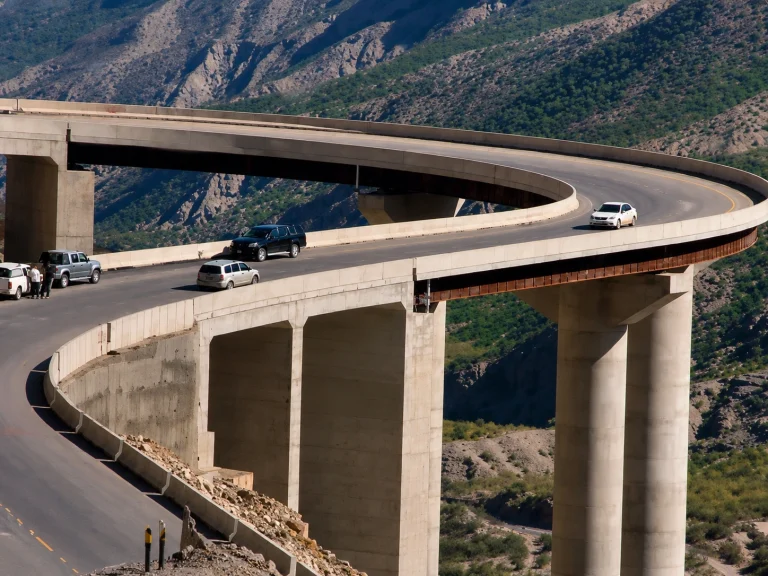
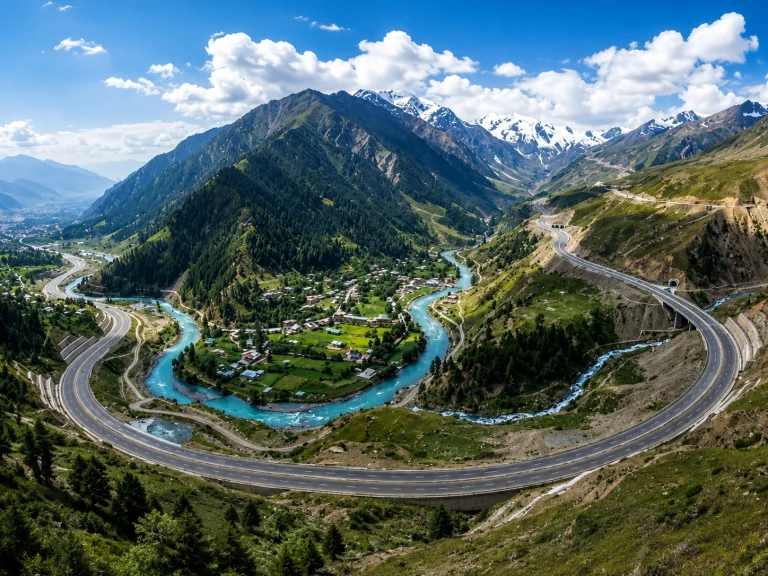
The transport industry is allocated funds which make the biggest splash out of all budgetary allocations. The Karachi-Chaman N-25 motorway, which is one of the most strategic roads in Pakistan, linking Karachi to Baluchistan, and onwards to Afghanistan, is allocated Rs. 100 billion for expansion into a two-way lane. The conversion of Pakistan Expressway would greatly facilitate shorter travel times, cheaper logistics, and improved connectivity through one of Pakistan’s busiest economic corridors.
The Sukkur-Hyderabad motorway in Sindh is allocated Rs. 30 billion for upgrading, providing much-needed funding to an important agricultural trade route connecting two of Sindh’s largest cities.
The Test Is Always Delivery
The infrastructure part of Pakistan’s Budget 2026-27 for Pakistan may be, on the face of it, one of the most thorough seen in some time. A single infrastructure proposal included in the budget, the Rs. 10 billion allocated for K-IV Karachi Water Project, sends the message that the authorities are aware of the significance of the issue.
However, it would do well to remember that Karachi knows how to interpret signs. After three inaugurations, the city learned its lesson – the difference between statements and delivery. The allocation of Rs. 10 billion is necessary; however, it is not sufficient by itself. What remains is to see whether the budget will turn into real infrastructure or yet another chapter of an already endless story for Pakistan’s most populous city.