
$460 Million Khyber Corridor Project Still Unbuilt After Eight Years
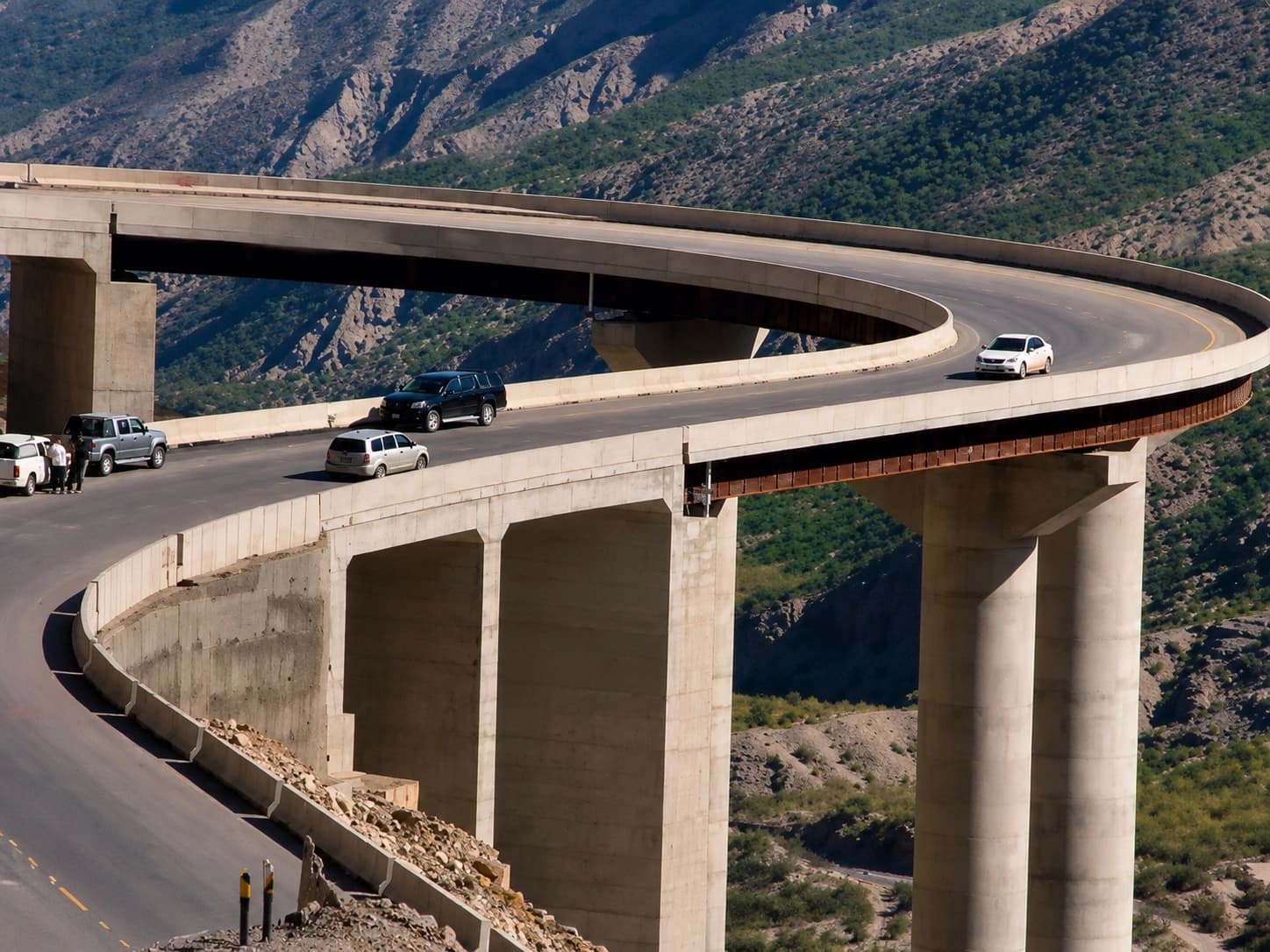
PESHAWAR: The Khyber Pass Economic Corridor Project of Pakistan costing $460.6 million has hit one of the most unfortunate milestones in its already checkered history with more than seven years having passed from the date of conception without building even an inch of expressways. Despite the improvement in the project's implementation rating to Moderately Satisfactory, the World Bank continues to consider the project Moderately Unsatisfactory since it is providing the funding for it.
Pakistan officially desires to extend its Peshawar-Torkham Expressway by another 36 months to be able to complete the said project, which is integral to the Khyber Pass Economic Corridor Project. These requests are being examined by the World Bank.
Eight Years, Utilised Only $4.41 Million from Total Financing of $437.84 Million
Financial analysis is crucial in any examination of the Khyber Pass Economic Corridor Project. It is because the project came into existence in June 2018. Out of the total amount that was supposed to be spent, which amounts to $437.84 million, only $4.41 million has been spent.
This is the true story that lies behind all of the delays, restructuring requests, and revised schedules that have come about during the near decade of existence of this project. Procurement for civil works has not only been delayed, but has not even begun. It will now be initiated again using an entirely new approach, and construction tenders advertised by May 2026.
The Goals of the Khyber Pass Economic Corridor Project
In June 2018, Pakistan initiated the Khyber Pass Economic Corridor Project with an ambitious agenda in mind – that of enhancing commercial links between Pakistan and Afghanistan via one of South Asia's most economicalaly vital land routes.
It has been nearly eight years since then, yet there has been no improvement in travel time between Peshawar and Torkham. No tangible difference has been seen in border processing at the Torkham Border Crossing. While the expressway has not yet been built, truckers are using the old infrastructure of the region.
World Bank Identifies Significant Risk with Environmental and Social Implications
Apart from delays in construction, the Khyber Pass Economic Corridor Project is also associated with significant risks as identified by the World Bank because of the unaddressed environmental, social, and stakeholders' issues associated with it.
Each of these factors has led to procurement paralysis during the various stages of the project. The designation of "Substantial risk" by the World Bank reveals that these challenges are not in the past; they still pose significant problems making things even more complicated for the 36-month extension that Pakistan is requesting.
ALSO READ: Red Line BRT Project: Another Deadline, Another Contractor Will Karachi Ever See It Done?
Progress amidst Inability to Move Forward
There have been some developments concerning the Khyber Pass Economic Corridor Project since its conception almost eight years ago. There were some outputs recorded from the planning and capacity building processes that took place; these included regional master plans, feasibility studies, and training programs for communities around the corridor.
An Inclusive Business Development Park was also initiated by the authorities in 2024 to produce a tangible infrastructure outcome for the project whose first physical output is still yet to be initiated. The National Highways Authority in Pakistan and Khyber Pakhtunkhwa authorities are still implementing and addressing complaints despite construction being at a halt.
Understanding the 36-Month Extension
In the event that the request for an extension of the construction period is approved by the World Bank, there should be an immediate start to the construction work that will last continuously for three years.
Since there has been no activity regarding the bidding process, it is obvious that there is little room left for delays within the next three-year period. The World Bank should question Pakistan’s intentions given its history on this particular project, since there is already an eight-year delay from the initial time it was supposed to be completed.


Leave a Reply
Your email address will not be published. Required fields are marked *