
ISLAMABAD: The government wanted electric cars to be taxed at 1%. The IMF disagreed yet again. As time runs out before the budget can be passed, Pakistan’s new car policy finds itself in a conflict that has proven too tough to solve.
The move by the Pakistani government to conclude the process of formulating a new auto policy has faced a major setback. The reason is that the International Monetary Fund has refused to accept the suggestion made by the government to impose only 1 percent NEV sales tax.
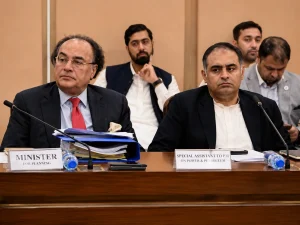
It was on Thursday that the government officially put forward its proposal to the IMF along with another proposal of taxing hybrid cars at 50 percent of the usual 18 percent rate of sales tax. Based on reports from people privy to the proceedings, the IMF once again refused to grant approval for both the proposals and instead asked for more information from the Pakistani authorities regarding the issue.
However, this is not the first instance where negotiations have failed regarding NEV sales tax Pakistan and IMF. Reports suggest that this problem of refusal to grant sales tax preferences has come up time and again in the negotiations between the IMF and Pakistan.
Why the Timing Is Terribly Poor
The issue regarding the IMF NEV sales tax and import duties of Pakistan comes at one of the most unfortunate moments. Any alteration in the sales tax and import duties must have been incorporated within the federal budget, which is supposed to be passed by the National Assembly on Wednesday. The current policy of auto industry of Pakistan comes to an end this month, and hence there is no grace period left in between the current deadline and the requirement of a finalized new framework.
Due to the absence of a finalized version and non-approval of the IMF of the tax policy, the Auto Policy 2026-31 may face an inability to meet the deadline. According to government officials, tax and duty structure had been proposed to the IMF on Thursday with the intention of meeting the June 24 deadline.
Industry’s Special Assistant to the Prime Minister, Haroon Akhtar Khan, refrained from making any comments regarding the stance of the IMF towards the 1 percent sales tax policy, thus creating an information vacuum as regards the exactness of the stance adopted by the Fund.
ALSO READ: Pakistan Receives $1.3 Billion From International Monetary Fund
Instead of what the IMF Really Wanted
Finance ministry officials explained the real position of the IMF in this regard. The IMF rejected the proposal for reducing sales tax on any kind of vehicle, including electric vehicles, and instead wanted the normal sales tax rate for all kinds of vehicles.
Importantly, there is scope for the government to intervene under the IMF NEV sales tax in Pakistan case in another way. It does not involve lowering the tax rate but involves the IMF recommending that any lowering of the price to be paid by the consumer must be achieved through subsidization rather than through lowering the tax rate – an altogether different strategy from the perspective of maintaining the same level of taxation.
The Clash Within Two Ministries
Apart from Pakistan’s rejection of the IMF NEV sales tax, there is a structural issue that has cropped up within the ministries themselves. Meetings held with the aim of coming up with Pakistan’s stand regarding the automobile policy, even those held with Deputy Prime Minister Ishaq Dar in charge, have been inconclusive.
Several sources indicate a particular procedural lapse in causing this conflict. There was no attempt by the industry ministry to consult with other ministries in accordance with Rule 8 of the Rules of Business. Not doing so seems to have caused a major conflict between the Ministry of Commerce and the Ministry of Industry.
Proposals for Tax Relief by the Ministry of Industry
Apart from the news item regarding the IMF’s NEV sales tax dispute in Pakistan, the ministry of industry has also come up with other tax relief proposals for NEVs. According to the proposals, the first three years will be charged at 1% customs duty on parts for NEVs. This will increase to 5% in year four onwards. Sales tax on imported parts is fully exempted.
In regard to the local supply and sale of NEVs in particular, the ministry has suggested a sales tax rate of 1 percent that will continue for five years. In addition, the ministry has also suggested that there will be exemption of federal excise duty, capital value tax, and withholding tax on NEV sales during the entire period of the policy.
The Tariff Debate That No One Can Solve
A second big controversy that has made matters worse relates to the import tariffs for locally assembled automobiles. While the Ministry of Industries would like the higher tariffs to be kept, the Ministry of Commerce wants to implement the cap of 15% customs duties set out in the National Tariff Policy by 2030.
The ministry in question questions the very need for the 15 percent limit, claiming that there has never been such a condition imposed by the IMF. The argument put forward by the ministry claims that the real condition stipulated by the IMF is to have a weighted average tariff lower than 6 percent, which could be reached even at tariffs up to 50 percent.
A great deal of the entire debate centers on the structural defect within the auto industry in Pakistan. Localizing production has been limited primarily to low-tech peripheral components, while the more valuable, capital-intensive components continue to arrive as imports. The players in the industry claim that localization of value-added components can be accomplished only when there is an economy of scale of 500,000 units per year.
In order to encourage adoption of new energy vehicles, even in the presence of uncertainty created by IMF NEV sales tax in Pakistan, the Ministry of Industries has suggested imposition of penalties on combustion engines vehicles in the form of ad valorem taxes. Ad valorem tax of 5% would be imposed on the sale of vehicles whose prices range from Rs15 million to Rs20 million
This proposed policy is not only related to new vehicles but also includes provisions on importing used vehicles, which include a maximum depreciation ratio of 30% fixed for all the used vehicles being imported to Pakistan, where the age of the vehicles should be above three years but less than 50 years.

Nayab Fatima is a university graduate and an emerging media professional with a strong passion for journalism, research, and independent reporting. She specializes in developing well-researched, fact-based, and analytical news stories covering a wide range of sectors, with particular expertise in technology, telecommunications, aviation, and the automobile industry.