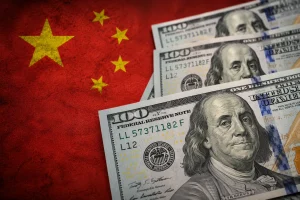
ISLAMABAD: China lent Pakistan $16.2 billion last fiscal year, and $1.7 billion of that never left Beijing’s books at all it was old debt, rolled over again.
The government wanted $19.92 billion in foreign loans and grants for the year ending June 30. It fell short by $3.72 billion, according to official figures, highlighting another significant gap between official financing projections and actual inflows.
Pakistan Borrowing Target Missed
The shortfall traces back to where the money actually came from. The Asian Development Bank handed over the single biggest loan of the year, $953.74 million, more than any other individual lender wrote in one transaction. That figure barely registers next to China’s contribution, which dwarfed every other bilateral or multilateral source combined.
China Loans Dominate Financing
The Ministry of Economic Affairs reported total government borrowing at $27.2 billion for the year, a figure that folds in $9 billion worth of rollovers from China and Saudi Arabia together. Almost all of it, roughly $24 billion, went straight into financing the budget, paying down old debt and shoring up reserves. Just 13 percent made it toward actual development projects.
Also Read: Pakistan Freezes External Debt as Reserves Hit Four-Year High, SBP Says
The imbalance looks even starker when viewed alongside Pakistan’s export performance. Exports fell 6 percent to $30 billion during the same period, meaning the country borrowed more dollars while earning fewer of its own.
Pakistan External Debt Rises
China’s grip on Pakistan’s debt load didn’t start this year. World Bank figures put Beijing’s total exposure at close to $29 billion, about a fifth of everything Pakistan owes abroad more than the World Bank and the Asian Development Bank hold individually. That relationship increasingly runs on one-year extensions rather than new construction money. China buys Islamabad breathing room; it doesn’t build new roads or power plants with it, at least not at the pace it once did.
Also Read: Pakistan’s Debt Hits Rs82tr as Watchdog Exposes Rs1.83tr Budget Blunder
That dependence carries its own risk. If Beijing ever declines to extend the debt again, or attaches new conditions to the next rollover, Pakistan has no obvious backup source large enough to fill the gap.
Pakistan’s total external debt has now climbed past $138 billion, and more than $100 billion of it comes due over the next four years. That repayment wall keeps growing while exports stay flat or shrink, leaving debt servicing to eat a bigger slice of whatever dollars the country actually brings in.
The repeated reliance on debt rollovers suggests this is no longer a short-term financing measure. Chinese debt rollovers are no longer acting as emergency relief. They have become a structural pillar of Pakistan’s external financing strategy, with no obvious alternative in sight.