
Agriculture Credit Disbursement Surges 24.7% to Rs3.23 Trillion in FY26
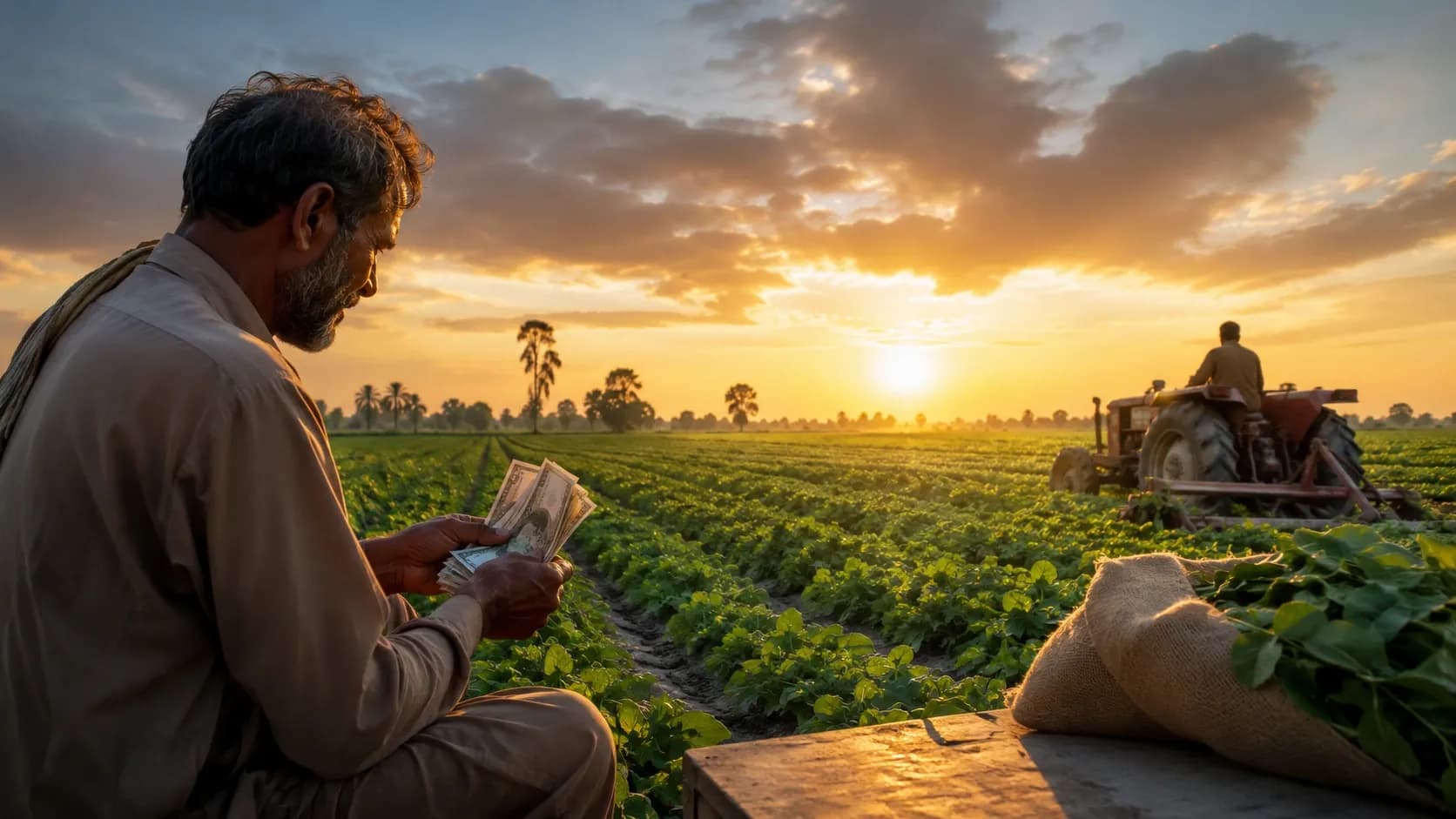
KARACHI: Pakistan's banks pushed a record Rs 3,231.56 billion into agriculture during fiscal year 2025-26, and the number looks impressive on paper, a 24.7% jump from Rs 2,592.23 billion the year before. But peel back the headline figure, and a quieter story emerges: the money grew far faster than the farmers receiving it.
The State Bank's Agriculture Credit and Financial Inclusion Department released the numbers for the July-June period, and they show outstanding borrowers climbing just 4.8%, from 3.11 million to 3.26 million. Compare that gap, a quarter more money chasing barely a twentieth more borrowers and the disbursement boom starts to look much deeper than it does broader.
Banks Drive Agri Lending Growth
Commercial banks did the heavy lifting. They disbursed Rs 2,791 billion, up 26.3% from Rs 2,209 billion in FY25, and drove most of the sector's overall growth. Within that group, mid-sized banks stole the show: their agri lending surged 61.7% to Rs 898.17 billion, far outpacing the five major commercial banks, which grew a comparatively modest 13.9% to Rs 1,642 billion. Islamic banks added Rs 250.38 billion, up 18.4%.
Also Read: Punjab Leases 4 Acres of Land to Landless Farmers at Rs100 Per Year
Specialized banks, the institutions built specifically for rural lending, told a smaller but still notable growth story. They disbursed Rs 108.45 billion, up 26.7% from Rs 85.62 billion. Zarai Taraqiati Bank Limited, the country's flagship agricultural lender, issued Rs 99.61 billion of that total, growing 36.5% year-on-year a figure that will matter to policymakers watching whether the state-backed lender can keep pace with commercial rivals chasing the same rural clientele.
Microfinance banks disbursed Rs 278.33 billion, up 10.3%, the slowest growth rate among all categories tracked. Microfinance institutions and rural support programmes fared better, climbing 19.6% to Rs 53.81 billion still a fraction of what commercial banks moved in a single year.
Agriculture Credit Disbursement Favors Production
The SBP data carries one more number that deserves its own spotlight. Of the Rs 3,231.56 billion disbursed, Rs 2,924 billion roughly 91% went toward production needs: inputs like seed, fertilizer and machinery that farmers need before harvest, not after. That concentration underlines how heavily Pakistan's agriculture financing still leans on short-cycle, planting-season credit rather than longer-term development lending aimed at irrigation, mechanization or land improvement. A sector this tilted toward production financing leaves little institutional muscle behind the kind of lending that actually builds farm capacity over years, not seasons.
By June 2026, outstanding agriculture credit stood at Rs 1,257.84 billion, a 25% jump from Rs 1,004.86 billion a year earlier, showing that Pakistan's outstanding agricultural loan book expanded almost as rapidly as annual disbursements.
The bigger question the SBP data leaves unanswered: does more money reaching fewer new hands signal deepening trust between banks and existing borrowers, or a financing system still struggling to widen its net beyond farmers who already have banking relationships? With mid-sized banks growing lending nearly five times faster than the big five, and borrower numbers barely moving, Pakistan's agriculture credit boom may be less about inclusion and more about existing clients simply borrowing more.


Leave a Reply
Your email address will not be published. Required fields are marked *