
Pakistan, Kyrgyzstan Ink Sweeping Deals From Crypto to Extradition
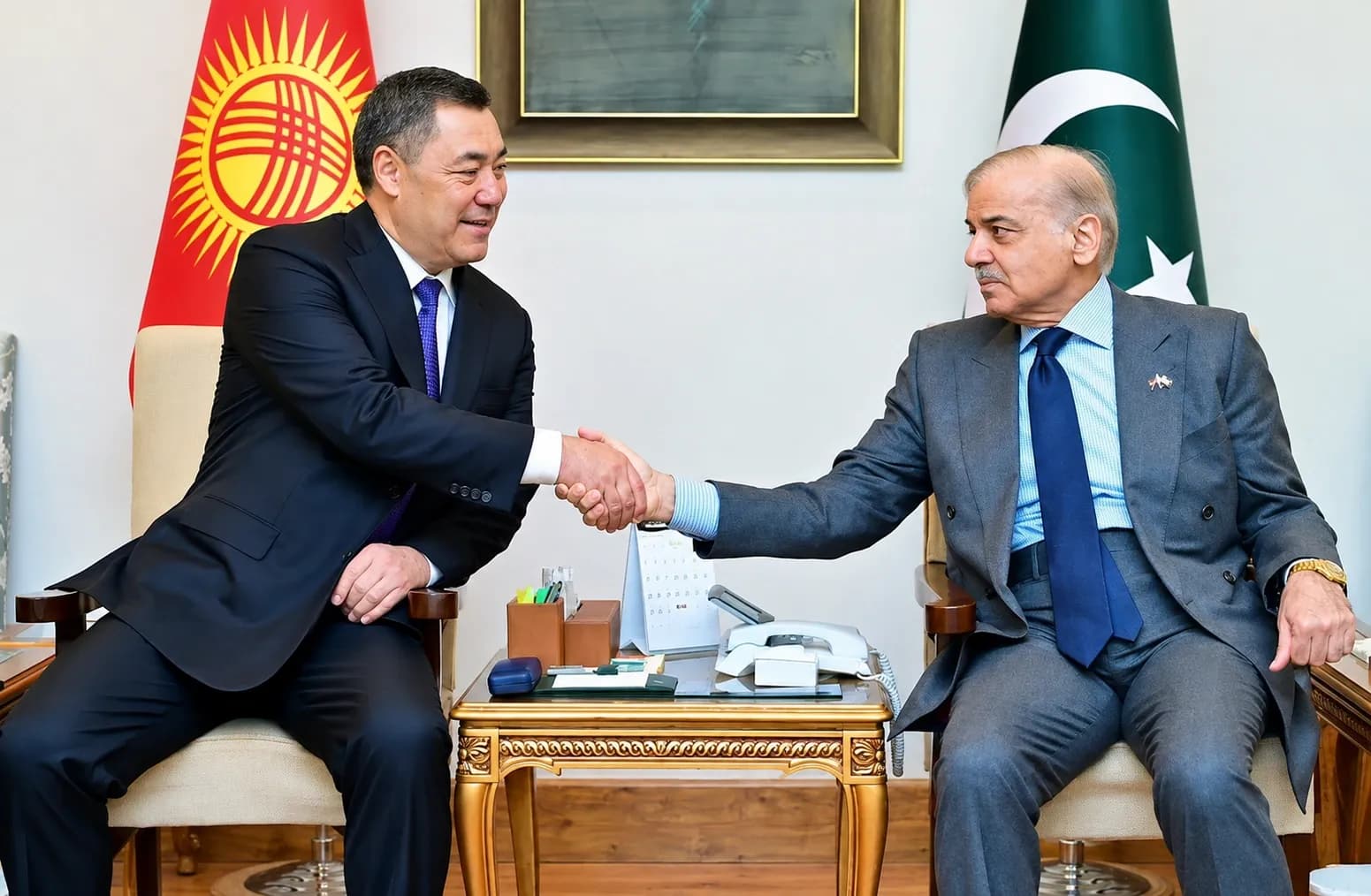
ISLAMABAD: Prime Minister Shehbaz Sharif didn't fly to Bishkek just to stand for photographs at the Shanghai Cooperation Organisation summit. He came home with a stack of signed paper that reads less like routine diplomatic housekeeping and more like a blueprint for a relationship neither country has bothered to build seriously. Until now.
Sharif and Kyrgyz President Sadyr Zhaparov watched as officials exchanged pre-signed documents covering thirteen separate agreements. Thirteen. That number alone breaks the usual pattern of state visits, where one or two MoUs get announced and everyone moves on. Extradition and narcotics enforcement landed on the same signing table as blockchain regulation and a sister-city pact between Lahore and Osh. Odd company, all things considered.
Shehbaz Sharif Kyrgyzstan Visit Delivers 13 Deals
Start with security, because that's the part nobody saw coming. Pakistan and Kyrgyzstan finalized a full extradition treaty. They also drafted mutual legal assistance arrangements for criminal matters instruments that typically take years of quiet back-channel negotiation, not a single summit sideline. Their interior ministries went further still, agreeing to jointly fight trafficking in narcotics, psychotropic substances and precursor chemicals. Central Asian trafficking routes clearly worry both capitals more than public statements usually let on.
Also Read: Pakistan to Lead SCO as Regional Powers Back Leadership
Then the money and tech angle, which really did catch people off guard. Kyrgyzstan's National Agency for Virtual Assets and Blockchain Technologies an outfit that reports directly to the Kyrgyz president signed on with Pakistan's Virtual Assets Regulatory Authority. Two countries running very different digital economies just agreed to compare regulatory notes, right as Pakistan tries to build its own crypto framework more or less from scratch.
Diplomacy Expands Into Education
Diplomacy got its own dedicated lane too. Both foreign ministries signed a two-year cooperation programme through 2027. Strategic-studies institutes from each side Islamabad's ISSI, Bishkek's National Institute for Strategic Initiatives committed to joint research. Pakistan's National Defence University struck a near-identical pact with that same Kyrgyz institute, stacking military-adjacent scholarship on top of the formal diplomatic track.
Healthcare and education didn't get skipped either. Kyrgyzstan's health ministry and Pakistan's Medical and Dental Council will now cooperate on medical education. Separately, both education ministries signed a broader agreement covering the wider sector. Climate and environment ministries added their own joint commitment on the side.
Trade got something more concrete than talk. Negotiators finalized a transit trade agreement designed to smooth commercial movement between the two countries. Science and technology cooperation got a standalone framework of its own. Even postal services made the list Pakistan Post and Kyrgyz Post agreed to cooperate on e-commerce logistics, a detail that matters more than it sounds, given how much regional trade now moves through parcel networks instead of shipping containers. Chambers of commerce on both sides signed up to push business ties directly.
And then, almost as an afterthought tacked onto the end of it all, Lahore and Osh became sister cities. A symbolic gesture, sure. But it ties Pakistan's cultural capital to a city sitting deep in the Fergana Valley — thousands of kilometres from anywhere Lahore has historically looked for partnership.
Thirteen agreements. One summit sideline. A relationship that just got a lot harder to call minor.



Leave a Reply
Your email address will not be published. Required fields are marked *