
Atlas Honda Signals 250cc and 500cc Bike Launch Plans
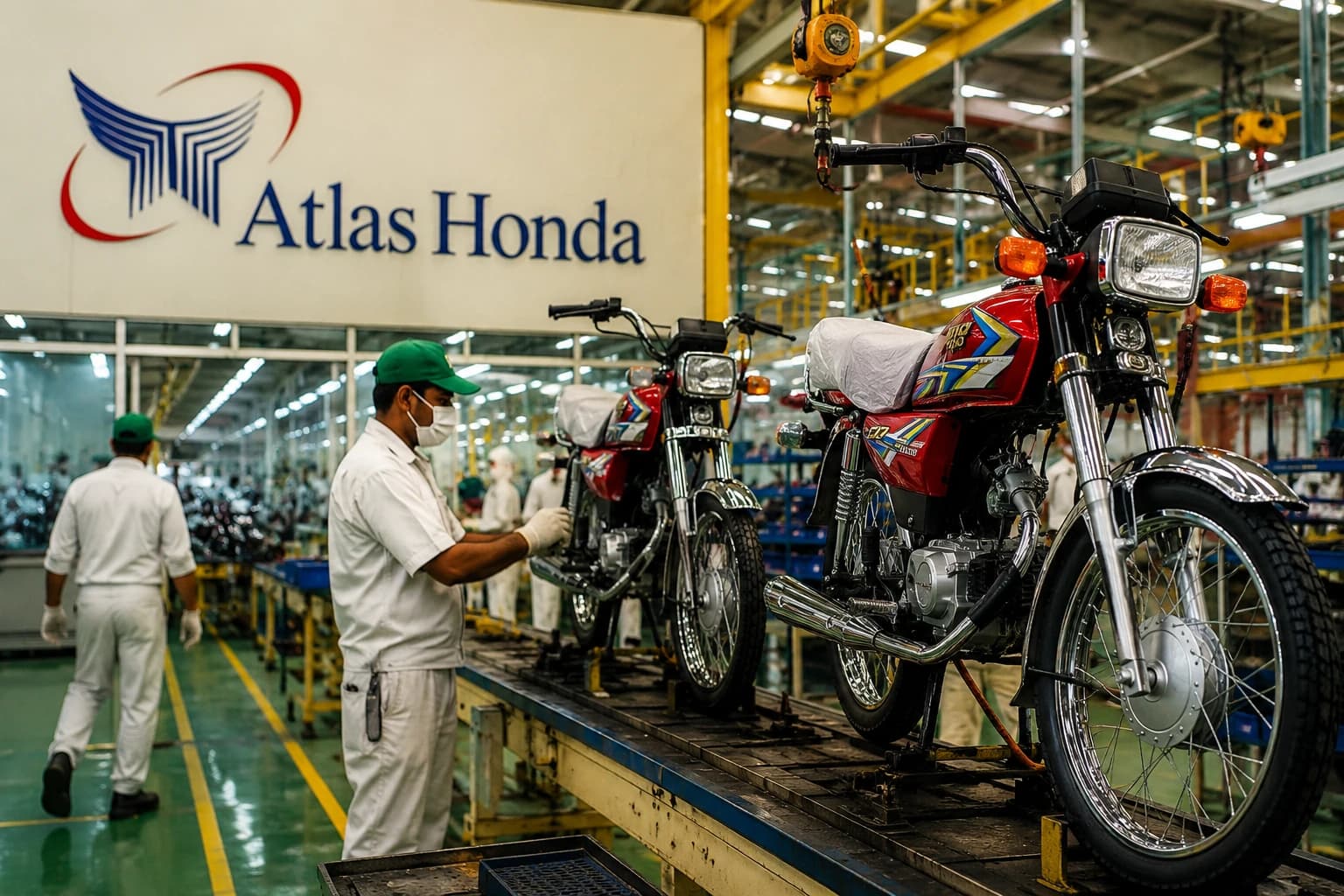
KARACHI: Atlas Honda Limited laid out an aggressive growth roadmap at its MY26 Corporate Briefing Session, telling investors the company could soon roll out 250cc and 500cc motorcycles if rising remittance inflows keep pushing customers toward bigger-engine bikes.
Atlas Honda 250cc 500cc Bikes
The management team pointed to four levers driving shareholder value going forward: sustained double-digit sales growth heading into MY27, expansion of the after-sales segment and distribution network, a shifting sales mix toward 100cc-plus bikes that carry fatter margins than the 70cc segment, and a treasury position sitting on a sizeable cash cushion.
Atlas Honda Capacity Expansion
Capacity constraints are already testing the company's limits. Atlas Honda's rated capacity stands at 1.65 million units annually, roughly 137,500 units a month, yet the plant hit 163,000 units in May alone running well above its official ceiling through overtime shifts and support from its vendor network. A Rs5-6 billion capacity expansion, targeted for completion by December 2026, will push annual capacity to 2 million units, about 166,000 units monthly.
The math behind that expansion reveals just how capital-intensive engine production really is: every 100,000 units of engine capacity requires roughly Rs1-1.5 billion in capex, separate entirely from assembly and vendor capacity, which the company says it can already scale beyond 2.5 million bikes a year. Management indicated future capacity decisions will hinge specifically on internal combustion engine demand the company considers its current setup sufficient for expected EV demand and isn't planning any EV-specific capacity additions for now.
Pakistan Motorcycle Market
Atlas Honda's rise is coinciding with a retreat from Chinese motorcycle brands, whose combined sales have fallen to around 400,000 units from a historic peak of 1.2 million. Meanwhile, recent oil price hikes are pushing consumers away from cars and toward motorcycles, helping lift the overall two-wheeler market to roughly 2.3 million units still short of the 2.7 million peak the industry hit back in 2017.
Within Atlas Honda's own product mix, the 70cc segment still commands 50-55 percent of sales despite thinner margins, while the higher-margin 100cc-plus category holds a 40-45 percent share and both segments are growing simultaneously, not trading share with each other.
Also Read: Can GPX Libre 150 Finally Dethrone Honda CB150F in Pakistan
On costs, the company's 70cc bikes run about 95 percent localized, with aluminum and steel sourced domestically, though pricing still tracks London Metal Exchange benchmarks, leaving input costs exposed to global commodity swings. Management said a 3-6 month raw material inventory buffer serves as the company's primary hedge against short-term price volatility. Notably, Atlas Honda hasn't raised prices in three years, aside from levy-related adjustments a retention strategy management credits for holding onto market share.
Pakistan Motorcycle Sales Growth
Roughly 60 percent of Atlas Honda's customer base ties back to the farming sector, and management is banking on a crop price recovery to keep boosting motorcycle demand. On policy, the company said talk of a new auto policy remains just market speculation for now, with no official announcement yet, and confirmed Budget FY27 tariff changes haven't touched the two-wheeler segment so far.


Leave a Reply
Your email address will not be published. Required fields are marked *