
Hajj 2026: Saudi Arabia Adds Rest Areas, Escalators and Cooling Systems for Millions of Pilgrims
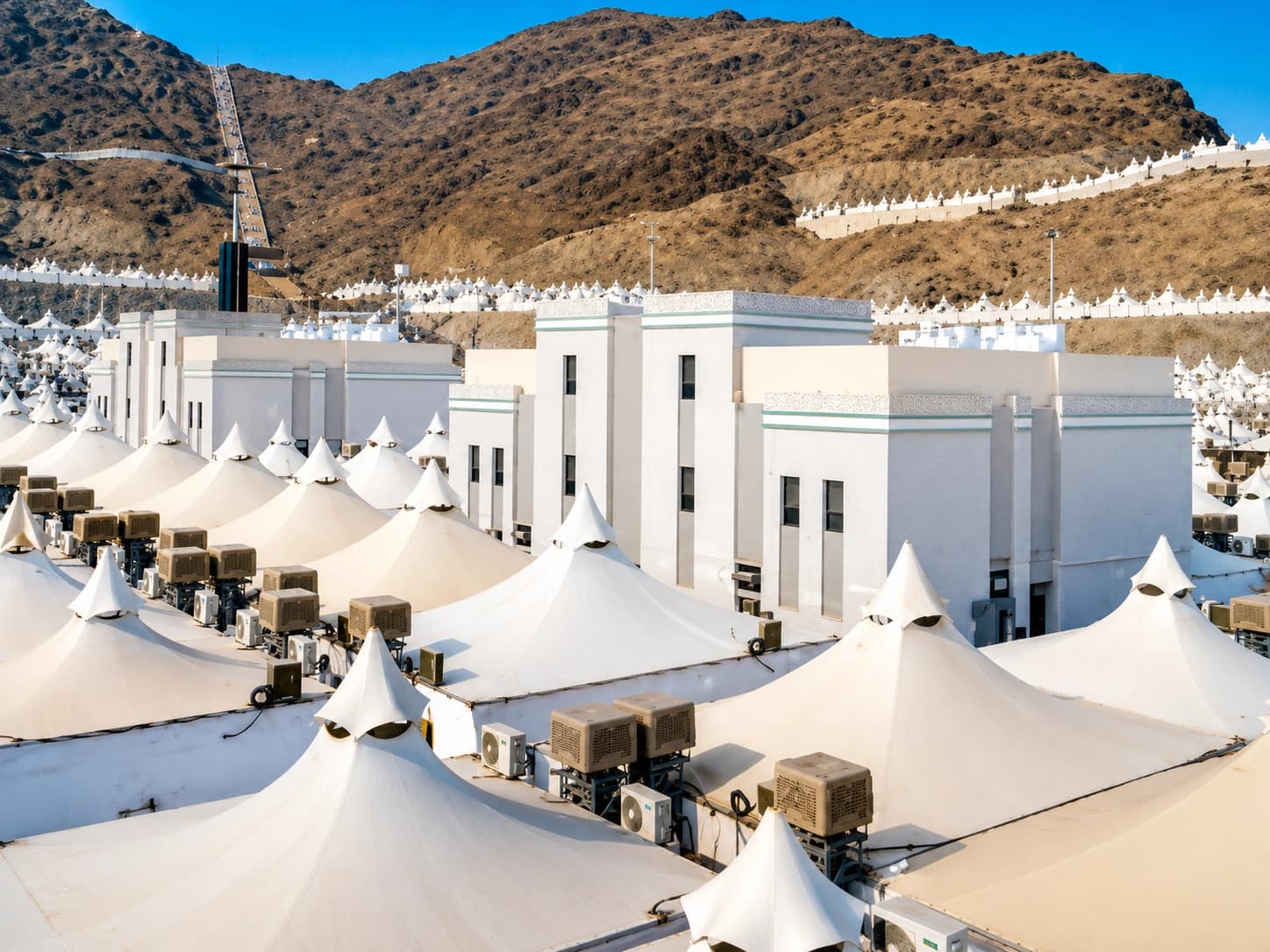
MAKKAH: The Kidana Development Company of Saudi Arabia has undertaken a wide range of construction and service activities in the holy sites before the start of the Hajj season in the coming year. This includes an array of improvements to the infrastructure for the Hajj 2026 infrastructure upgrades including rest rooms, air conditioning systems, toilet services, escalators, walkways, and energy sources.
The Kidana, operational arm of the Royal Commission for Makkah City and Holy Sites, disclosed to Arab News the duration of time needed for completion. All projects are focused on ensuring that certain aspects of the pilgrimage experience are improved; such as comfortable accommodation, movement from one place to another, controlling temperature and sanitation.
36,000 Square Metres of New Rest Areas Created for Pilgrims' Routes
In the second stage of Kidana's pilgrim rest area project, an additional 36,000 square metres of developed area were created on the route linking the holy places for the benefit of pilgrims walking to the holy places, building upon the area created in the earlier Hajj season.
Rest areas included within the development of infrastructure for the Hajj 2026 include arrangements for seating area, service booths, shade canopies equipped with misting fans, as well as rubber flooring, which are intended to facilitate easy movement of pilgrims. This is in response to the physical difficulties encountered during the pilgrimage period when the temperature is high in Makkah.
60,000 Trees Planted and 400 Misting Fan Columns Replaced at Jamarat
The Kidana project has been able to plant more than 60,000 trees in the second phase of their greening program at the holy places, which is an extensive environmental project that ensures provision of natural shading, cooling of surface temperatures, and better visual environment.
For the Jamarat Bridge where the pilgrims are to stone the devil, the improvements to the Hajj 2026 infrastructure project included the installation of 400 misting fan columns in two stages. The cooling system at the Jamarat can handle around 180,000 pilgrims each hour, making it capable of regulating the thermal conditions of what is considered the most strenuous part of the Hajj pilgrimage.
7,838 Toilets in 79 Two-Storey Restroom Blocks in Mina
The sanitation facilities witnessed an immense growth as part of the infrastructure development for Hajj 2026. The development program for toilets in Mina by Kidana includes 79 two-story blocks that have 7,838 toilets after the addition of 18 two-story toilet blocks for this year.
The increased number of restrooms serves to solve two of the greatest problems faced when organizing mass pilgrimages: capacity and waiting time. The increased number of restrooms, over 7,800, distributed throughout Mina, eliminates the waiting that is associated with having few restrooms where millions of pilgrims need access at once.
ALSO READ: Pakistan Sends 8,000 Troops and JF-17 Fighter Jets to Saudi Arabia Under Secret Defence Pact
Escalators Running In Total 74 Numbers in Mina
The mobility of pilgrims from one level to another in Mina gets an immense boost because of the escalation program for Hajj 2026 infrastructure upgrade. The escalators running in total numbers will increase from 40 to 74 after completion of three phases of the program.
The presence of escalators eliminates any physical exertion that would be experienced while maneuvering through Mina's various levels by pilgrims who are elderly or have some physical impairment, as well as those who suffer from accumulated fatigue due to several days of performing rituals. The efficiency of crowd movement depends on the ability of the escalator to cope with its traffic during peak movement hours.
Shading Over 272,000 Square Metres of Arafat Mountain
The most significant assembly during the Hajj ceremony occurs at Arafat Mountain. Millions of Muslims assemble at Arafat Mountain in what is viewed as the spiritual climax of the whole pilgrimage journey. In the recent infrastructure improvement project for Hajj 2026, the shading area at Arafat was increased to over 272,000 square meters.
Second stage of Arafat Shading Project included addition of 18 modern shades, 36 mist fans, 7 air conditioning units, and 107 more mist columns. This increase helped to expand the area covered by shade and increased cooling facilities available for pilgrims during the assembly. It is important to note that this facility helps in increasing utilization ratio of previously uncovered areas.
240,000 Sqm Pedestrian Paths and Intelligent Charging Stations
The network of pedestrian paths that link the holy sites now spans an area exceeding 240,000 square meters through the new infrastructure enhancements for the Hajj 2026 project. The paths consist of over 150,000 square meters of rubber floors, which are easier on the feet and have better traction than concrete in rainy weather.
The supporting infrastructure for the pathway network consists of 25,000 square meters of green areas, 241 misting fan columns, and 240 smart device charging stations. The charging stations cater to a basic need of today's time, which is that pilgrims depend a lot on their mobile devices for navigation, communication, translation, and record keeping during the Hajj season.
6,000 Mist Columns and SCADA System Monitoring
Kidana manages over 6,000 mist columns and above 25,000 chilled water taps in all of the holy sites — a cooling and hydration system that helps provide services to pilgrims at all the points where they can rest and move. The infrastructural improvements for the 2026 Hajj were done using a Supervisory Control and Data Acquisition system that can monitor over 400 reserve tanks, above 300 cooling units, 800 electrical panels, 500 misting fans, and 1,000 restrooms. T
hrough the SCADA system, central monitoring and quick response to any fault in equipment, supply disruptions, and other operational irregularities can be done within the whole network at once. This system detects the problem right away instead of receiving reports about it from the field.
Projects of Accommodation, Energy Upgrading and 127%
Brand Growth The Hajj 2026 infrastructure improvements not only apply to public services but also to accommodation and energy infrastructure. The finished project of Rabiah Kidana provides an area of more than 33,000 square meters, whereas Kidana Al-Khaif Tents provide another 24,000 square meters for pilgrims.
Upgrades in the electrical network with a capacity of 550 megavolt amperes guarantee that the power network can carry the full load when all cooling, lighting, sanitation, and digital services are running at full capacity. The fire and cooling network project created 188 residential blocks including 565 camps.
What the Upgrades Offer to This Year’s Pilgrims
Each element of this program rest, cooling, mobility, hygiene, shade, path quality, connectivity, and energy responds to a demonstrated need driven by the realities of Hajj.




Leave a Reply
Your email address will not be published. Required fields are marked *