

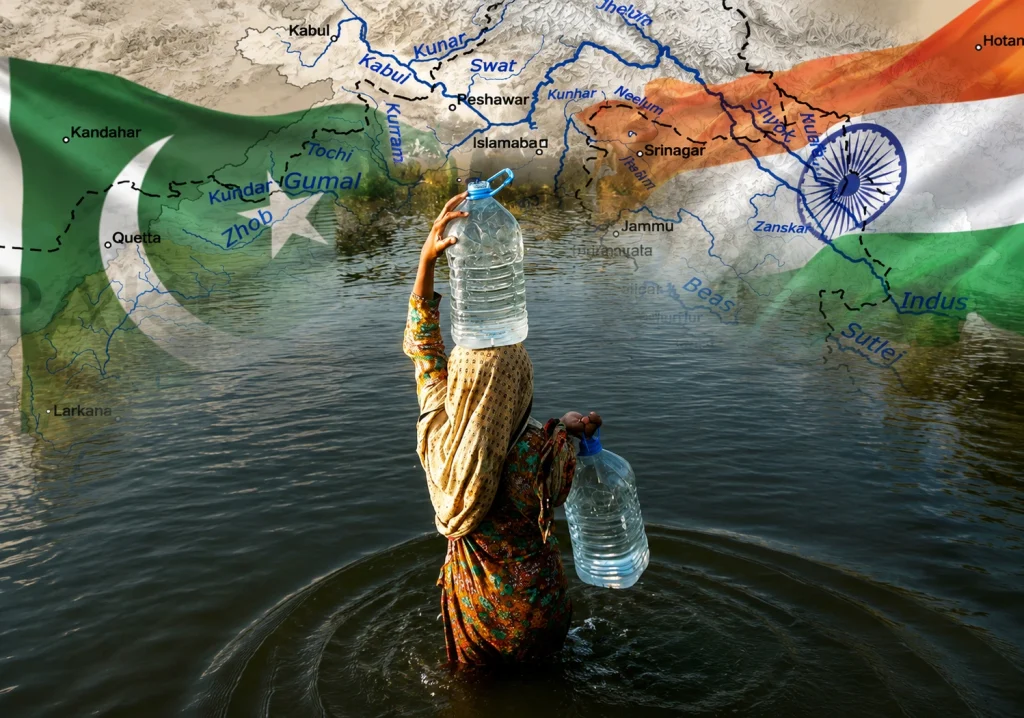
ISLAMABAD: Pakistan had told the world in unequivocal terms that there could be no amendment, revocation, suspension or abeyance of the Indus Waters Treaty by any individual entity.
“The people of Pakistan have an inalienable right to the waters of the Indus River. Any unilateral attempt to alter the treaty is unacceptable.”
Federal Minister Attaullah Tarar
This announcement was made by Federal Minister for Information & Broadcasting Attaullah Tarar at the start of an international conference called “Indus Waters Treaty: Instrument of Peace & Regional Stability.” This message was meant for New Delhi, and the whole world was paying attention.
Pakistani Stance: At the Heart of It
There were three key points in Pakistan’s stance at the seminar:
- Legality: India’s decision to suspend the treaty is immoral, illegitimate, and illegal on all counts. This is because the 1960 World Bank treaty binds the two nations on equal terms.
- Humanitarian: The Indus River is essential for the survival of over 240 million people in Pakistan. As mentioned by Tarar, water is the matter of survival for Pakistan.
- Historical: This treaty survived several wars and decades of animosity between the two nations. This historical legacy shows that dialogue and fulfillment of commitments is the only way towards peace.
ALSO READ: China, Pakistan Can Jointly Enforce Indus Waters Treaty: Victor Gao
Unified Message From the Leadership of Pakistan
The prime minister of Pakistan, Shehbaz Sharif, Field Marshal Syed Asim Munir, and the minister for defence, Khawaja Muhammad Asif, have sent the same message to the people of Pakistan. That message is the fact that Pakistan will never compromise on its water rights. It is also evident from the statement of Tarar that the leadership of Pakistan was fully ready to answer any attack.
This united effort on all fronts is an indication that the Indus Waters Treaty conflict between Pakistan and India is now at the topmost level of importance from a national security perspective in Pakistan.
Climate Change Heightens This Struggle
Tarar linked the Indus Waters Treaty of Pakistan-India to an even broader issue of survival – climate change. The rising temperatures and altering climate patterns have caused added pressure on water sources within the region. Within this perspective, there is more need for the treaty regime than ever before.
The minister appealed to the press to fight misinformation through responsible reporting, since responsible journalism will help inform the public when misinformation has become a challenge that could lead to a very explosive situation.
What’s Next?
Pakistan plans to take up the matter through all possible means in international law and diplomacy. Tarar emphasized that any nation cannot make changes to an international agreement on its own and Islamabad is fully prepared to enforce that principle on India.
Indus Waters Treaty Dispute between Pakistan and India is no longer a dispute concerning water alone; it poses a threat to the whole structure of international law, according to Pakistan, which plans to take up both.

Nayab Fatima is a media professional specializing in fact-based journalism, research, and analytical reporting on technology, telecom, aviation, and automobiles.