
Pakistan Unveils Historic Immigration Policy to Protect 12 Million Overseas Pakistanis
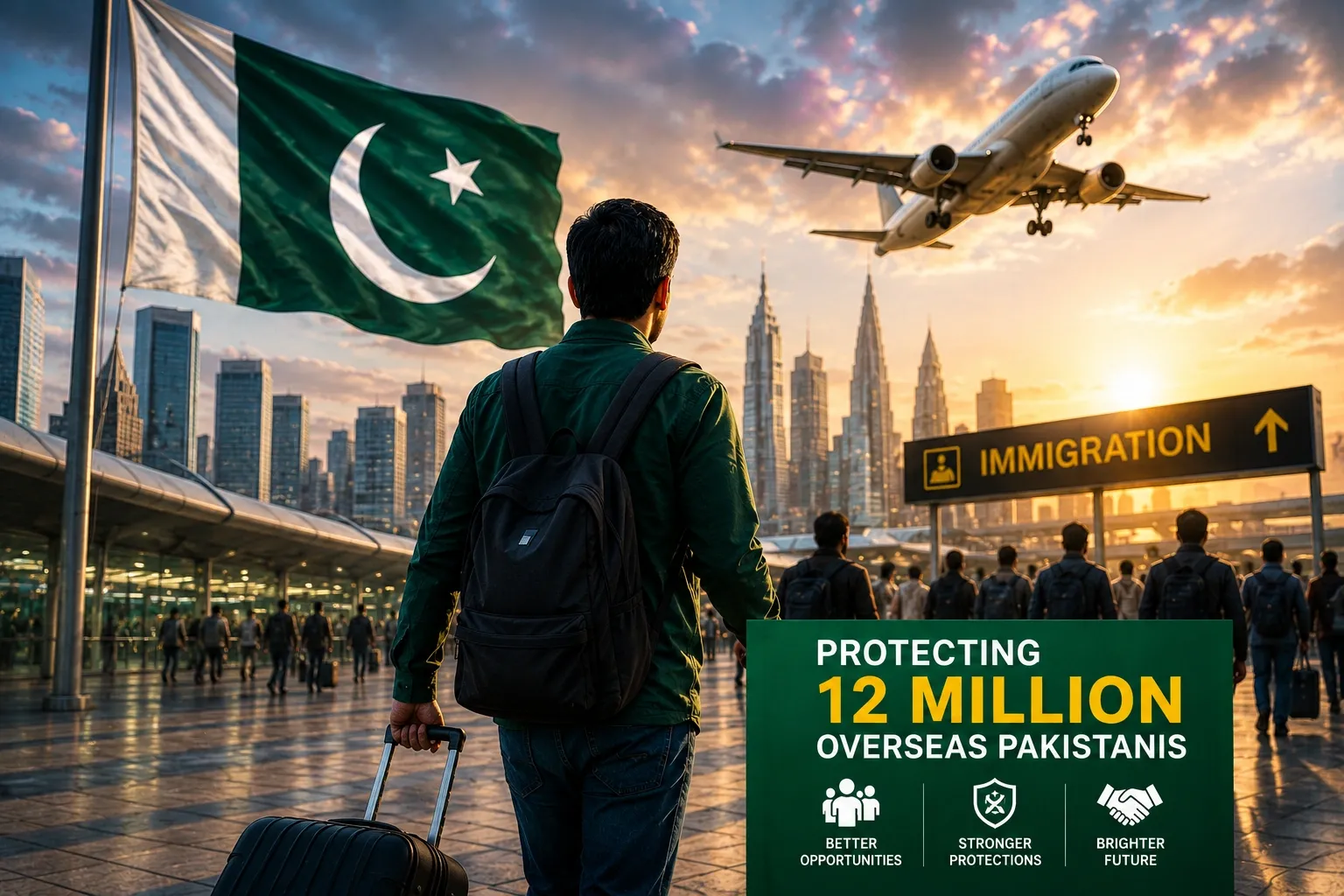
ISLAMABAD: Chaudhry Salik Hussain officially introduced the National Immigration and Welfare Policy 2026 of Pakistan on Thursday, describing it as the most important overhaul of the nation’s labour migration framework in recent times.
The federal minister of Overseas Pakistanis and Human Resource Development formulated this policy based on the core idea of safe migration paths, protection from exploitation, skills training, and assistance to migrants upon their return home. Over 12 million Pakistanis are currently residing in foreign countries.. Last year they sent home over $41 billion in remittances money that props up the national economy at a scale few other sectors match.
Pakistan Immigration Policy
Salik called the launch a historic milestone. He didn't stop there. He described overseas Pakistanis as the country's most effective ambassadors, pointing to their professionalism and work ethic as proof.
His argument rests on timing. Technology is shifting fast. Global labour markets are shifting with it. Salik wants Pakistan positioned as a supplier of skilled workers before other countries corner that market first, not after.
Also Read: PM Shehbaz Orders Embassies to Fast-Track Overseas Jobs for Pakistani Youth
The policy tries to bring order to a system that currently involves government departments, training providers, employers, development partners and the private sector, all operating somewhat separately. Salik wants them working from one national framework instead, so a worker gets support before departure, during employment abroad, and again on return.
He put real emphasis on what happens before a worker ever leaves the country. Market-driven skills training, accurate information about job conditions, and ethical recruitment practices Salik argued these matter more than reactive protections once a worker is already overseas and facing a bad employer or exploitation.
Making this work will take coordination Pakistan hasn't always managed well: federal and provincial governments, regulatory bodies, employers, development organizations and overseas Pakistani communities all need to pull in the same direction, Salik said.
He thanked the provincial governments and development partners, including the International Centre for Migration Policy Development, for their role in shaping the policy through consultation. He also credited the Special Investment Facilitation Council for helping finalize it.
Salik closed on a line meant to stick: migration should never mean uncertainty or vulnerability. It should mean opportunity, dignity, and progress.
His closing appeal reached further than policy detail. He wants a Pakistan where workers headed abroad travel with confidence, work with pride, and stay connected to a country that recognizes what they contribute.
Whether the policy delivers on that will come down to execution — the federal-provincial coordination Salik flagged, and whether ethical recruitment mechanisms actually get enforced rather than just written into a document. Pakistan's remittance economy depends on the answer.


Leave a Reply
Your email address will not be published. Required fields are marked *