
Satellite Photos Expose Islamabad's Vanishing Forest, PM Demands Answers
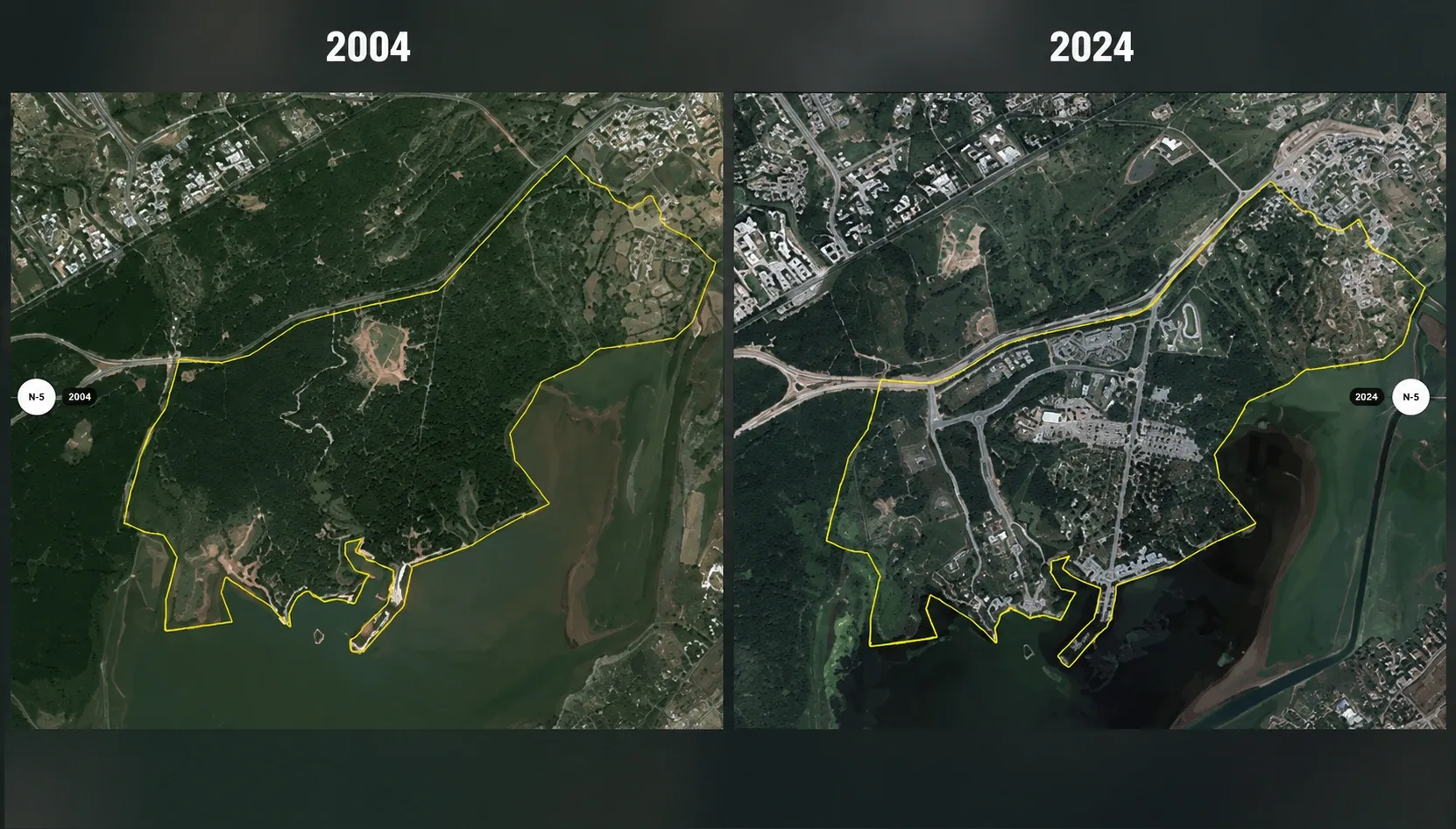
ISLAMABAD: Prime Minister Shehbaz Sharif is putting Islamabad's civic administration on notice. Satellite images from Pakistan's own space agency show the capital has lost roughly half its tree cover at Rawal Lake park over two decades, and the prime minister wants the Capital Development Authority to fix it and report back.
Rawal Lake Tree Cover Shrinks
The evidence came from Suparco, which posted side-by-side images of Lake View Point from 2004 and 2024 on its climate-monitoring website. The contrast is stark. Dense greenery covered the area in 2004. Twenty years later, commercial development has replaced much of it. The water itself tells the same story greenish in 2004, blackish by 2024.
Recreational infrastructure explains much of the change. Developers built barbeque points, a go-karting track, an off-road circuit, a golf club, a horse-riding facility, a food street, a paintball arena, and two large parking lots on land that once held forest cover. Prime Minister Sharif has directed the CDA to restore the green cover, control untreated waste entering Rawal Dam, and submit a progress report.
Forest Loss Confirmed
Global Forest Watch data adds harder numbers to the picture. Islamabad lost 14 hectares of tree cover between 2001 and 2025 about 0.46% of the tree cover the city held in 2000 and released 6.0 kilotonnes of carbon emissions in the process. Settlements, infrastructure, and permanent agriculture drove 77% of that loss, according to the same data.
Also Read: Pakistan's 3,000 Glaciers Are Melting Fast, Putting Seven Million at Risk
CDA spokesperson Shahid Kiyani pushed back on part of the narrative. He said developers built Rawal Lake Park between 2005 and 2015, and that phase reduced the area's shrubs and vegetation. Tree cover has held steady since 2015, he said, citing Suparco's own satellite imagery, and no tree cutting has occurred in the area recently.
The pollution problem extends beyond trees. Fish died in Rawal Dam last week, and the Pakistan Environment Protection Agency blamed rising sewage and detergent runoff for depleting oxygen levels in the water. Rawal Dam supplies drinking water to Rawalpindi residents, which raises the stakes considerably. Pak-EPA says building a sewage treatment plant upstream remains the only real technical fix.
Concerns Spread Further
An official at the Ministry of Climate Change called the fish deaths a recurring problem, not a one-time event. Pak-EPA issues similar statements every year, he said, pointing to thermal shock and oxygen depletion each time, while the underlying sources of untreated waste stay unaddressed. The ministry frames Islamabad's environmental crisis as more than bad planning officials describe it as a violation of ecological justice and residents' basic rights.
The damage isn't confined to Rawal Dam either. Residents near Sundaymar Dam in Sector B-17 say untreated waste keeps flowing into their water source too. That dam supplies drinking water to nearby housing societies, and residents say their complaints to the CDA have gone nowhere so far.





Leave a Reply
Your email address will not be published. Required fields are marked *