
Pakistan Railways Delivers Best Financial Performance in 78 Years
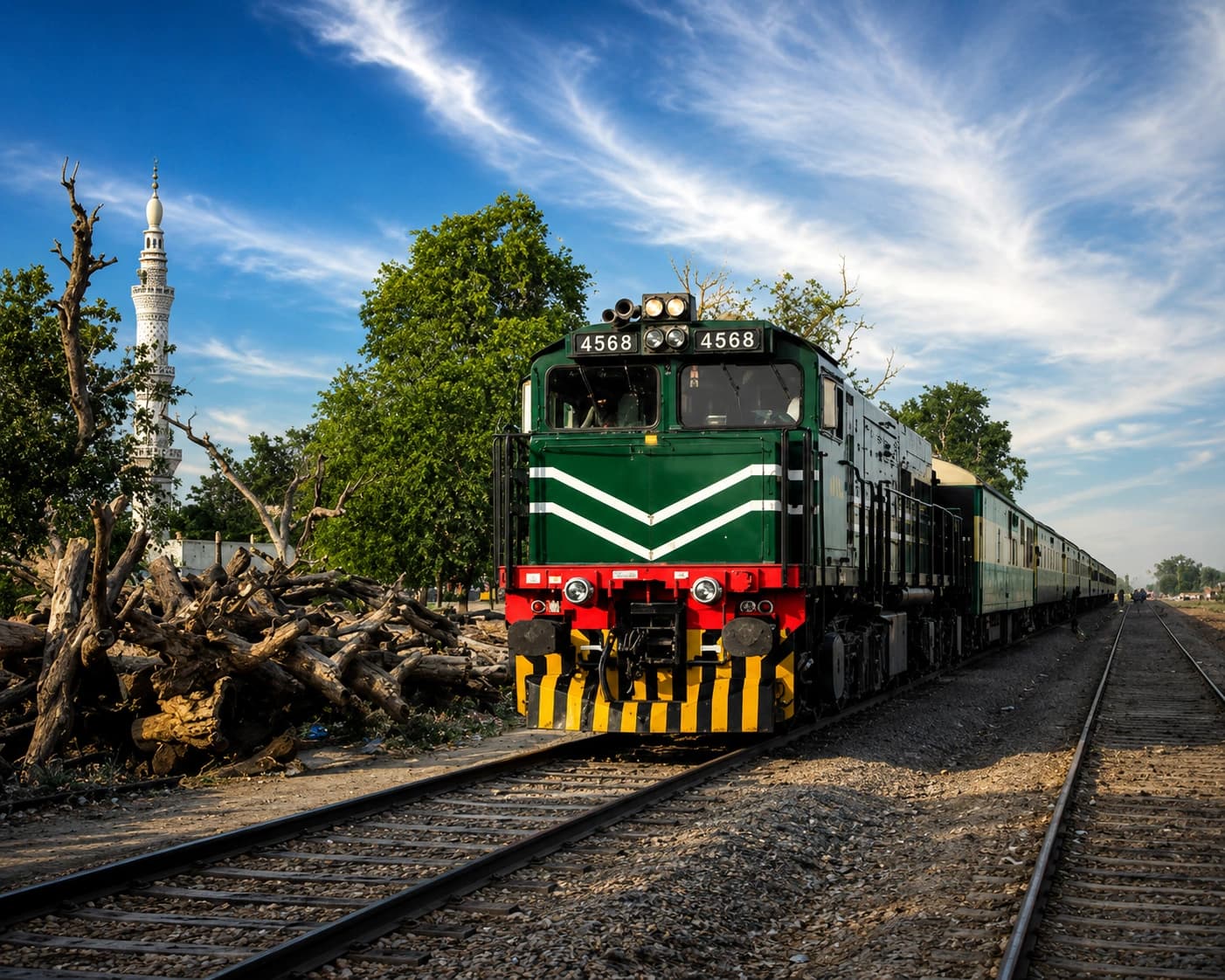
Record-breaking earnings have been recorded by Pakistan Railways in the form of Rs115 billion in its fiscal year 2025-26, which was termed by Federal Minister for Railways, Mr Hanif Abbasi, as the first time in the history of the organization’s 78 years that such a level of revenue had been reached.
FY26 financial records of the Pakistan Railways have been made public during the press conference conducted at the Pakistan Railways headquarters in Lahore, where the minister mentioned the better governance, operational efficiency, and hard work of the officers and employees for this accomplishment. Breaking record does not happen instantly; it is done through continuous performance, and it has been accomplished through three consecutive years of increased profit.
Digitalisation, Transparency and Merit-based ContractsThe minister made the reasons for the record revenue FY26 success of Pakistan Railways clear by providing specific examples rather than vague statements.
The Badami Bagh auction generated Rs450 million in revenue from an estimated Rs52 million — a nine-fold excess of estimate as a result of the open auction system being employed rather than discretionary contract awarding.
One example is enough to illustrate the magnitude of the governance gains that, according to the minister, contributed to the overall revenue growth. If the contracts are awarded on the basis of merit, via open competition, the government gets its full value. But if the contracts are awarded via patronage or negotiation, the government gets only part of it.
Outsourcing of Trains, Increasing Fleet Size
There have been five outsourced trains as a result of the public-private partnership scheme and it has yielded Rs3 billion in earnings. The government plans to outsource more trains through this scheme in order to lessen the workload of Pakistan Railways and incorporate private-sector efficiency into the business of passenger transport.
There have been three new train rakes delivered for the Awam Express. There is ongoing locomotive refurbishment, with tenders being released for the acquisition of 16 new power plants using the money generated by the railways. There will be 80 new power plants added to the fleet size by March 2026, according to Abbasi, to overcome the problem of locomotive shortages.
ALSO READ: NA Approves Rs.27 Trillion Budget, Rejects Every Opposition Challenge
Advances in ML-1, New Railway Lines Unveiled
The minister repeated that the rehabilitation of ML-1, ML-2, and ML-3 is essential for Pakistan Railways. Discussions are being held with Asian Development Bank about financing for ML-1, and very soon Prime Minister Shehbaz Sharif will inaugurate the ML-1 project. The rehabilitation will lead to saving up to five hours from Rohri to Karachi.
Eight new branches of railways will be developed, and rail connectivity will reach remote areas of Pakistan. In addition, two new railway routes will be operationalized in Sindh through MoUs. Balochistan government has allocated funds for the upcoming People's Train project.
Higher FY27 Goals Established
The Pakistan Railways’ accomplishment in FY26 revenues will be the baseline against which FY27 goals will be judged as follows:
- Freight goal: Rs65 billion
- Passenger goal: Rs60 billion
- Total Goal: Rs125 billion and over
Abbasi was hopeful that these goals could be attained based on the three consecutive years of revenue growth, the completion of the digitization process, and outsourcing of trains, power generation projects, and infrastructure development projects.



Leave a Reply
Your email address will not be published. Required fields are marked *