
Pakistan Requests US to Provide $10 Billion Exchange Facility
Exchange Support Facility (sometimes referred to as Exchange Stabilization Facility) is a financial arrangement in the form of bilateral transaction between two countries wherein the treasury or the central bank of one nation lends dollars, currency swaps or guarantee to another nation in order to stabilize its currency and increase its foreign exchange reserves.
It works in the following way:
Source of funding: In case of US, it is provided from the Exchange Stabilization Fund (ESF), which is an account managed by the US Treasury established in 1934 for stabilizing the value of the dollar.
Nature of financing: It can take the form of direct loans, currency swap lines (an agreement between two nations to exchange currencies at a certain rate which will then be reversed) or guarantees.
Maturity: Normally, these facilities are of short to medium term period although the reported maturity period of Pakistan's facility is five years which is long compared to the normal short term nature of ESF interventions.
Washington: As per an article published by Reuters, Pakistan has asked the United States to provide a $10 billion facility for foreign exchange, as per a Reuters source. This is likely to be a big help for the financially-starved Pakistani economy.
High-Level Meeting Details
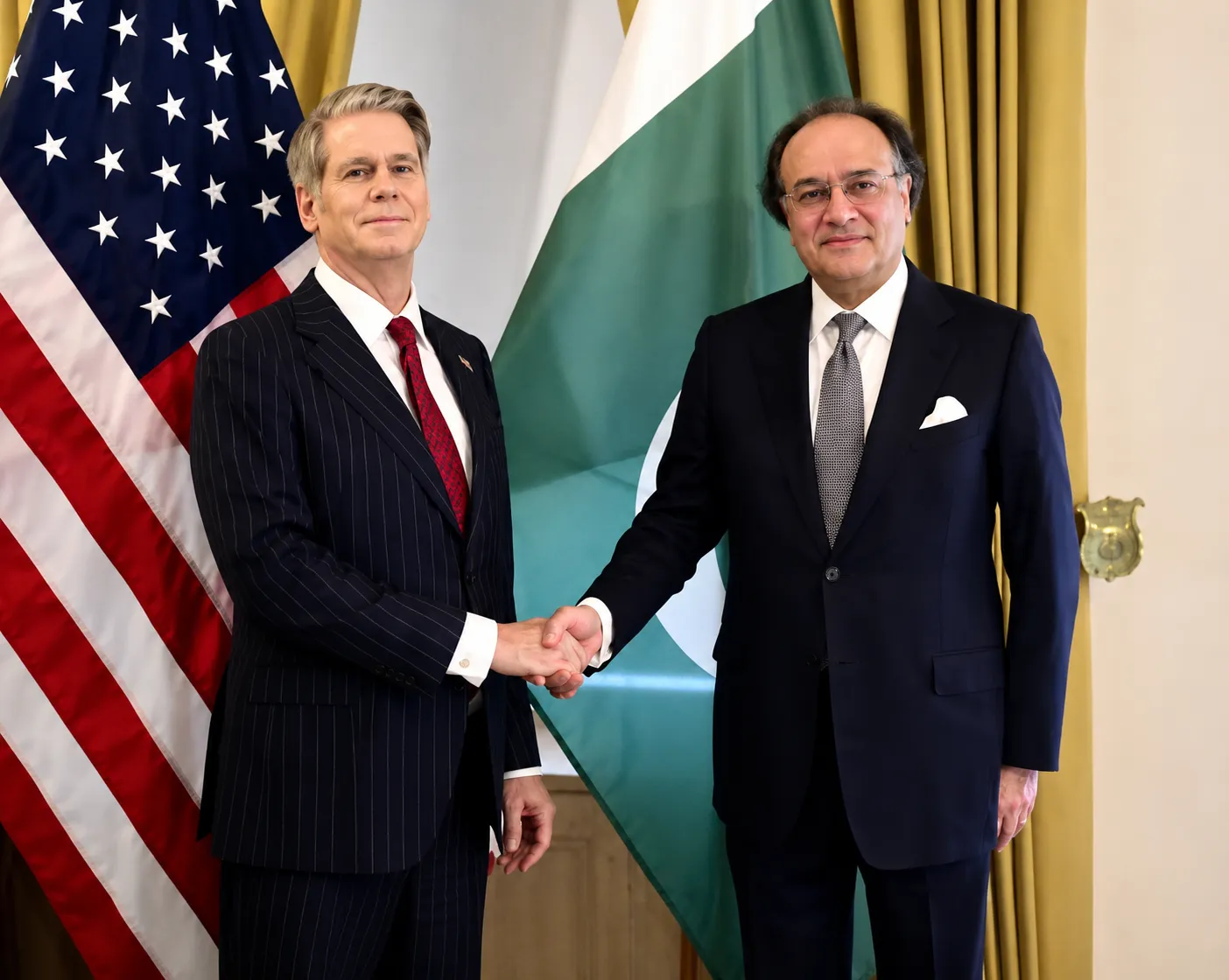
Pakistan's Federal Minister of Finance, Muhammad Aurangzeb, held talks with his US counterpart, Treasury Secretary of the United States, Scott Bessent, in Washington yesterday regarding increasing economic collaboration between the two nations. In the high-level discussion, Pakistan makes a request for assistance from the US which will be helpful in increasing the foreign exchange reserves and the sovereign credit rating of the country.
As per an official press release of the Ministry of Finance of Pakistan, Aurangzeb informed Bessent of Pakistan's efforts towards macroeconomic stability and sustainable export-oriented growth. The minister of finance also discussed the adverse effects of the geopolitics of the region on the economy of Pakistan.
High-Level Meeting Overview
Yesterday, Mr. Muhammad Aurangzeb, Federal Minister for Finance of Pakistan, held a meeting with his American counterpart, Secretary of the Treasury of the United States, Mr. Scott Bessent, in Washington to discuss growing economic cooperation between the two countries. During the high-level meeting, there is a request from Pakistan to the US which would assist in boosting foreign exchange reserves and the sovereign credit rating of the country.
According to an official statement by the Ministry of Finance of Pakistan, Mr. Aurangzeb has updated Mr. Bessent about the efforts being made by Pakistan in macroeconomic stabilization and export-led growth.
Expected Benefits if Application is Approved
In the event of the application made to Bessent being approved, Pakistan's foreign exchange reserve position will improve greatly. It is estimated that the application may ease the pressure on the Pakistan rupee and decrease Pakistan's reliance on multilateral sources of funding, which has increased tremendously due to Pakistan's current $7 billion loan from the IMF.
Since Pakistan makes the US provide for this application while at the same time maintaining stringent monetary policies through the IMF, the application would complement and not substitute the multilateral obligations.
ALSO READ: Pakistan Bleeds $3 Billion Yearly as Cotton Production Plunges to Historic Lows
Context of Diplomacy Behind the Request
According to the report, Pakistan's involvement in mediating negotiations on the issue of the US-Iran conflict has raised the strategic importance of Pakistan in the last few months. The strategic importance seems to be one of the reasons why the request has been made, as Pakistan wants to benefit from their diplomatic efforts through increased economic ties with the United States and other nations.
It is also mentioned by diplomatic sources in Washington that the chances of approval of the $10 billion request are high as the current US government has shown a great deal of interest in working closely with Pakistan and supporting the development of its economy.
What’s Up Next?
As the request for the US to facilitate the facility is made by Pakistan, the next question that arises pertains to how Washington reacts in the weeks to come. As things stand, the foreign exchange reserves of Pakistan's central bank are expected to amount to around $20 billion in 2026, although uncertainties relating to international oil prices, geo-political issues in the region, and low foreign investments persist with regard to the economy as a whole.
Leave a Reply
Your email address will not be published. Required fields are marked *