
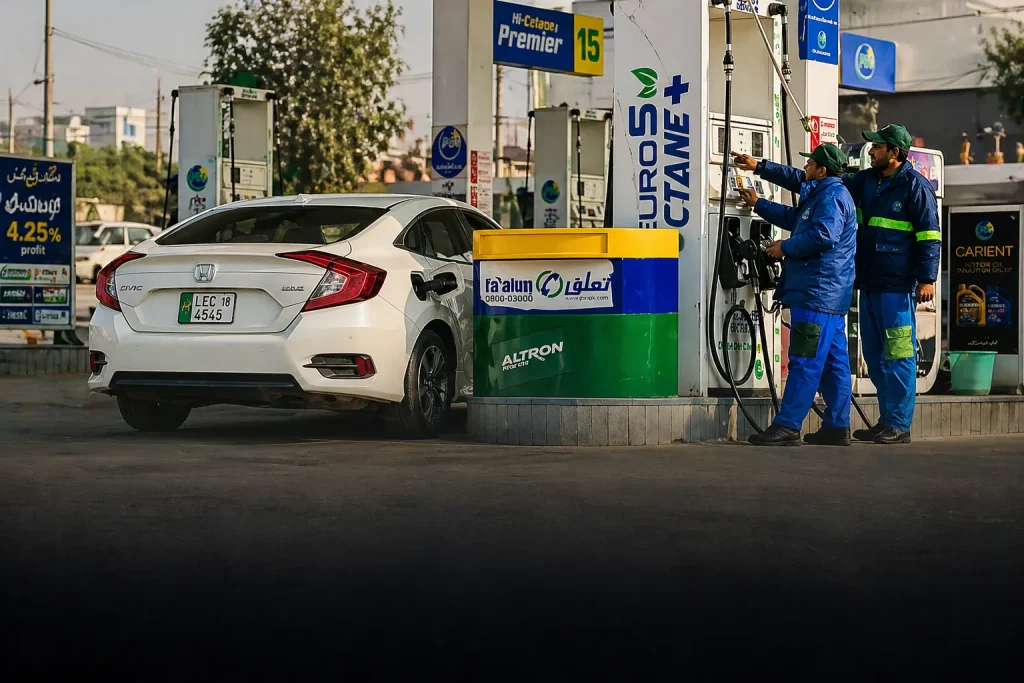
ISLAMABAD: A substantial petrol price increase in Pakistan in the coming week seems imminent for Pakistan, with reports of an estimated hike of Rs50-Rs70 per liter of oil being witnessed due to rising geopolitical issues in the Middle East and the subsequent impact on the supply chain. The upcoming weekly review of fuel prices may be influenced by the drastic rise in crude oil benchmark rates, following apprehensions of further supply cuts.
“The global oil market scenario has changed drastically in the last two weeks,” a senior official from the Ministry informed Focus Pakistan. “If the trend continues, the country’s fuel prices would see a major alteration.”
Global Energy Prices Driving Petrol Price Increase in Pakistan
This rise is consistent with the latest projections from the World Bank, where the bank estimated that there would be an unparalleled rise in energy costs, reaching 24%, in 2026, as a result of the price increases associated with the Russia-Ukraine conflict. The rise occurred largely due to supply disruptions resulting from wars in the Middle East region.
Also Read: Global Energy Prices to Jump 24% in 2026 as Oil Shock Threatens Economy: World Bank
About 30-35% of global marine oil transportation takes place via the Strait of Hormuz. As a result, the area becomes very vulnerable to any political risks. Any disruption in the passage can break supply chains and trigger sharp price volatility in international markets.
At present, Brent crude, the most significant benchmark indicator globally, shows considerable growth, staying close to its multi-month highs. According to analysts, any disturbance in the supply chain may cause excessive increases in prices.
The Exposure of Pakistan to Any External Factors
There is still considerable exposure of Pakistan to external shocks, especially when it comes to the prices of crude oil. Pakistan relies heavily on imported crude oil, and since suppliers price it in US dollars, exchange rate movements make the country even more vulnerable.
Under the current pricing formula, authorities adjust fuel prices every two weeks based on international oil rates and the exchange rate.
A senior government official stated, “Given the nature of the pricing formula, there is little scope to buffer against such shocks without government intervention via subsidies or taxes. But with fiscal considerations becoming more stringent, this possibility seems remote.”
The Inflation Problem Going to Get Worse
An increase in the price of gasoline and diesel will definitely lead to a chain reaction and result in inflation. The increase in the price of crude oil can cause an increase in transport and power generation costs.
Economists warn that a Rs50–70 per litre increase in fuel prices will push up the cost of living, particularly in major cities such as Karachi, Lahore, and Islamabad.
“The pass-through effect of fuel rate hikes in Pakistan is rapid and far-reaching,” stated an expert on energy economics. “This will not only affect consumers but also slow down economic activity.”
Policy Dilemma for Government
But now, the issue is how to achieve fiscal prudence in accordance with its agreement with the IMF while simultaneously reducing the financial strain on people in the wake of inflation.
The government had earlier used petroleum duties to offset price volatility but now finds itself in a tight corner because of the dilemma of subsidizing to help citizens in the face of escalating global oil prices.
Government officials have made it clear that the government will make its decision nearer to the time of announcement after taking into consideration any last-minute changes in global oil prices and exchange rates.
In the meantime, consumers and entrepreneurs brace themselves for what could become one of the largest hikes in fuel prices in the year.

Focus Pakistan is an independent digital news and media platform dedicated to delivering credible, insightful, and impactful journalism across Pakistan and beyond. The publication covers a broad range of sectors including business, economy, technology, telecommunications, aviation, automotive, infrastructure, energy, tourism, public policy, and national affairs.
Committed to accuracy, transparency, and editorial integrity, Focus Pakistan combines breaking news coverage with in-depth analysis, feature stories, expert commentary, and research-based reporting. The platform aims to provide readers with timely, factual, and balanced information while promoting informed public discourse and responsible journalism.
Through its commitment to high editorial standards, Focus Pakistan strives to be a trusted source of news and analysis for policymakers, business leaders, industry professionals, and the general public.