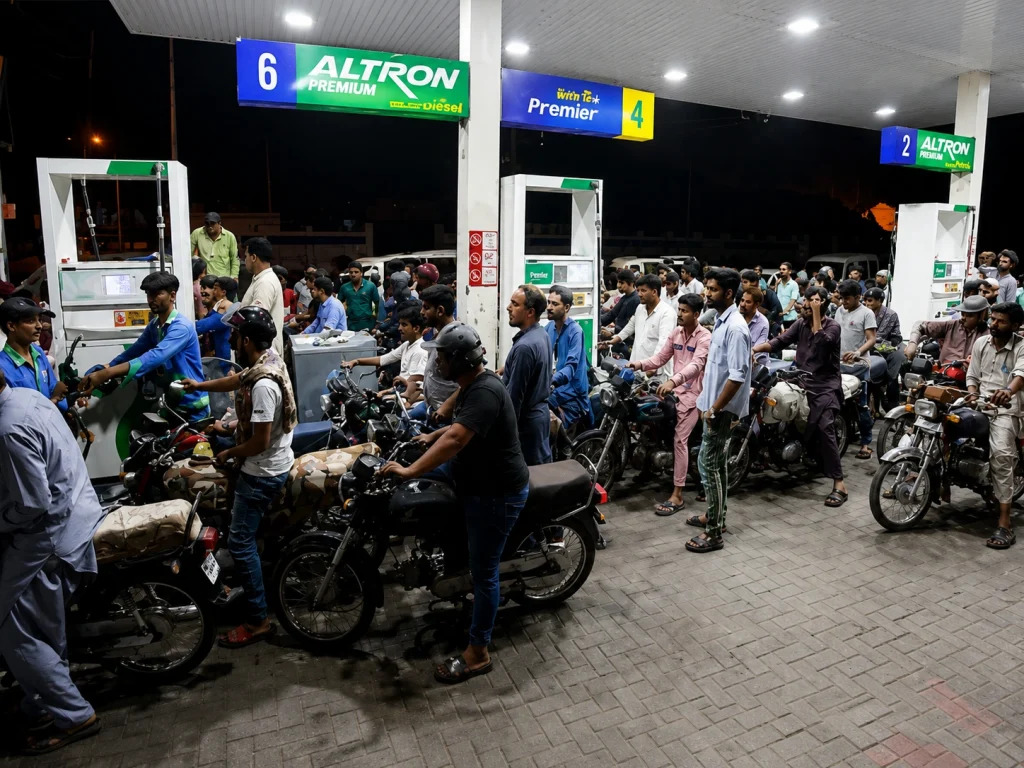
ISLAMABAD: The government of Sindh will manage the People’s Motorcycle Fuel Subsidy Scheme until May 31, 2026. The government of Sindh is providing a budget of Rs2 billion in May. More than 548,000 motorcycle drivers in the province who belong to economically deprived classes will receive financial assistance from the government under this scheme. Another government policy concerning motorbikes in Sindh Province is the reduction of the sales tax rate on motorcycles used for taxi rides. The new rate of 2% comes into effect after the previous rate was 5%.
“The spokesperson of the Chief Minister made an announcement about both decisions after the meeting,” reported local media sources. The decision to extend the motorcycle fuel subsidy for Sindh as well as cutting the taxi service fees were explained as “a package decision that was taken to help poor people in transportation.”
Rs1.096 billion distributed among 548,000 beneficiaries
The motorcycle fuel subsidy program of Sindh province has already been implemented successfully, covering more than 548,000 beneficiaries, with Rs1.096 billion distributed through the program before the approval of its extension for May by the cabinet. The distribution data was shared with the cabinet, proving that the distribution network for this program is effective and that the beneficiary group for whom this program is designed – poor motorcyclists who use motorcycles as a means of transport for earning money – is receiving subsidies as promised.
Allocation of Rs2 billion in May is a sizeable sum per month that has been made by the Sindh Provincial Budget when the financial situation of the country calls for the careful utilization of provincial budgets. Extension of the Sindh motorcycle fuel subsidy by the cabinet means that the provincial government believes in its importance and feels that it deserves some financial commitment till the end of this month.
Drop in sales tax on ride-hailing from 5% to 2%, as the government eyes digital transport revolution
The move by the cabinet to lower the sales tax on ride-hailing services using motorcycles from 5% to 2% seeks to encourage the growth of an industry that has boomed in recent years in all major cities in Pakistan. Ride-hailing on motorcycles involves the use of mobile phone applications that provide a link between riders and passengers. Ride-hailing services using motorcycles have emerged as the main source of earnings for thousands of young Pakistani men who work in big cities like Karachi and other cities in Sindh.
This has been openly accepted by the government of Sindh in that this will result in a loss of income for the provincial government of around Rs. 120 million per annum. However, considering the importance of developing the digital transportation system, the government has accepted this tax break, viewing it as an essential component for promoting development within the industry. According to Chief Minister Murad Ali Shah, this policy will help the online riders and will also boost modern transport systems in Sindh province.
ALSO READ: Petrol Price Increase in Pakistan: Rs70 Hike Likely as Global Prices Surge
Pakistan Motorbike Fuel Subsidies focus on poorest Sindh motorists
The motorcycle fuel subsidies in Sindh are based on addressing a particular weakness identified in the transport economics of Pakistan, which is the sensitivity of motorcycle users to the changes in fuel prices. Motorbikes in Pakistan constitute the largest single group of vehicles and the people who commute using these motorbikes mostly come from lower income groups whose budgets are affected by changes in fuel prices unlike other groups of vehicle users.
In allocating Rs2 billion toward the fuel subsidy program for motorcycles in Sindh only for the month of May, the provincial administration makes it clear that they realize that the beneficiaries of the program numbering 548,000 in total form a constituency whose economic stability needs assistance on account of the rising cost of fuel relative to their earnings.
Cabinet decision ensures Sindh emerges as digital transport trailblazer amongst Pakistan’s four provinces
In light of the two decisions made by the Sindh provincial government in Pakistan, extending the subsidy on motorcycles and reducing the sales tax on the ride-hailing services on motorbikes, the government has emerged as one of the more forward-thinking provincial governments in terms of ensuring its tax policies and subsidy programs are aligned to support the digital economy. While the federal government of Pakistan continues to grapple with the issue of how best to regulate ride-hailing apps in the country, the provincial government of Sindh has shown that it is willing to make changes that facilitate this process.
The saving of Rs120 million per annum due to lowering of the ride-sharing tax, in addition to the Rs2 billion monthly expenditure on subsidizing fuel for motorcycles in Sindh, shows that the provincial cabinet is ready to incur a substantial financial burden in pursuit of their goals in this area – a test of which will come at the end of the subsidy program on May 31.