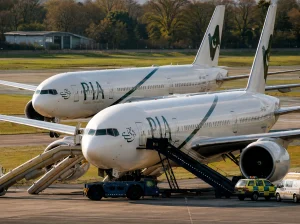
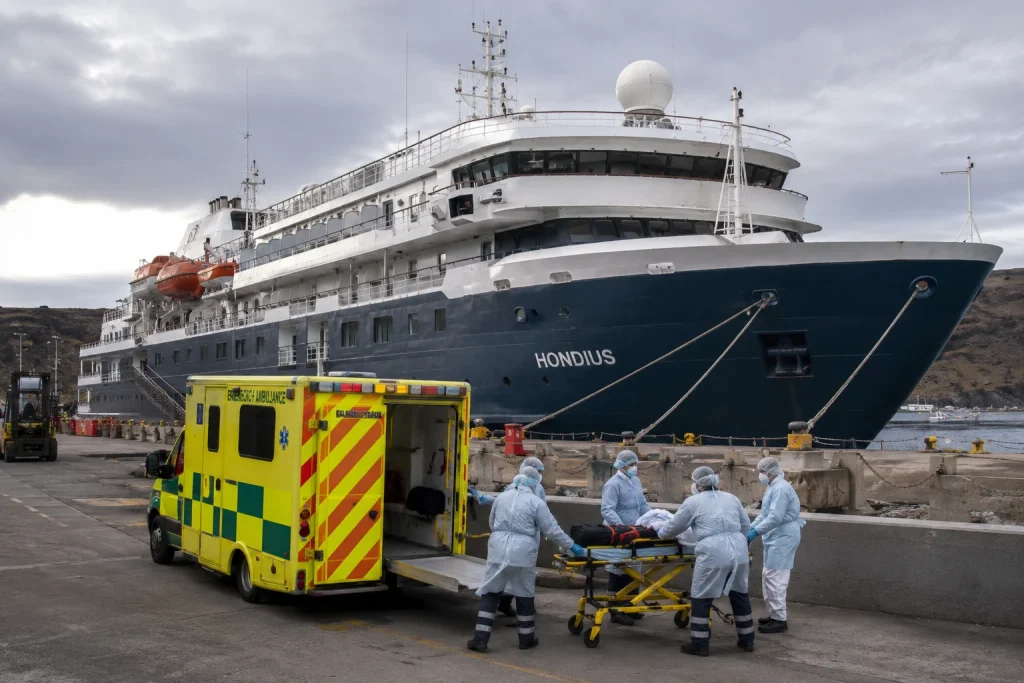
LONDON: Hantavirus outbreak fears have intensified after three passengers died aboard the MV Hondius cruise ship, triggering a global health alert and a massive international contact-tracing effort.
The cruise ship, MV Hondius, had tourists from the UK, America, South Africa, the Netherlands, Switzerland, and elsewhere on board. This international crowd has made the process of identifying anyone at risk a “mammoth effort,” as put by one British health department official. However, before anyone starts panicking, experts have advised everyone to keep their cool.
Not Another Covid
The WHO was blunt about it. Dr Maria Van Kerkhove stepped forward Thursday and told the world directly: “This is not Covid, this is not influenza, it spreads very, very differently.” The Andes strain of hantavirus driving this outbreak simply does not travel the way respiratory viruses do. It does not float through the air in crowded supermarkets or spread through a handshake. Walking in the park, going to work, attending a school – all these things do not put anyone in any danger.
Also Read: Pancreatic Cancer New Treatment Delivers Historic Survival Results
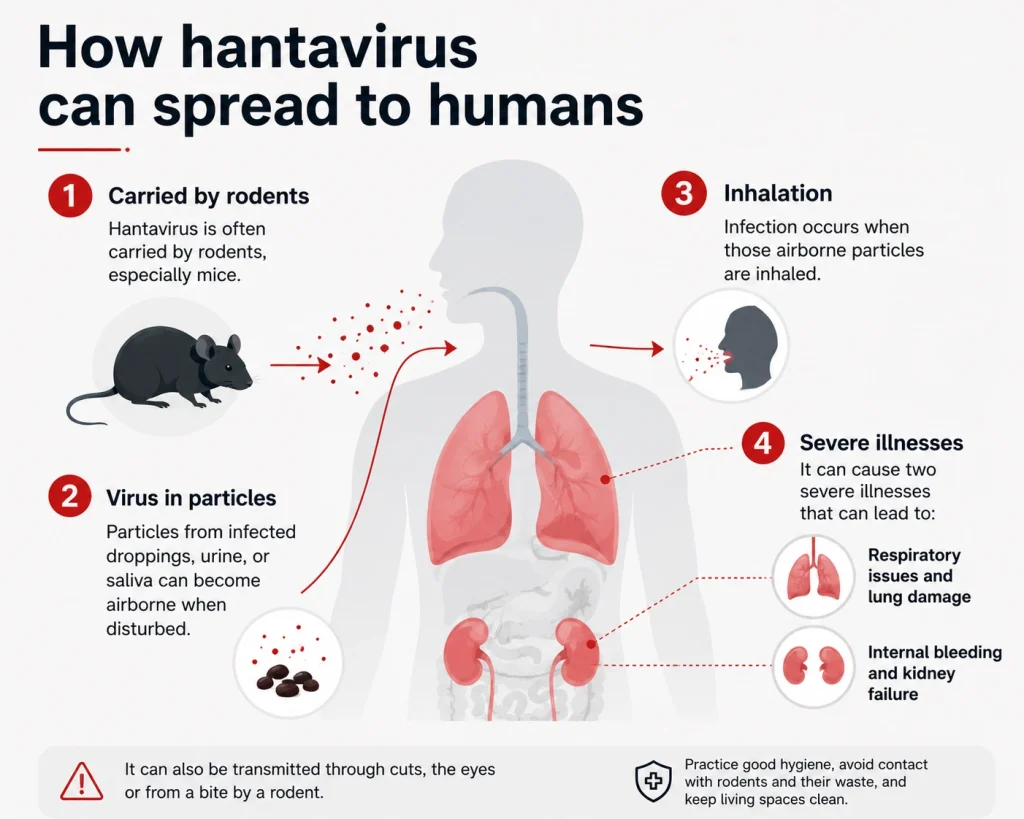
It usually transfers from rodents to people. This virus is spread through breathing of contaminated air containing the urine, fecal matter, and saliva of rodents carrying the infection of hantavirus. MV Hondius cruise trips took place prior to death of the patients; thus, there is likelihood that they had acquired the virus either while on a cruise trip or before taking the cruise.
How It Spread on the Ship
What makes the Andes strain unusual is that it can, under the right conditions, pass between people. Scientists have documented this in previous outbreaks, and experts believe some of the cases on MV Hondius likely spread that way. Cruise ships provide the ideal setting for such contagion through the use of common quarters, dining facilities, and prolonged interactions among individuals.
The death of people gives one a vivid picture of just how fast matters have spiraled out of control. A woman from Holland passed away after disembarking at St Helena on April 24. Her husband had died on board two weeks earlier, on April 11. They shared a cabin. Whether his death counts among the confirmed hantavirus cases remains unclear. The WHO currently lists eight cases three confirmed, five suspected among people who were on the ship.
What Happens Next
MV Hondius is on its way to the Canary Islands of Spain, following three days at anchor close to Cape Verde. Passengers will be flown back home. The ship has undergone a deep professional clean, and Oceanwide Expeditions confirmed Thursday that nobody still on board shows symptoms.
Authorities are moving fast on contact tracing. Britain’s UKHSA says any returning British passengers must self-isolate for 45 days as a precaution. Two Britons who disembarked at St Helena and flew home via Johannesburg are already voluntarily isolating. They feel fine. In the US, health officials in Georgia and Arizona are monitoring three returned passengers none showing symptoms either.
Should You Worry?
Symptoms of Andes hantavirus resemble a bad flu fever, fatigue, muscle aches, shortness of breath, nausea. They appear two to four weeks after exposure, sometimes longer. No specific treatment exists, but early hospital care significantly improves survival chances.
Prof Robin May from the UKHSA put it plainly for anyone anxious about broader spread: for the general public with no connection to this cruise, “the risk here is really negligible.” The situation demands serious attention — and it is clearly getting it. But a pandemic, this is not.