
ISLAMABAD: From mere hope to official policy, the turnaround of Tuwairqi Steel Mills came this week when the Economic Coordination Committee gave in-principle consent to supplying natural gas to Pakistan’s longest-standing unfinished industrial project, which would not become operational owing to the problem of natural gas pricing. This is a Saudi-South Korean joint venture at Port Qasim that has remained uncompleted since close to two decades.
Approval for the supply of 40 to 45 million cubic feet per day of natural gas – the essential energy resource for making steel through the Direct Reduced Iron process – has been granted by the ECC, thus resolving the single most significant hurdle to reviving the Tuwairqi Steel Mills which have been out of operation since 2006.
$340 Million Project Lying Unused Since 2006
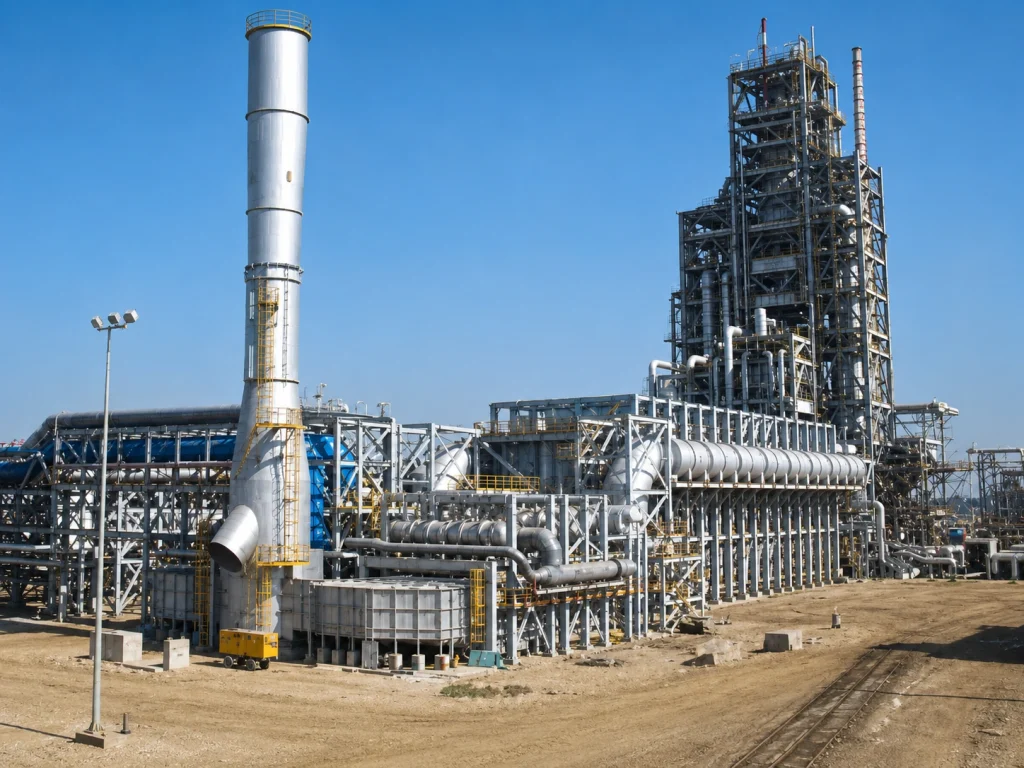
The revival of Tuwairqi Steel Mills is an effort to revive an industrial project which was one of the largest FDI projects of Pakistan back then. The Al Tuwairqi Holding Company of Saudi Arabia had initiated this project in 2004 and officially started its operations in 2006 as a fully integrated steel production facility, occupying 220 acres at the Port of Qasim, Pakistan.
In the first phase of the project, South Korean POSCO had made an investment of around $340 million in this joint venture, contributing the state-of-the-art technology of steel manufacturing along with the Saudi funds which had sparked off the entire venture. This industrial complex was intended to manufacture one million tons of direct reduced iron per annum, which would become the largest privately owned integrated steel manufacturing complex of Pakistan.
Conditions on Gas Approval Are Key to Its Impact
The important aspect in the revamping plan of Tuwairqi Steel Mills is the gas approval by the ECC; however, this comes attached with some conditions, which need to be known before viewing the announcement as an unequivocal promise.
The ECC approved a gas supply of 40 to 45 million cubic feet per day at the same time stressing that such supply is contingent on the country’s economic needs and the government accepts no legal responsibility for ensuring uninterrupted gas flow. The latter point holds particular significance because the manufacture of steel using the DRI process involves an uninterrupted and assured gas supply that Pakistan has never been able to provide.
Restarting of Tuwairqi Steel Mills is Made Possible by the Special Investment Facilitation Council
The renewed vigor shown in the efforts to revive Tuwairqi Steel Mills is largely due to the formation of the Special Investment Facilitation Council, which made the task of restarting the project a priority, resulting in better coordination among various government ministries that was missing from earlier revival endeavors. The council has tasked SSGC to issue a letter of commitment to supply gas on a consistent basis for ten years, with an option of extension for another ten years.
The SIFC further recommended that the gas be supplied at competitive prices and urged that a new tariff class be formed for industrial giants – an institutional change that will address the issues relating to pricing that led to the failure of Tuwairqi Steel Mills and which still make industrial gas supplies problematic in Pakistan.
ALSO READ: SLM Tyres IPO Oversubscribed 16.7x, Sets New PSX Recor
Industrial Users Now Classified in Top Priority Tier
Reconstruction of the Tuwairqi Steel Mills was made feasible in part by the fact that the policy on gas distribution in Pakistan has changed in such a way that industrial users are favored. Recently, industrial users were classified in the top priority tier along with residential and commercial users, thus providing the National Steel Complex the status of being in line with the new gas allocation policy.
Another major decision taken by the ECC was that all the applications of large industries requiring more than 10 million cubic feet of gas per day must be approved by the ECC itself, as this would create an institutional framework for allocating natural gas to the large industries that is both accountable and considers the country’s economy first and foremost.
Industrial Import Substitution
The reinvigoration of Tuwairqi Steel Mills is an event of considerable economic importance that goes far beyond just the project itself. Pakistan presently imports considerable quantities of steel and direct reduced iron, both of which can be produced within Pakistan and which would help build up Pakistan’s industrial capacity.
An efficiently functioning Tuwairqi plant capable of producing 1.28 million tons of DRI per year would bring about a transformation in the entire equation concerning steel supplies in Pakistan – not only through savings in the import expenditure but also because such a project will show that Pakistan is capable of completing major industrial projects successfully.

Focus Pakistan is an independent digital news and media platform dedicated to delivering credible, insightful, and impactful journalism across Pakistan and beyond. The publication covers a broad range of sectors including business, economy, technology, telecommunications, aviation, automotive, infrastructure, energy, tourism, public policy, and national affairs.
Committed to accuracy, transparency, and editorial integrity, Focus Pakistan combines breaking news coverage with in-depth analysis, feature stories, expert commentary, and research-based reporting. The platform aims to provide readers with timely, factual, and balanced information while promoting informed public discourse and responsible journalism.
Through its commitment to high editorial standards, Focus Pakistan strives to be a trusted source of news and analysis for policymakers, business leaders, industry professionals, and the general public.