KARACHI: The government of Sindh opting for switching from hybrid vehicles to entirely electric buses in the project known as “Karachi BRT Red Line Project” is certainly a milestone in terms of the urban transport policy in the province. It is evident from the above shift that electricity is surely a forward-looking energy for urban transportation.
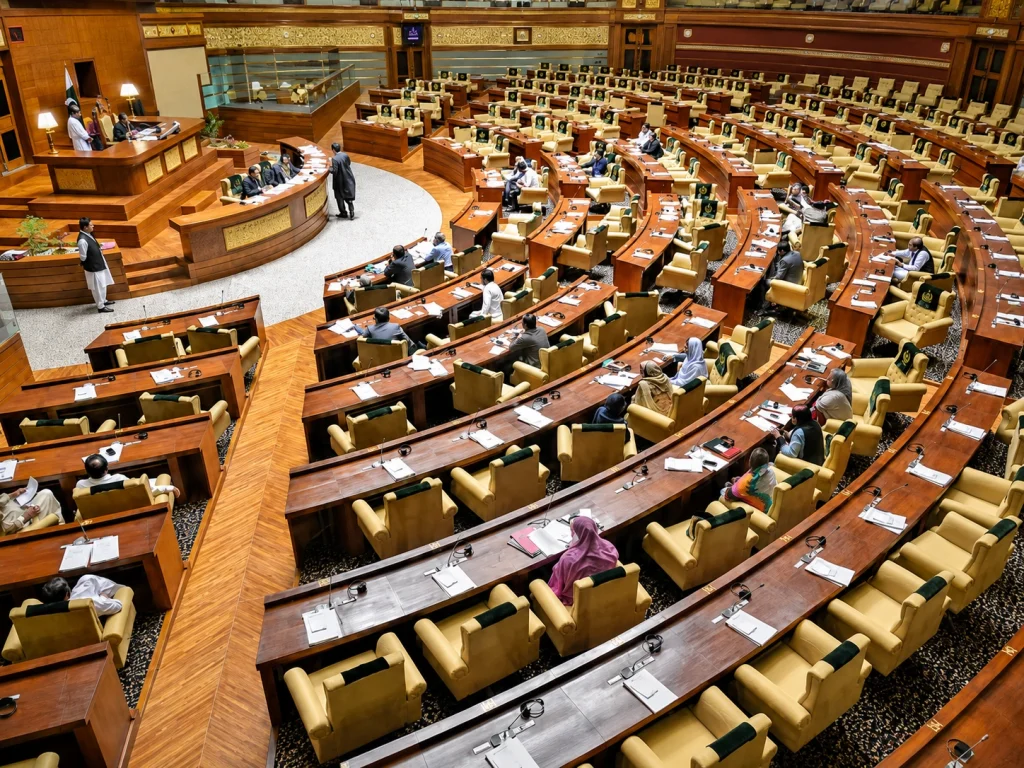
During the questioning of the Question Hour in the Sindh Assembly, the Sindh Minister of Information, Transportation and Mass Transit, Sharjeel Inam Memon, stated that an important policy decision had been made regarding the Karachi Bus Rapid Transit Red Line project where the hybrid buses proposed to be used would be replaced with electric buses. The minister claimed that this decision was taken by the authorities owing to the better benefits associated with electric buses.
Deployment of 500 EV Buses through Public Private Partnership Model
Deployment of 500 EV buses through the Karachi BRT red line route will be done using the public private partnership model where the provincial government of Sindh will give land for the operation of 500 EV buses.
Memon stated that a study related to this project is still ongoing, while the tenders are to be issued next month. The actual cost of the entire project will be known once tenders have been submitted. The PPP framework divides capital into responsibilities among the government side and the private sector.
The 500 buses goal is an ambitious increase in the electrical capacity of public transportation systems of Karachi. These charging stations and designated depots located in the working terminals will guarantee that there are no disruptions in service because of range anxiety, and that the bus operations proceed smoothly.
Passengers Onboard Orange Line Soar From 2,000 to 9,500
The ridership figures highlighted by Memon at the meeting provide the best argument in favor of the Sindh’s public transport enhancement program. Since the provincial government took charge of managing the existing public transport lines, the numbers of passengers have risen sharply on all routes.
The Orange Line’s number of riders increased from 2,000 per day to 9,500 daily riders; this is a growth of 375%. The growth for the Green Line was even higher than this – the number of riders increased from 50,000 per day to 95,000 riders. These numbers prove that there is substantial demand for good public transportation in Karachi.
Load-shedding, Solar Panels and Assembly Session Discourse
The issue of energy has been tackled from different angles during the session of the Sindh Assembly on a day when Private Members’ Day was convened. It should be noted that a resolution submitted by Sajjad Soomro, a member of Pakistan Tehreek-i-Insaf, regarding the promotion of solar panels and advanced battery technology and their disposal received unanimous approval.
The adjournment motion by PTI’s member Sajjad Ali Soomro regarding long hours of loadshedding in Lyari was accepted to be discussed, and the Speaker had set aside two hours to discuss loadshedding in the whole city.
Asif Moosa, a member of Pakistan People’s Party, moved a different resolution asking for an end to the gas loadshedding without any prior notice in Baldia Town and all of Karachi. This resolution was referred to the special committee of the house, which convenes on Thursdays.
Expanding the Bus Services beyond Karachi
The BRT Red Line electric bus service project in Karachi was just the beginning of the expansion of Sindh’s bus system. “People’s Bus Service is running successfully in Hyderabad and a new bus service from Latifabad to Haider Chowk will be introduced soon after Eidul Azha.”
29 bus routes have been made functional in Karachi, and some more are being planned. There is also going to be provision of new links on routes between Sukkur-Shikarpur, Khairpur-Rohri, and Khairpur-Ranipur, and these routes will enhance the connectivity via intercity bus routes.
Recognizing the Difficulties – Utility Transfers and Project Delays
Memon confronted opposition’s objections regarding project delays and did not avoid the issue. Memon accepted that delays caused by utility transfers of K-Electric and other organizations have led to operational challenges in transport-related projects throughout the city. Increased costs associated with rupee devaluation and international increases in prices have compounded the problem.
The replacement of the non-performing contractor and the FWO’s takeover in the Red Line is an indication that the government wants to focus on completion as opposed to continuity with the original contractor. FWO has experience in handling infrastructure projects in Pakistan.