




- 82% of consumers in Pakistan have utilized artificial intelligence technology for their shopping assistance purposes, whereas 93% believe that AI-based technologies would speed up and simplify their online shopping experience.
- 87% expect AI to be crucial in the protection of their consumer rights from fraud, but only 42% currently trust AI agents to conduct the checkout process.
- 82% of them have bought things via social commerce, whereas 44% of those consumers who were scammed reported their scamming incidents to have occurred on social media.
- 77% are concerned children struggle to recognize scams, and 33% have seen a child fall victim while gaming or shopping online.
LAHORE: Visa, a world leader in digital payments, today released the annual Stay Secure study in Pakistan, which assesses consumer awareness and behaviors around digital commerce and fraud. This year’s edition, conducted by Wakefield Research, highlights how AI‑enabled shopping and social commerce are changing consumer behavior even as expectations around trust and protection remain firmly in place.
Consumers Embrace AI-Assisted Shopping
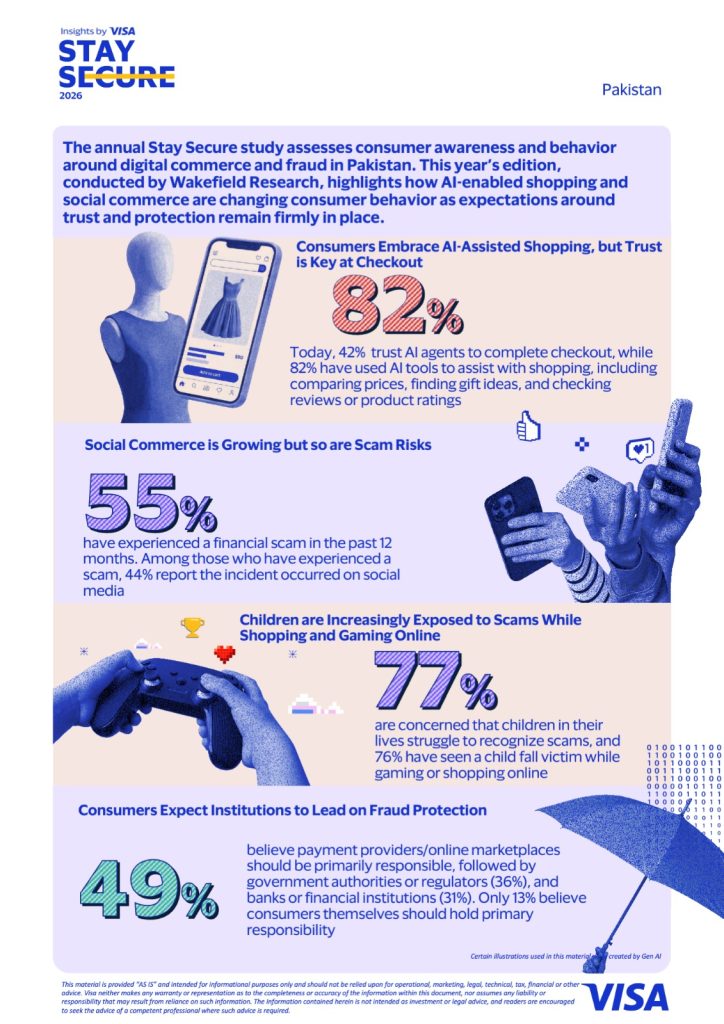
AI technology is being used by consumers as an integral part of their shopping experience – 82% of shoppers in Pakistan have used artificial intelligence technology for their shopping purposes, including price comparisons (56%), searching for gifts (47%), or reading reviews about products (53%).
The reason behind this is that 93% of consumers believe that innovations in shopping technologies, including artificial intelligence-based tools, are helping make online shopping easier and quicker. Artificial intelligence also contributes to consumers discovering new products and brands during their online shopping sessions (55%).
Nevertheless, consumers prefer not to entrust transactions to artificial intelligence. Today, only 42% would trust AI agents to complete checkout, reinforcing the importance of earning consumer trust in the age of agentic commerce.
Also Read: China Activates the World’s First Underwater AI Data Center
As AI adoption grows, consumers increasingly view the technology as part of the solution to fraud. Around 65% of respondents feel AI has made scams easier to recognize today and 87% believe AI will play a critical role in protecting consumers from fraud in the future.
Social Commerce is Growing, but so are Scam Risks
Shopping through social platforms has become mainstream, with 82% of consumers in Pakistan having purchased products directly through social media platforms. As commerce expands across new channels, fraud risks continue to follow consumers online. 55% have experienced a financial scam in the past 12 months. Among those who have experienced a scam, 44% report the incident occurred on social media, more than those who encounter scams on other platforms such as websites, online marketplaces, or shopping apps.
This research has further brought into focus the issue of how vulnerable children can be to scams on the Internet, where 77% of respondents said that there were challenges among children in recognizing these scams. As many as 33% said that a child in their life had fallen victim to an online scam while gaming or shopping.
Also Read: Meta Just Started Charging for Instagram, Facebook and WhatsApp Here Is Everything That Changes
That concern comes as children gain greater access to digital commerce. 44% of Pakistani parents have children who can access mobile payment apps or digital wallets.
Consumers Expect Institutions to Lead on Fraud Protection
When it comes to protecting against fraud while shopping online, consumers look first to institutions rather than themselves. 49% believe payment providers and online marketplaces should be primarily responsible, followed by government authorities or regulators (36%) and banks or financial institutions (31%). Only 13% believe consumers themselves should hold primary responsibility.
They also want more proactive reassurance. 51% felt more secure with getting real-time alerts from their bank or payment provider whenever anything seems out of place, while 33% said they would prefer seeing their favorite brand logo during the checkout process.
“In Pakistan, there is strong progress being made towards a future where consumers leverage digital commerce, enabled through AI and social commerce becoming increasingly central to discovery and purchase. However, the insights show us that there is one consistent theme across all our markets: trust. Consumers desire to have convenient yet trustworthy experiences, as they transition into a more agency-centric commerce ecosystem powered by AI.
This creates a tremendous opportunity in our region for inclusive economic growth.
” At Visa, we are focused on working with our partners to strengthen secure digital ecosystems, through advanced technology, real-time protections, and secure-by-design innovation, so that the future of commerce across the region is seamless, resilient, and trusted by everyone,” said Leila Serhan, Senior Vice President and Group Country Manager, North Africa, Levant and Pakistan at Visa.