LAHORE: The Turning Point in all its simplicity, it all began with a contract. Actress Hira Tareen found herself examining a seemingly simple drama contract, but then something made her stop right there. Within the document was an agreement that suggested that a certain production house and TV network had complete possession of her digital image everything from her voice to her facial expressions.
She put it quite bluntly. From what she could make out, the wording implied that the production company had the right to copyright all aspects of her as a person. More frightening was the fact that these rights did not apply just to the current production.
Punjab Enters the Ring with a Revolutionary Bill
The Punjab government is set to introduce the Punjab Performers’ Digital Identity and Artificial Intelligence Protection Bill 2026 an entirely new law aimed at ensuring that the scenario described by Tareen can never be enforced in any Pakistani court.
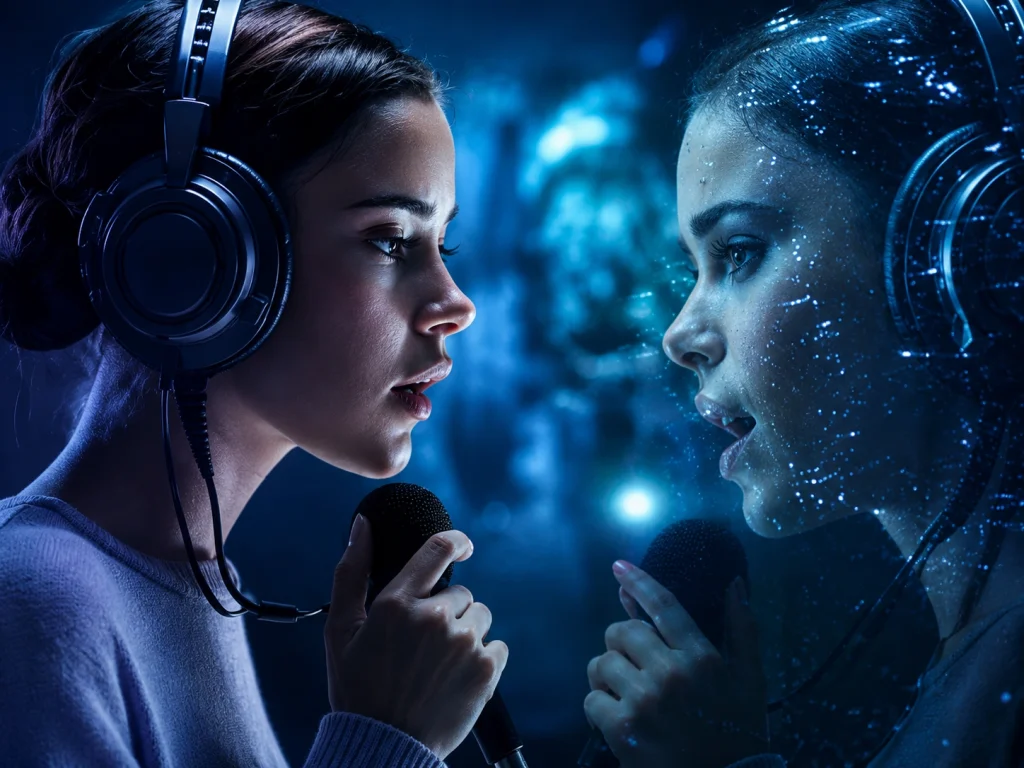
The voice, face, and overall online identity of the performer under the Punjab AI deepfake law fall under the umbrella of protected intellectual property. This is an important point in itself. It codifies into law what the performers themselves have always maintained to be true – that these are theirs by right and not by virtue of payment made.
The use of these attributes using AI technology in any manner without explicit permission is banned in this draft law. The range is kept wide on purpose since the technology advances at a rapid pace and the ways of misuse can change and increase every day.
Legally Required
The AI deepfakes law for Punjab does not merely prohibit bad conduct; rather, it lays down a constructive obligation for all those dealing with performers in the creation of artificial intelligence-related performances.
The producers and film studios must obtain the performer’s consent in writing. A verbal consent is not sufficient for this purpose. In addition, the consent should relate to the particular purpose for which it was sought.
Moreover, the content creator will be required to make it clear when any kind of artificial intelligence was involved in the creation of the content. It is important for the viewer to know whether what he/she is watching is an entirely digital performance or not. This means that Pakistan is more advanced compared to other countries, especially those where the use of artificial intelligence does not have to be disclosed.
Any kind of performance created using any form of artificial intelligence should have separate payment terms and contractual agreement.
ALSO READ: Pakistani Tech Firm Lands Massive Multi-Million Dollar Deal With Middle East Telecom Giant
Strict Penalties for Any Breach
Penalties are quite serious for any person found violating the provisions of the Punjab deepfake law based on AI technology. The violator is liable to imprisonment up to a maximum period of three years in addition to hefty fines measured in millions of rupees. It is quite clear that such strict penalties have been imposed not just for show.
The extent to which these punishments will be carried out shows how serious the situation is. An unauthorized deepfake of an entertainer can hurt one’s reputation, career chances, spread misinformation, and harm one psychologically – all without them ever knowing.
Specific Protection for the Most Vulnerable
There are two classes of entertainers that get their own specific protection under the proposed bill. There is specific provision made for minors involved in the entertainment industry because there are special problems faced by children that are beyond normal consensual agreements.
The second one also makes plenty of sense. For 25 years after the death of a performer, their digital identity will receive adequate protection. This helps to resolve an issue that had been bothering the world’s entertainment industry, given how the development of AI technologies enabled the digital resurrection of deceased performers without the consent of their estates. In the case of Pakistan, the cultural importance of performers who are now long deceased is significant.
Digital Rights Registry Emerges
In addition to the penalties set out in the law, the Punjab AI deepfake legislation creates institutional frameworks that will enable enforcement in the future. The creation of a Digital Rights Registry, which is an official system where performers will be able to register themselves, is discussed.
There will also be a separate regulatory process for ensuring that the process is carried out effectively and that any dispute arising from it is sorted out. This is because, when one looks at it holistically, there will be a powerful administrative system created by registration and regulation.
The reaction to the law was not a stand-alone one; rather, there was an underlying reason for the same before the passing of the law. The apprehensions within the entertainment industry of Pakistan were brewing when a meeting of artists with officials from the Pakistan Film City Authority was held via Zoom.
Shamoon Abbasi, an actor and film maker, conducted this session. Among others who joined in were Faysal Quraishi, Faisal Rehman, Hira Tareen, Faiza Hassan, and many other prominent people from the artistic fraternity. This was a very unique occasion where the entire industry came together to contribute towards a process affecting each one of its performers.

Nayab Fatima is a university graduate and an emerging media professional with a strong passion for journalism, research, and independent reporting. She specializes in developing well-researched, fact-based, and analytical news stories covering a wide range of sectors, with particular expertise in technology, telecommunications, aviation, and the automobile industry.