
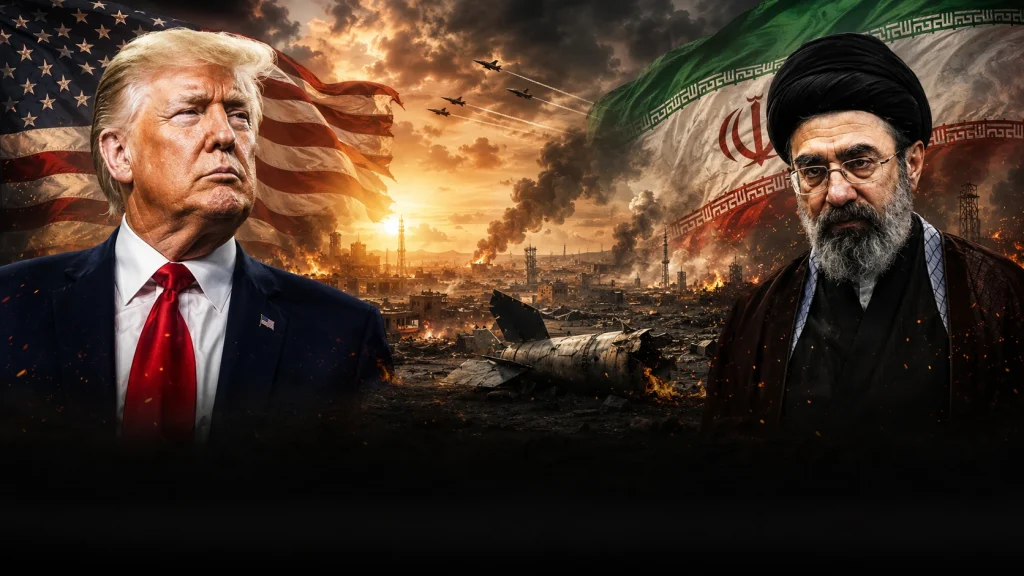
ISLAMABAD/TEHRAN: Iran’s Mehr News Agency on Sunday disclosed the contents of a proposed 14-point memorandum of understanding between Tehran and Washington, offering the most detailed public account yet of a diplomatic framework that both sides are negotiating to end months of military confrontation and chart a path toward broader talks on nuclear and sanctions issues.
The document, attributed to a source close to Iran’s negotiating team, has not been independently verified. Neither Iranian nor American officials have publicly confirmed its contents.
Ceasefire and Security Terms
According to Mehr, the draft opens with an immediate and permanent halt to military operations across all active fronts, explicitly including Lebanon, paired with a binding American pledge of non-interference in Iranian internal affairs.
The draft calls for lifting the maritime blockade and reopening the Strait of Hormuz within 30 days under Iranian regulatory arrangements, alongside a US commitment to withdraw forces from areas surrounding Iran.
$300 Billion Iran Rebuild Plan
The framework also mandates suspension of economic sanctions on Iran’s crude oil, petrochemical products, and petroleum derivatives, granting Tehran full access to its foreign financial revenues. On reconstruction, Mehr News Agency reported that the draft includes reconstruction projects worth at least $300 billion, a provision that US administrations have historically resisted.
Also Read: Pakistan Helped Open Door to US-Iran Talks, Says Khawaja Asif
The draft outlines a 60-day negotiation window toward a final agreement covering nuclear issues, full sanctions relief, and reconstruction of Iran’s economy, with any final deal requiring approval through a UN Security Council resolution. During that period, $24 billion in frozen Iranian funds would be released, with Mehr adding that final talks would not begin before the release of half of those frozen funds, the suspension of oil sanctions, and the lifting of the naval blockade.
Iran-US Negotiations
Crucially, the framework explicitly excludes discussions regarding Iran’s ballistic missile program and its support for regional armed groups, a position that diverges sharply from longstanding demands by several US allies, including Israeli Prime Minister Benjamin Netanyahu, who has argued that any comprehensive agreement must address both Iran’s nuclear activities and missile capabilities.
Also Read: UAE Pays Iran Billions to Stop Missile Strikes on Dubai
The draft also reiterates Iran’s standing commitment under the Non-Proliferation Treaty prohibiting the acquisition or manufacture of nuclear weapons, and includes a US pledge to halt any military deployment increases in the region and refrain from enacting new economic sanctions during the designated negotiation period.
The US negotiators have also portrayed the new deal quite differently. There are still some important differences between the two sides in regards to the key aspects of finance and security. According to Iranian officials, the release of the document with the 14 points should not be seen as a sign that any deal is about to be made soon.
The foreign minister of Iran, Abbas Araghi, tweeted on the social networking site “X” that the infamous “Islamabad Memorandum of Understanding” was now closer than ever to being finalized, although he advised the media against speculating on its contents.

Faraz Ali Ansari is the Founder & Editor of Focus Pakistan and Founder & CEO of Focus Public Relations. With more than 22 years of experience in journalism, media relations and strategic communications, he covers business, economy, aviation, technology, public policy and corporate affairs. He has worked with leading national and international organizations across multiple sectors.