



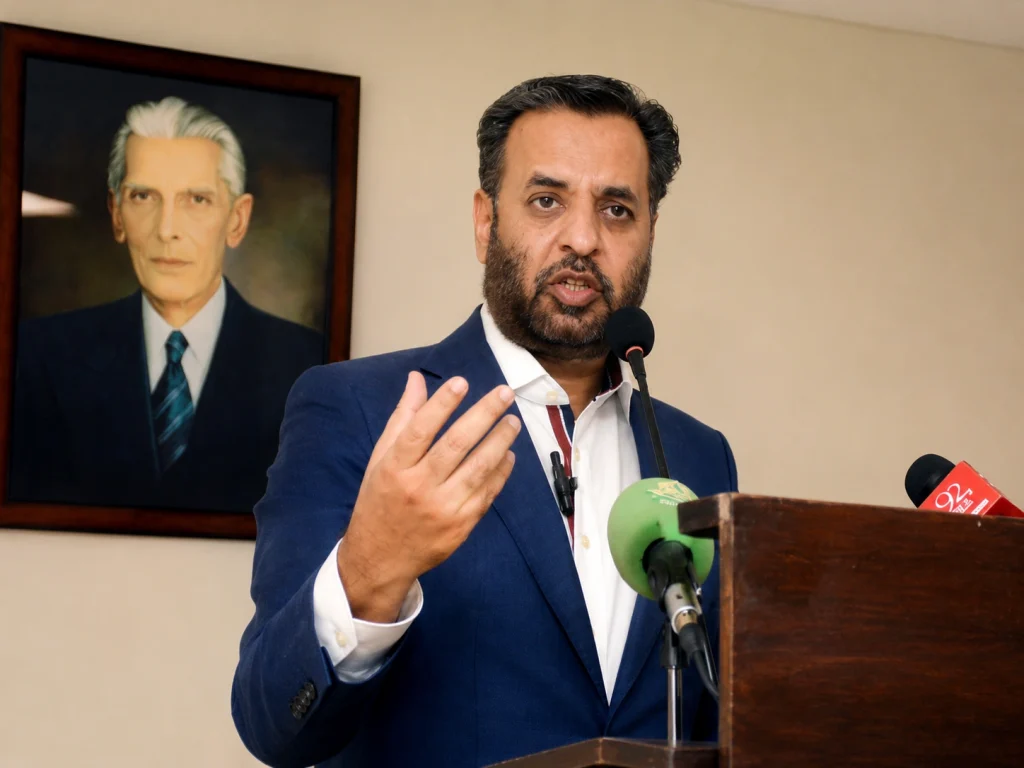
ISLAMABAD: During a parliamentary session, federal health minister Syed Mustafa Kamal gave one of the most forceful warnings ever made in the National Assembly, stating that there were around 6.2 million additional births in Pakistan every year, and this number was more than the total population of New Zealand. According to him, at the rate of population growth at present, Pakistan would be the world’s fourth most populated country by 2030, surpassing Indonesia.
Population explosion in Pakistan was no longer a future issue but the current one, according to Kamal, which has long overstretched the capacity of the state to provide education, healthcare, employment, and housing to its citizens.
Fourth Largest Population Nation by 2030
The current fourth largest nation by population is Pakistan, as per the 2023 digital census where the total number of people is approximately 241.5 million. According to the digital population count for the first time in the country, the country has one of the highest population growth rates in the entire region.
According to Kamal, should things remain as they are, Pakistan’s population is bound to be around 400 million in 2050. This estimate would make Pakistan’s population equal to that of nations that manage economies many times bigger than that of Pakistan’s and boast much more advanced infrastructure as well. The minister appealed to the legislators to take the estimate very seriously.
The Human Price Is Already Being Seen
The minister was not limited to speaking only about predictions. The population problem in Pakistan is one that has been highlighted by figures which show the extent of suffering currently being experienced. Each year, 11,000 women die in the course of giving birth in the nation, a statistic which places maternal mortality figures very high in South Asia.
On the other hand, 26.2 million children are currently out of school. This number of children indicates a generation of Pakistani youth who have been deprived of learning basic skills in terms of literacy and numeracy that will affect them for their entire life when they enter the workforce.
According to Kamal, Pakistan needs to construct 66,000 more primary schools per year just to cope with population growth alone without doing anything about the existing shortage of children out of school. It is evident from this demand that changes in the educational budget can never solve this problem. What Pakistan really needs is to revolutionize its educational financing system.
ALSO READ: Pakistan Risks Leading Global Disease Burden, Warns Mustafa Kamal
Jobs, Housing, and Primary Healthcare Pakistan’s Infrastructural Needs
In addition to schools, the minister detailed all the other infrastructural requirements imposed on Pakistan due to the population explosion there. Pakistan must provide jobs for 65 million people who have joined or will soon join the labor force, develop 3,600 new primary health facilities to improve access to healthcare, and erect 20 million new homes.
This would be overwhelming enough in its own right, but the cumulative effect of all three points is that we have a nation where the population exceeds the system’s ability to cope in every way imaginable.
The NFC Award Formula Complicates the Problem Further
It is also pertinent to mention here that Kamal touched upon an area regarding the crisis which is very politically controversial but does not emerge in the discussion in public forums. This is because in accordance with the NFC Award formula, funding is shared among the provinces according to their populations.
The minister continued that this would lead to an unhealthy paradox. The provinces which manage their population would be punishing themselves because of how the formula stands today. For instance, for Balochistan to earn as much money as Punjab, it needs to have a similar number of people; hence, the distribution system acts contrary to any plans for population reduction policies in the country. It appears from Kamal’s statement that any attempts at reforming the population policy in Pakistan should go hand-in-hand with NFC reform too.
The Future of Karachi’s Water and the Usury System
On a local level, the minister also commented on two issues relevant to Karachi. First, he stated that even upon the completion of the K-4 water supply project, the city will still require water tankers to supply the required amount of water a shocking commentary on how much population growth has outpaced development in the country’s biggest city.
Secondly, he demanded strong measures be taken to disassemble the illegal usury loan system, which keeps millions of poor people trapped in a debt cycle – an issue which is directly linked with the population growth crisis of poverty in Pakistan.
Verified figures based on previous announcements by ministers reveal that Pakistan currently has a fertility rate of 3.6 births per woman. According to Kamal, it needs to reduce this rate to 2.0 which is the replacement fertility rate, beyond which population stabilizes. Nations like Bangladesh, Indonesia, and Iran have succeeded in lowering their respective fertility rates due to policies in place regarding family planning facilities, education of women and community involvement. Pakistan, a larger country facing more governance issues, has not yet undertaken such an endeavor.
It is the first time that any indication has been given by the national government as to its plans for putting population policy at the heart of its developmental agenda. It is not known whether this intent will result in concrete actions being taken, but there should be no further delay.

Nayab Fatima is a university graduate and an emerging media professional with a strong passion for journalism, research, and independent reporting. She specializes in developing well-researched, fact-based, and analytical news stories covering a wide range of sectors, with particular expertise in technology, telecommunications, aviation, and the automobile industry.