



KABUL: The Taliban this week imposed a sweeping ban on smartphone use among government officials, with enforcement videos showing devices smashed on the spot a move analysts warn could signal a much broader, population-wide crackdown across Afghanistan.
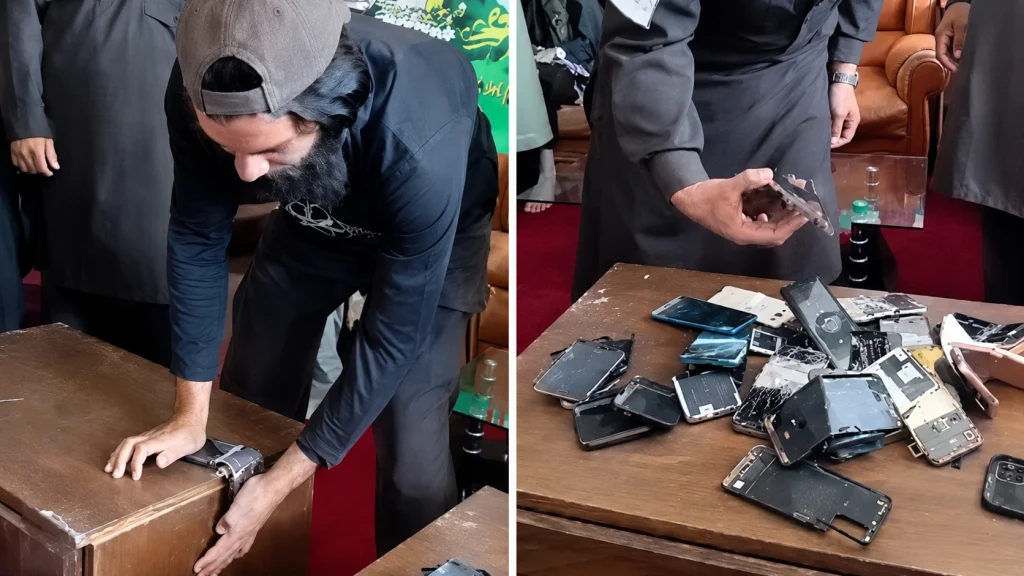
A directive issued by the Taliban’s military courts and reviewed by The Guardian bars “high rank, low rank, general mujahideen, or service staff” from carrying mobile phones. One video circulating online shows a Taliban official reading the ban order aloud from his own phone while a second man smashes confiscated devices in front of him.
Taliban Ban Smartphones
There is nothing ambiguous about the directive, which says any official found carrying his mobile phone will have it immediately confiscated and face both legal and sharia penalties. Only Supreme Leader Hibatullah Akhundzada can grant an exception through a written order.
Ban Expands Beyond Officials
Ground reports paint an inconsistent picture. Some provinces apply the ban strictly to government officials, while others extend it to women, civilians, medical workers, teachers and students. An analyst tracking Afghanistan called the pattern deliberate. “A lot of things happen at the local level, because of what someone local has decided. “But at the same time, it could also mean they are preparing for a total ban and are just testing the waters,” he added.
Internet Blackout Fallout
This latest development came after an internet blackout that took place in September and was attributed by the Taliban to their efforts to reduce immorality. The blackout lasted two days and halted business across the country. “The private sector was freaking out, the banking sector was freaking out, even their own people… realised ‘OK guys, we didn’t really think this through,'” the analyst said.
Also Read: UK Enforces Smartphones Ban in Schools to Boost Student Focus
There were probably several factors behind the recent order. Protests took place in Herat when the Taliban arrested women and girls for not wearing the “proper hijab,” and there were scenes of Taliban gunmen opening fire on protesters, resulting in the death of at least two individuals. The Taliban had denied the occurrence until video evidence was presented. “The videos from the protests in Herat alarmed a lot of people. The emirate tried to contain it,” he stated.
But the phone restrictions predate the Herat unrest. Officials in Herat province confirmed informal bans had run for months already. “About two months ago they said not to bring your mobile phones to the office,” one government employee said, describing how Taliban enforcers confiscated and smashed his phone after he initially ignored the order a loss he valued near 8,000 Afghanis.
Beyond productivity concerns, the Taliban worry smartphones fuel leaks, with officials photographing internal documents and recording meetings before the supreme leader formally approves them. The analyst noted the underlying problem isn’t unique to Afghanistan, but the response is. “I haven’t seen any other countries legislating against it,” the analyst said.

Faraz Ali Ansari is the Founder & Editor of Focus Pakistan and Founder & CEO of Focus Public Relations. With more than 22 years of experience in journalism, media relations and strategic communications, he covers business, economy, aviation, technology, public policy and corporate affairs. He has worked with leading national and international organizations across multiple sectors.