


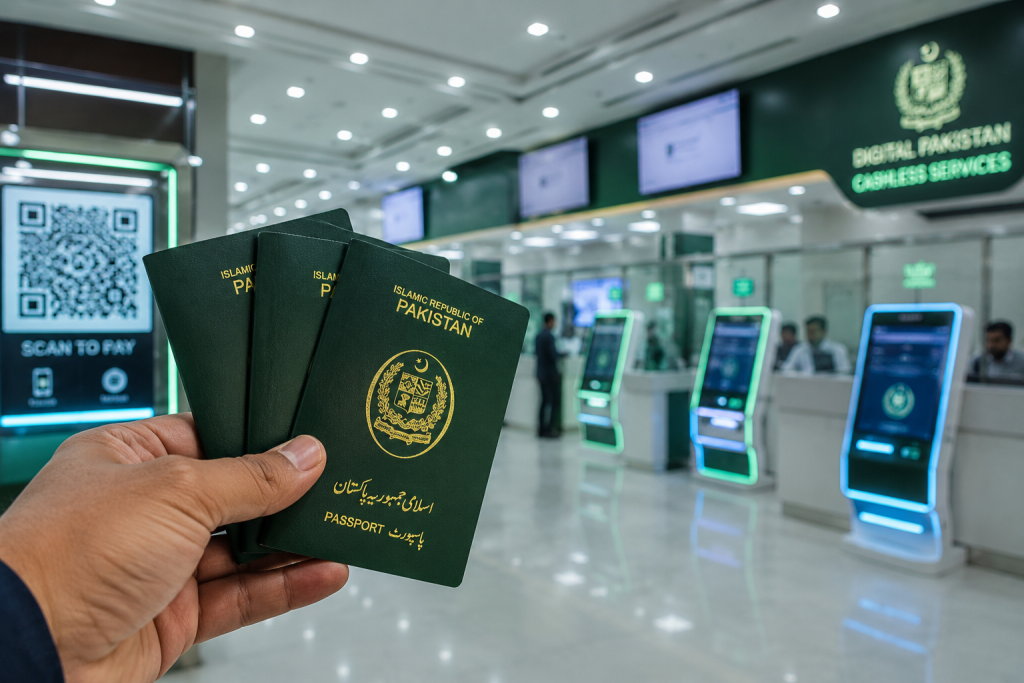
KARACHI: Pakistan’s Directorate General of Immigration and Passports will stop accepting cash payments at all passport offices in Pakistan starting July 1, 2026, as applicants will have to make their payments solely through digital means in a massive reform process that marks the end of decades of cash-based operations in what is one of the busiest public sector systems in Pakistan.
Pakistan Passport Fees Go Digital
Muhammad Ali Randhawa, DG Immigration and Passports, led a meeting of zonal heads and made it clear that authorities will enforce the July 1 deadline without delay. From that date, passport offices will reject cash entirely. Citizens must pay through QR code-based digital payment systems no exceptions, no alternatives.
This move cuts right to the core of an entire system which has always fostered inefficiency, corruption, and delay. Passport offices process millions of applicants per year, and cash counters have always been places of frustration for citizens due to leakages, bribes, and processing delays. Randhawa’s administration is betting that removing cash from the equation dismantles those pressure points permanently.
Passport Mobile App Nears Launch
The directorate will simultaneously launch a dedicated Passport Mobile App that allows Pakistanis both inside the country and abroad to submit passport applications from home without visiting an office. The application integrates QR-code payments into the process, allowing citizens to complete tasks that currently require multiple office visits through a single online application.
Also Read: Govt to Launch Home-Based Online Passport Application System
In this context, the news is especially important for the millions of people from Pakistan residing abroad who have difficulty obtaining renewed passports using embassy services. The mobile application will allow the user to submit his or her application online and get the passport delivered to him or her at home.
E Passport Replaces Traditional Passports
Officials at the meeting confirmed that the Directorate General will exclusively issue e-Passports going forward, retiring the Machine Readable Passport format that has served Pakistan for years. The transition does not strand existing holders all current Machine Readable Passports remain fully valid and internationally accepted until their individual expiry dates. No holder needs to rush a replacement.
This passport is embedded with a chip that has information about biometrics, giving much higher protection from fraudulent activities compared to the previous generation passport. With Pakistan following other countries like the UK, UAE, and most of the European Union member states, the new passport becomes one of those countries using the chip-based passports.
The timeline compresses everything into one week. July 1 arrives in eight days, meaning passport offices must complete staff training, infrastructure deployment, and public awareness rollouts before cash counters close permanently. Sources confirmed to Focus Pakistan that zonal heads received direct instructions to ensure readiness at every office before the deadline, with no grace period for non-compliant offices.
Pakistan’s broader digital governance push running parallel across federal agencies and provincial governments including KP’s landmark September cashless mandate now reaches one of the country’s most citizen-facing public services. The passport office touches virtually every Pakistani at some point. Killing cash there carries a message that no amount of bureaucratic inertia can ignore.

Focus Pakistan is an independent digital news and media platform dedicated to delivering credible, insightful, and impactful journalism across Pakistan and beyond. The publication covers a broad range of sectors including business, economy, technology, telecommunications, aviation, automotive, infrastructure, energy, tourism, public policy, and national affairs.
Committed to accuracy, transparency, and editorial integrity, Focus Pakistan combines breaking news coverage with in-depth analysis, feature stories, expert commentary, and research-based reporting. The platform aims to provide readers with timely, factual, and balanced information while promoting informed public discourse and responsible journalism.
Through its commitment to high editorial standards, Focus Pakistan strives to be a trusted source of news and analysis for policymakers, business leaders, industry professionals, and the general public.