




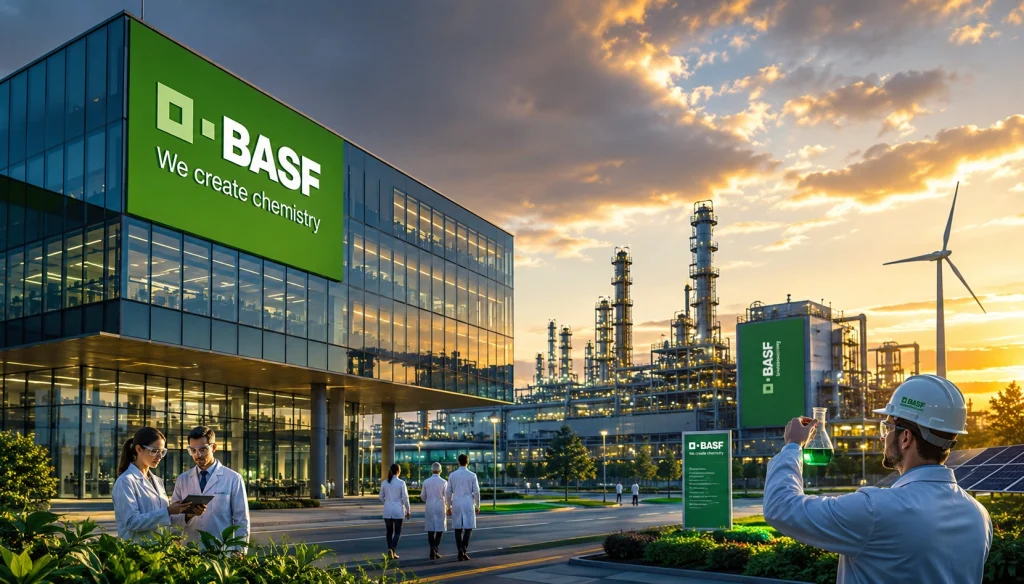
KARACHI: A UAE-based chemicals trading company with zero revenue, zero assets, and zero operational footprint in Pakistan just cleared Pakistan’s competition regulator to acquire the local subsidiary of one of the world’s largest chemical companies and the watchdog’s verdict is that nothing changes.
BASF Pakistan Acquisition Approved
Competition Commission of Pakistan gave approval for the take-over of BASF Pakistan (Private) Limited by Kemyion Chemical Solutions Trading FZCO registered in Dubai through its Phase-I clearance procedure under Competition Act 2010. The Share Purchase Agreement, signed on November 18, 2025, allows Kemyion to acquire 100% of BASF Pakistan’s equity from its parent company, BASF SE.
The CCP approved the said transaction under Section 31(1)(d)(i) of the Act after assessing that the acquiring company has neither revenue nor assets nor any business operations in the country, hence the transaction was deemed by the regulators to be a change in ownership without any shift in competitiveness.
BASF Pakistan is a merchant and an indenting house, selling colorants, catalysts, solvents, oxo alcohols, and process chemicals for the use in various processes in the country ranging from the textile dyeing lines to the pharmaceutical industries. However, it does not manufacture any chemicals but only imports them, thus keeping itself involved in the industrial supply chain of the country.
Also Read: Telenor Moves to Sell Easypaisa Stake and Exit Pakistan Completely After Two Decades
Kemyion, for its part, carries trade authorisation across a wide chemical sweep: acids, alkalis, construction chemicals, insecticides, petrochemicals, and plastic and nylon raw materials. The CCP identified the relevant product market as specialty and industrial chemicals trade within Pakistan’s borders, and in that market, it found the combined post-merger share of both entities negligible.
The regulator concluded the transaction raises no barriers to entry, confers no dominant position, and delivers no material change in market concentration clearing language that in Pakistani merger law constitutes a clean pass.
Acquisition Strategy
The BASF SE company, whose revenues were estimated at around €60 billion in 2025, adopted an ambitious restructuring program based on the “Winning Ways” strategy. During the period from December 2023 to December 2025, the company succeeded in cutting down the number of senior management positions by 11% and reducing the workforce by 4,800, except for the recruitment of 1,000 workers in the Chinese Verbund complex. The sale of the Pakistan unit, an indenting and merchandising division without manufacturing activities, is part of the general strategy to simplify the portfolio of companies and target investments to key regions, namely Asia Pacific, North America, and Europe.
The investment strategy of BASF aims primarily at Asia Pacific, especially China, which appears to be the region where BASF sees the greatest potential for the future development of the chemical industry globally. The company has repeatedly highlighted China as a key pillar of its future expansion plans, supported by major investments including its new Verbund site in Zhanjiang. Publicly available strategic materials place significant emphasis on high-growth markets and large-scale integrated production assets, while Pakistan does not appear among BASF’s publicly identified priority investment markets. Against that backdrop, the sale of BASF Pakistan aligns with the group’s broader effort to streamline its portfolio and concentrate resources on regions and projects that occupy a more central role in its long-term growth strategy.
BASF Pakistan Acquisition Impact
For Kemyion, the acquisition hands it a ready-made market access vehicle: an established legal entity, existing customer relationships, regulatory history, and a chemical product portfolio that maps directly onto its own trading mandate. The company enters Pakistan not through constructing from the ground up but via acquisition of a functioning distribution network that provides instant access to the existing customer base, regulatory legacy, and business connections in the Pakistani industrial sector.
CCP justified the approval in terms of its responsibility to ensure effective operation of markets and investment in compliance with the consumer interests and competition standards. The approval of the Phase-I clearance on an unconditional basis suggests regulators see no competition concerns requiring further investigation.
Whether Kemyion will keep the BASF Pakistan employees on board, diversify the product range, or evolve the indenting business into a broader chemical distribution platform is now solely dependent on the new owner.