
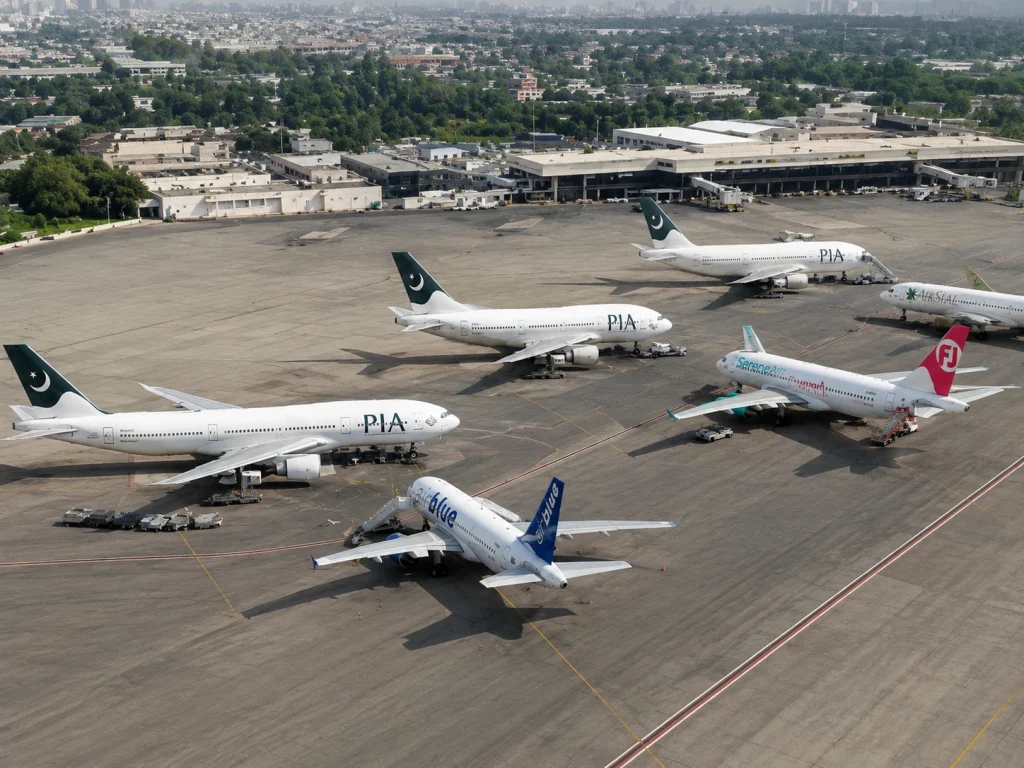
The Iranian capital city insists that its airspace is now open around the clock for commercial flights. But what the flight tracking websites are showing reveals something else entirely. The discrepancy here reveals just how unstable this calm could potentially be.
TEHRAN: The western airspace of Iran has been reopened by the country’s civil aviation department, which is a significant development in ensuring the resumption of complete flight services throughout Iran following several months of interruption caused due to conflicts. According to IRIB, the news source of Iran, the western airspace of Iran has been put to operational use as was done earlier for the eastern airspace.
At a time when the larger region is far from stabilized, Iran is opening up its airspace to the West. However, the closure prior to this opening was not caused by a regular technical problem. On the contrary, it came after an eventful military development that began in 2026, when America and Israel launched attacks on some facilities in Iran, leading to Iran retaliating against aviation in the entire Middle East.
What Reopening Involves
As per the statements from Iranian authorities, the required criteria have been met for facilitating the movement of flights both domestic and transit through Iranian air space. Flights can be made from all airports in Iran in accordance with the stipulations of the Aeronautical Information Publication.
Iran opens up airspace for the West while taking into account certain provisions with respect to each particular airport. Kish and Asaluyeh in the south of Iran are examples where airports will only work between the hours of sunrise and sunset, not day and night, indicating that the Iranian authorities have begun to ease restrictions slowly but surely.
Why International Airlines Are Not Convinced
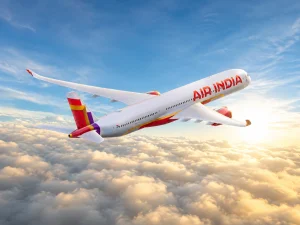
This is the point where things become really complicated. While Iran is officially stating that the western airspace of the country is now open for flights, data from flight tracking services indicate that the number of flights passing through Iranian airspace is quite insignificant. International airlines are still avoiding flying over Iran altogether and choosing to go either south through Egypt or Saudi Arabia or north through Caucasus and Afghanistan.
It is worth noting that such advice is not merely because of institutional routine. Indeed, international regulatory authorities have provided their own guidance which is not necessarily aligned with the announcements made by Iran. Thus, the EU Aviation Safety Agency has kept warnings recommending avoiding flying in Iranian air space at all altitude levels, with separate NOTAMs released by some European aviation regulatory agencies, including France, Italy, and Germany, which directly told their airlines not to enter Iranian air space.
A Dispute that has Altered the Skies of the Area
In order to appreciate the importance of why Iran reopened airspace for western aircrafts, one needs to comprehend how disruptive the previous closure has been. It all started on February 28, 2026, when attacks by the US and Israel against Iran took place. In retaliation for this attack, Iran closed its airspace and expanded the dispute to other nations in the Gulf area, including Kuwait and Bahrain.
ALSO READ: Downed F-15 Pilot’s ‘Jellyfish Drone’ Revelation Rocks US Intelligence Iran Hiding a Deadly Secret?
The True Cost of Months of Closure
In the course of closure, there have been many instances where international airlines had to re-route their flights due to the long duration of travel time involved. This has added to the cost for many international airlines since there have been several European-Asian routes that now have to be routed through Central Asia or the Arabian Sea which adds up to an additional 2 to 5 hours.
What Happens When Iran Opens up Western Airspace?
With the opening of western airspace by Iran now officially confirmed, all airlines around the world are now reconsidering their routes, although the aviation experts say that any sort of return to normalcy will take much more time than what this announcement implies. Airline companies don’t only depend on the declaration made by governments of different countries in deciding to operate in an area that was considered dangerous before.

Nayab Fatima is a university graduate and an emerging media professional with a strong passion for journalism, research, and independent reporting. She specializes in developing well-researched, fact-based, and analytical news stories covering a wide range of sectors, with particular expertise in technology, telecommunications, aviation, and the automobile industry.